

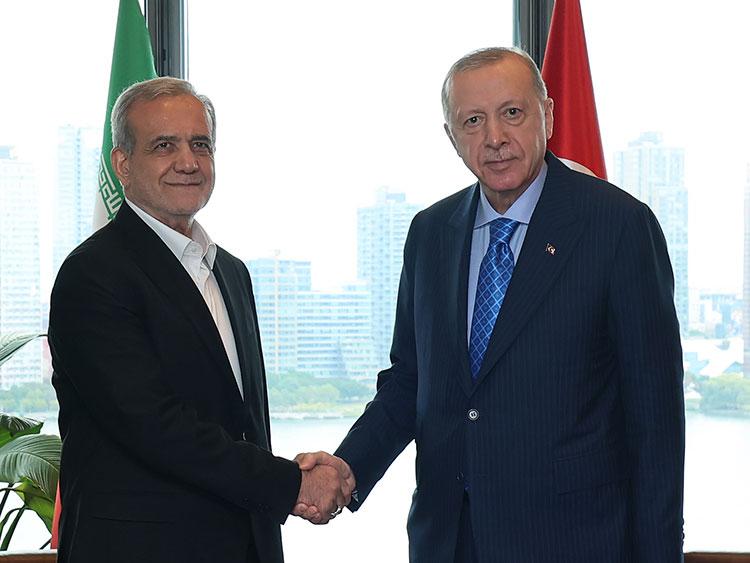
Turkish President Recep Tayyip Erdogan has called for an immediate end to the war between Iran and the United States, urging both sides to return to negotiations after meeting Iranian President Masoud Pezeshkian on the sidelines of the COP31 climate summit in Antalya.
The meeting on Thursday, 12 November, brought the leaders together as regional diplomatic efforts continue to seek a way out of a conflict that has disrupted energy markets, threatened commercial shipping and drawn neighbouring countries into a widening security crisis.
Erdogan said the negotiating process should resume without further delay and stressed that Turkey would continue supporting initiatives aimed at securing peace in cooperation with other countries in the region.
“Common ground for agreement must be strengthened and diplomacy given a chance,” he said, according to remarks reported by Turkish and international media.
The Turkish president also expressed hope that the conflict would end as soon as possible, emphasising the need to establish lasting peace and restore regional stability.
The meeting did not produce an announced agreement between Tehran and Washington, and neither leader indicated that direct negotiations between the two governments had been secured. Its significance lies instead in Ankara’s renewed public effort to keep diplomatic channels open at a time when military tensions and competing demands continue to obstruct a settlement.
Ankara seeks to keep diplomacy alive
Turkey has repeatedly presented itself as a potential facilitator between regional and international powers during the conflict. Its geographical position, membership of NATO and established relations with Iran and Gulf states give Ankara a diplomatic role that few countries in the region can easily replicate.
Erdogan’s latest appeal reflects concern that continued hostilities could further destabilise the Middle East and expose Turkey to economic and security consequences. The conflict has affected energy supplies, maritime traffic and regional trade, while missile and drone attacks have raised the risks for countries beyond the immediate battlefield.
During Thursday’s meeting, Erdogan underlined the importance of creating conditions for a negotiated settlement rather than allowing the confrontation to continue indefinitely. He said Turkey would maintain its support for peace-oriented efforts alongside friendly countries in the region.
The Turkish presidency’s account, as reported by Daily Sabah, said the discussions covered bilateral relations as well as the war between Iran and the United States. The emphasis on a lasting settlement suggests that Ankara is seeking more than a temporary pause in hostilities.
However, the public statements did not set out a new negotiating framework, identify specific concessions or establish a timetable for talks. Erdogan’s appeal was a diplomatic call, not confirmation that either side had accepted a fresh proposal.
Pezeshkian’s presence at COP31 gives the meeting wider significance
The meeting took place during the 31st United Nations Climate Change Conference, hosted in Antalya. The summit brought together government leaders and international representatives to discuss climate finance, energy transition and the resilience of communities facing environmental pressures.
For Pezeshkian, participation also provided an opportunity to raise the consequences of the war before an international audience. In his address to the summit on Wednesday, he accused the United States and Israel of causing extensive environmental damage through attacks on Iranian energy infrastructure.
The Iranian president said strikes on fuel facilities had released substantial quantities of greenhouse gases and pollutants into the atmosphere. He cited attacks on facilities in Asaluyeh and fuel storage sites near Tehran, arguing that the destruction of energy infrastructure exposed a contradiction between international climate commitments and military operations.
Those figures and accusations were presented by Pezeshkian and have not been independently established in the diplomatic statements surrounding the Erdogan meeting.
The Iranian leader also called for international organisations to document environmental damage resulting from military operations and raised the question of accountability and compensation.
His remarks brought the war directly into a summit whose central purpose is to address the global climate crisis. They also underscored Tehran’s effort to frame the conflict as an issue extending beyond military security and into environmental protection and international law.
Pakistan’s parallel diplomatic efforts
Erdogan’s meeting with Pezeshkian came amid a series of diplomatic contacts in Antalya involving Pakistan, which has sought to play a role in efforts to end the conflict.
Pakistani Prime Minister Shehbaz Sharif also met Pezeshkian during the COP31 gathering. Sharif said Pakistan was continuing to pursue a constructive role in regional peace efforts and emphasised dialogue, restraint and de-escalation as the only sustainable route out of the crisis.
The Pakistani prime minister referred to understandings reached under the Islamabad Memorandum of Understanding, which had previously provided a framework for diplomatic engagement between Washington and Tehran. He said the two sides should build on those understandings to advance regional stability.
Sharif also held talks with Erdogan. According to Pakistan’s Prime Minister’s Office, the Turkish president welcomed Islamabad’s mediation efforts and the two leaders stressed the importance of all parties honouring their commitments under the Islamabad agreement.
The meetings demonstrate that Pakistan and Turkey are seeking to coordinate their diplomatic positions while maintaining separate channels with the countries directly involved in the war.
The Islamabad framework remains a diplomatic reference point
Pakistan’s involvement has been significant because it has maintained working relationships with both Iran and the United States. Islamabad has previously hosted contacts between the two sides and has attempted to preserve a route towards a broader settlement.
The Islamabad memorandum is therefore an important reference point for current diplomatic discussions. But the statements made in Antalya do not establish that the document has been fully implemented or that a comprehensive peace agreement is imminent.
The central obstacle remains the gap between Tehran’s conditions and Washington’s position. Iran has demanded concessions that include the unfreezing of assets and the lifting of sanctions, while linking the reopening of the Strait of Hormuz to the wider negotiations.
The United States, meanwhile, has continued to apply economic pressure and has not publicly accepted Iran’s demands as the basis for a settlement.
The diplomatic challenge is not simply to bring representatives back to the negotiating table. It is to find terms that both governments consider politically acceptable while addressing the security concerns that have driven the confrontation.
Strait of Hormuz remains central to the crisis
The future of the Strait of Hormuz is one of the most consequential issues in any effort to end the war. The narrow waterway connects the Persian Gulf with the Gulf of Oman and is a critical route for international oil and gas shipments.
Iran’s restrictions on shipping through the strait have raised concerns among energy importers and maritime operators. Disruption has affected the movement of tankers and increased the risks associated with commercial navigation across the Gulf.
Tehran has linked the waterway’s reopening to its broader demands in negotiations with Washington. That position gives the dispute an international economic dimension, since prolonged restrictions can affect energy prices, shipping costs and supply chains well beyond the region.
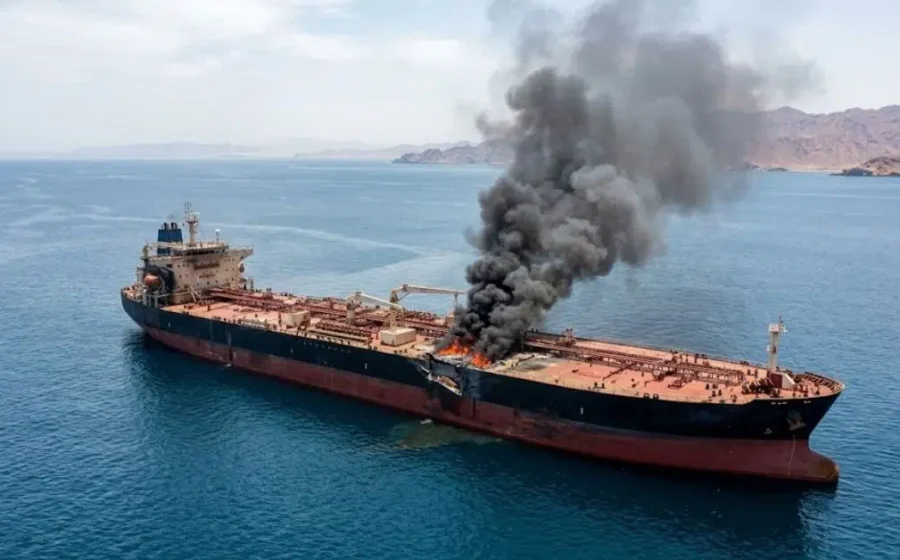
Recent maritime incidents have added to the uncertainty. Iran’s Revolutionary Guards have made claims about explosions and damaged tankers near the strait, while separate incidents have been reported by international maritime monitoring bodies. The claims surrounding individual attacks have not all been independently verified.
For Turkey, Pakistan and other countries advocating diplomacy, the economic consequences of continued disruption provide an additional reason to press for de-escalation.
Regional governments fear a wider confrontation
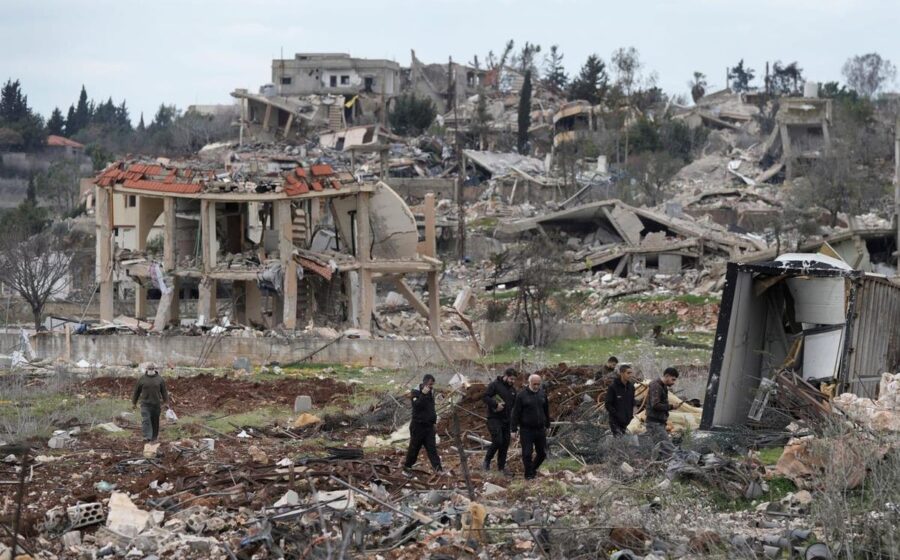
The war has already placed neighbouring states under pressure, with missile and drone activity, threats to energy infrastructure and attacks involving armed groups extending the conflict beyond Iran and the United States.
Gulf governments have faced security concerns linked to their proximity to Iran and the presence of US military facilities in the region. Commercial shipping has also become increasingly vulnerable, while airlines and businesses have had to account for a more volatile security environment.
The possibility of further escalation creates risks for countries that are not direct participants in the conflict. Turkey, which shares a border with Iran, has particular reason to avoid a prolonged regional confrontation that could affect trade, security and population movements.
Pakistan has similarly warned of the wider consequences of continued instability. Its diplomatic engagement reflects concern that an expanded conflict could undermine regional economic cooperation and create additional security pressures.
A diplomatic opening without a confirmed breakthrough
Erdogan’s appeal in Antalya comes at a time when the prospects for a negotiated settlement remain uncertain. Public statements from Tehran and Washington continue to reveal significant differences over sanctions, security guarantees, the Strait of Hormuz and the conditions under which military operations would end.
The Turkish president’s call for an immediate return to negotiations is consistent with Ankara’s wider effort to position itself as a diplomatic interlocutor. His meeting with Pezeshkian, alongside the parallel discussions involving Shehbaz Sharif, also highlights the growing importance of regional coordination in attempts to contain the conflict.
Yet diplomatic activity should not be mistaken for progress towards an agreed settlement. No new direct US-Iran negotiation date was announced following the meeting, and the public readouts did not indicate that either side had accepted the other’s conditions.
For now, the efforts in Antalya amount to renewed pressure for dialogue rather than a breakthrough. Whether they can produce a lasting agreement will depend on decisions taken in Tehran and Washington, as well as the willingness of regional mediators to help bridge the remaining differences.
The stakes extend far beyond the two governments. A prolonged conflict threatens energy security, commercial shipping and the stability of countries across the Middle East. Erdogan’s message was therefore directed not only at his Iranian counterpart but also at the wider international community: diplomacy must regain momentum before the costs of continued confrontation become still harder to contain.