

Explosions near Deir Mimas and artillery fire across several southern towns underline the fragility of the Israel-Lebanon truce, as displaced residents continue to face uncertainty over returning home.
Israeli military operations across southern Lebanon continued on 28 October, with artillery fire, reported demolitions and explosions affecting several towns despite a US-brokered framework agreement between Lebanon and Israel. The latest activity has renewed concerns over the safety of civilians living near the border and the prospects for a lasting return of displaced families.
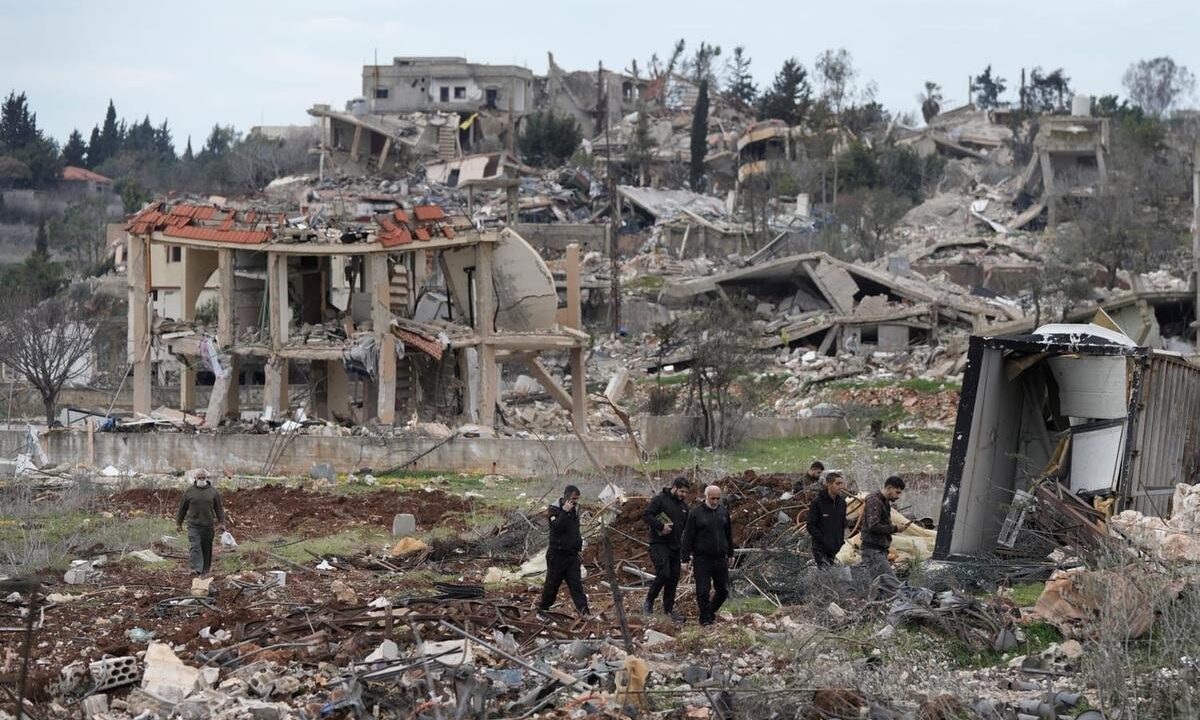
One of the most closely watched incidents occurred near Deir Mimas, in the Marjayoun district. Residents received a warning ahead of a large explosion in the vicinity of the town, prompting local authorities to advise people to take precautions. The explosion later shook the area, according to Lebanese reporting.
The incident formed part of a wider pattern of military activity reported across the south, including airstrikes, artillery fire and explosive demolitions. While the intensity of fighting has fluctuated, continued operations have left communities uncertain about whether the ceasefire can provide the security needed for normal life to resume.
Warning precedes explosion near Deir Mimas
On 28 October, a resident of Deir Mimas received a warning from Israeli forces that an operation involving a major explosion would take place near the town. The message was passed to the municipality and other residents, according to Tania Barnaba, president of the municipal council, who spoke to Lebanese newspaper L’Orient-Le Jour.
Residents were advised to leave their windows open and remain away from them as a precaution against the effects of the blast. The municipality communicated the warning as people waited for the operation to take place.
A powerful explosion was subsequently reported near Deir Mimas late that evening. The reporting described the blast as occurring on the outskirts of the town; it did not establish that the entire municipality had been destroyed or provide a confirmed casualty figure from the incident.
The warning itself illustrates the uncertainty faced by residents in southern communities. Even when civilians receive advance notice, they may have little information about the exact location, scale or consequences of an impending military operation.
The incident also came amid reports of Israeli demolition activity elsewhere in the area, including around Bani Hayyan and Khiam. Lebanese media reported that explosive demolitions had taken place near those localities during the preceding night.
Artillery and air activity reported across the south
The Deir Mimas explosion was not an isolated report of military activity on 28 October.
Lebanon’s National News Agency reported artillery fire targeting Mansouri, Majdal Zoun and nearby valleys. Several shells reportedly landed in the eastern neighbourhood of Hadatha. In Baraachit, an Israeli drone dropped a stun grenade, while intermittent artillery fire was reported between Mayfadoun and Zawtar al-Sharqiya.
L’Orient-Le Jour also reported an Israeli airstrike on Kfar Tebnit and explosions near Kounine, in the Bint Jbeil district. Artillery fire was reported around Nabatiyeh al-Fawqa, Wadi Slouki and Khiam. In Mansouri, an Israeli drone reportedly exploded above the area while artillery shells were fired from a tank positioned near Bayyada.
The Qatar News Agency, citing Lebanon’s National News Agency, reported the shelling of several southern locations and Israeli military aircraft flying over Beirut’s southern suburbs.
On 29 October, Anadolu Agency reported further Israeli strikes and shelling, including two consecutive strikes on Kfar Tebnit and attacks around Baraachit and Wadi al-Hujayr. It also reported demolition activity in Deir Mimas. The Israeli military separately said it had launched an interceptor at a suspected aerial target detected near its troops in southern Lebanon, without providing further details about the object or the outcome.
These accounts describe incidents reported by Lebanese media and the Israeli military. They do not, by themselves, establish the full circumstances or intended targets of every operation.
Ceasefire framework has not ended military activity
The continued incidents are taking place against the background of an agreement intended to reduce hostilities and establish a more stable security arrangement along the Israel-Lebanon border.
A US-brokered framework agreement was signed by Lebanon and Israel on 26 June, according to Anadolu Agency. The arrangement calls for a gradual Israeli withdrawal from occupied Lebanese territory in exchange for the deployment of the Lebanese army and the disarmament of armed groups.
However, military activity has continued in southern Lebanon. Israel has maintained that its operations are connected to security threats, while Lebanese authorities and media have repeatedly reported strikes, demolitions and incursions despite the agreement.
The disagreement over security arrangements remains central to the wider dispute. Israel wants to prevent Hezbollah from rebuilding military capabilities close to its border. Lebanon, meanwhile, faces the challenge of strengthening state authority and extending the Lebanese army’s presence while seeking an end to Israeli military activity and the return of displaced residents.
The future of the arrangement therefore depends not only on a reduction in attacks but also on progress over withdrawal, security responsibilities and the role of armed groups.
Displacement complicates the return home
For civilians, the continuation of strikes has consequences beyond the immediate risk of injury or damage. It also makes it difficult to decide when it is safe to return to homes and communities that have been affected by months of conflict.
The United Nations refugee agency has warned that continued Israeli strikes and military activity can prevent returns or trigger fresh localised displacement.
In a statement reported by Anadolu Agency on 1 September, UNHCR spokesperson Babar Baloch said that more than 350,000 people remained displaced across Lebanon as of mid-August. Approximately 860,000 had returned to their communities of origin or nearby areas, but the agency cautioned that many of these returns were not durable because significant challenges remained. Around 23,000 people were still living in collective shelters.
These figures provide a snapshot of the displacement situation in August, rather than a current count for November. They nevertheless demonstrate the scale of the recovery challenge facing the country.
Returning home does not automatically mean that normal life can resume. Residents may find damaged buildings, disrupted public services, unsafe roads and agricultural land they cannot access. Continued military activity adds another layer of uncertainty, particularly for families living close to the border.
The economic consequences are also significant. Southern Lebanon relies on agriculture, local commerce and cross-border economic activity. Restrictions, damaged infrastructure and insecurity can prevent farmers from reaching their land and businesses from reopening, prolonging the financial pressure on communities already affected by the conflict.
A fragile border with wider regional implications
The situation in southern Lebanon is closely connected to the wider regional confrontation involving Israel and Hezbollah. Any renewed escalation along the border could undermine diplomatic efforts to prevent another large-scale conflict and complicate attempts to stabilise Lebanon.
For the Lebanese government, the challenge is particularly difficult. It must demonstrate that state institutions and the national army can provide security across the south while negotiating an arrangement that addresses Israeli concerns and protects Lebanese sovereignty.
For Israel, the continued military presence and operations reflect its stated objective of preventing threats from emerging near its northern border. But repeated strikes and demolitions also risk deepening hostility and making the return of civilians more difficult.
The events around Deir Mimas show how fragile the situation remains. A warning, a large explosion and reports of military activity in neighbouring towns can disrupt daily life even without a confirmed mass-casualty incident.
The central question is no longer simply whether the ceasefire can reduce the frequency of attacks. It is whether the agreement can create conditions in which residents feel safe enough to return, local institutions can function and the Lebanese state can exercise authority across the border region.
Until those conditions are established, southern Lebanon is likely to remain vulnerable to further military activity, with civilians continuing to bear much of the uncertainty.