

New Delhi’s casualty figures underline the human cost of the conflict for Indian workers across the Gulf, with merchant-ship crews particularly exposed to attacks and disruption around vital maritime routes.
Twenty-two Indian nationals, including 14 seafarers, have been killed in the ongoing West Asia conflict since February, India’s Ministry of External Affairs (MEA) said on 28 October, highlighting the growing risks faced by Indian citizens working and travelling across the region.
MEA spokesperson Randhir Jaiswal confirmed the figures during a regular media briefing in New Delhi. He said the government remained deeply concerned about the conflict and was maintaining close contact with Indian communities across the Gulf to support their safety and wellbeing. Jaiswal also confirmed that three Indian nationals had lost their lives in Saudi Arabia.
The announcement provides one of the clearest official summaries of the conflict’s human toll on Indian citizens. It also draws attention to the particular vulnerability of seafarers, many of whom work aboard foreign-flagged commercial vessels travelling through waters affected by military activity.
The 22 deaths do not relate to a single incident or location. They reflect casualties associated with multiple developments since the conflict began, including attacks involving commercial shipping and incidents in Gulf countries. The government has not publicly provided a complete individual breakdown of all 22 deaths in the statement.
For India, the figures carry significance beyond diplomacy. Millions of Indian nationals live and work across West Asia, while Indian maritime professionals are an important part of the international shipping workforce. Their safety is connected to the security of commercial routes that carry energy supplies and other goods to global markets.
Fourteen seafarers among the Indian dead
The most striking element of the MEA’s announcement is that 14 of the 22 Indian nationals killed were seafarers.
Indian crew members work on vessels operating under different national flags, including tankers, cargo ships and other merchant vessels. Their nationality does not necessarily determine the flag under which a ship sails, and their employers and vessel operators may be based in countries far from the waters in which an incident occurs.
That international structure can complicate emergency response. When a vessel is attacked or damaged, responsibility for immediate assistance may involve the ship’s flag state, its operating company, coastal authorities, maritime rescue services and the governments representing individual crew members.
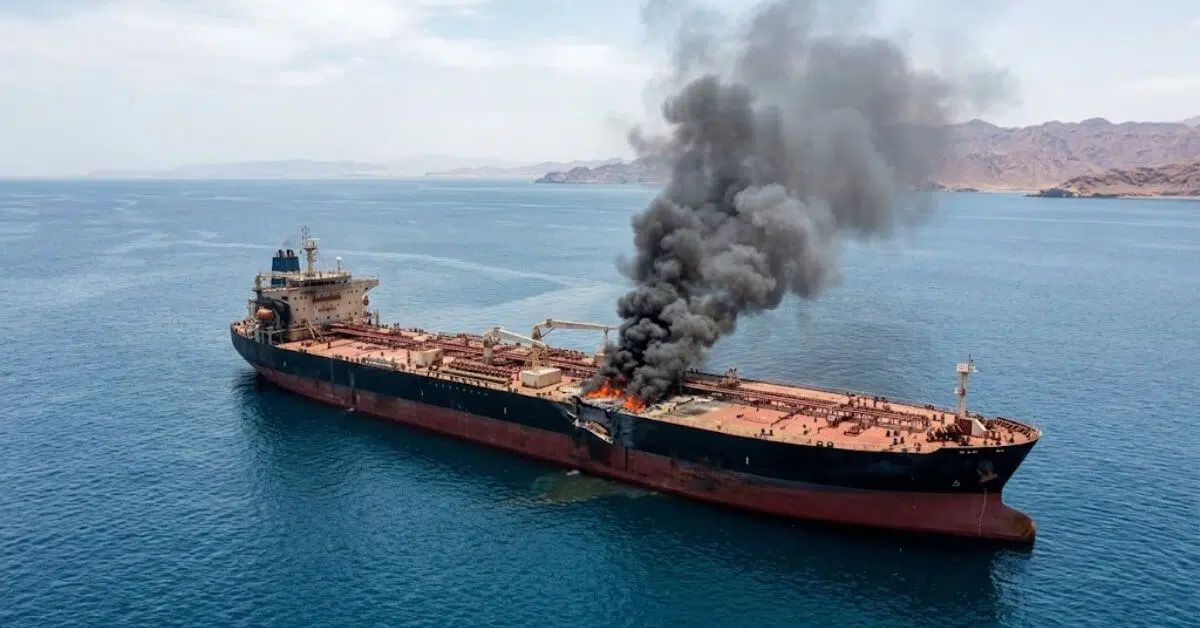
Several incidents involving commercial vessels have been reported since the conflict began on 28 February. In early March, the Marshall Islands-flagged tanker MKD Vyom was attacked in the Strait of Hormuz, killing an Indian crew member. Another incident involving the Palau-flagged tanker Skylight near Oman’s Musandam Peninsula also resulted in the deaths of Indian sailors.
In May, an Indian sailor died after a wooden dhow carrying Indian crew members caught fire near the Strait of Hormuz. In June, three Indian seafarers were reported killed after an attack involving the Palau-flagged tanker MT Settebello off the coast of Oman.
Further incidents were reported in July and September, including attacks involving vessels in or near the Strait of Hormuz and waters off Oman. Indian nationals were among those killed, injured, rescued or reported missing in these separate cases.
These incidents demonstrate why the risks facing merchant crews cannot be measured only by the number of attacks on commercial vessels. A ship may be operating far from its home country, carrying crew members of several nationalities and navigating a route where military activity can change rapidly.
The MEA’s figure of 14 seafarer deaths is therefore a reminder that the conflict’s impact extends well beyond military personnel and the immediate populations of countries involved in the fighting.
Three Indian deaths reported in Saudi Arabia
Jaiswal separately confirmed that three Indian nationals had died in Saudi Arabia in incidents associated with the regional conflict.
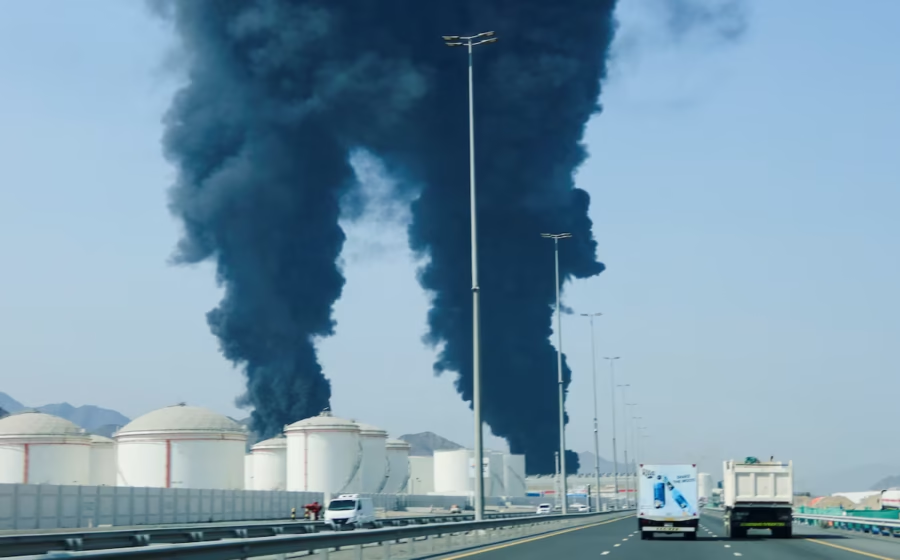
The announcement followed a series of attacks and security incidents affecting the kingdom. On 22 October, India condemned attacks on Saudi civilian infrastructure after an Indian national was killed in an incident involving King Fahd International Airport in Dammam. Another Indian national was injured in a separate incident involving the Shaybah oil field, according to reporting by The Indian Express.
The Indian Embassy in Riyadh had also reported that an Indian national was among two people killed and two other Indians were among eight injured in an attack at Dammam airport.
The incidents illustrate the exposure of foreign workers in a country that hosts a large Indian community. Indian citizens are employed across sectors including construction, healthcare, engineering, retail, transport, hospitality and energy.
Saudi Arabia is home to approximately 2.74 million Indian nationals, according to figures cited in The Indian Express. Their presence makes the security situation particularly important for New Delhi, which must balance diplomatic relations, consular support and the safety of its citizens.
The government has repeatedly expressed concern over attacks on civilian and economic infrastructure in the kingdom. It has also urged restraint and called for the protection of civilians and essential facilities.
Why the Strait of Hormuz is a major concern
The concentration of seafarer casualties reflects the strategic importance and vulnerability of the Gulf’s maritime routes.
The Strait of Hormuz connects the Persian Gulf with the Gulf of Oman and the wider Indian Ocean. It is a critical passage for energy shipments from major Gulf producers, and disruption can affect oil exports, tanker movements and the cost of international shipping.
For Indian seafarers, the waterway is not an abstract geopolitical concern. It is part of the operating environment in which they work. A commercial vessel passing through a contested maritime corridor can face risks from missile attacks, drones, explosions, fires, navigational disruption and the possibility of being caught in military operations.
The threat also extends beyond the Strait itself. Shipping routes in the Gulf of Oman, the Red Sea and the approaches to the Bab el-Mandeb Strait are strategically connected. A wider escalation can force shipping companies to change routes, delay voyages or reconsider whether particular journeys can be undertaken safely.
The consequences are felt by crews and their families. Seafarers may remain at sea for extended periods, while relatives at home depend on employers, maritime authorities and diplomatic missions for reliable information during emergencies.
India faces a major consular and maritime challenge
India has a substantial presence in the international maritime workforce. The 2026 BIMCO-ICS Seafarer Workforce Report, cited by The New Indian Express, estimates that India has 311,936 maritime professionals, representing 12.16 per cent of the global seafarer workforce.
The country’s maritime workforce includes officers and ratings serving on commercial vessels around the world. This gives India an important role in global shipping, but it also means that security incidents affecting international trade routes can have direct consequences for Indian citizens.
The Directorate General of Shipping issued safety guidance following the escalation of hostilities in February, urging Indian-flagged vessels and Indian seafarers to exercise caution around affected waters. The government has also used control rooms and coordination with diplomatic missions to monitor the situation and assist nationals requiring support.
Such measures are important, but they cannot eliminate the risks faced by crews already aboard vessels operating in dangerous areas. The ability to respond depends on timely communication, cooperation between maritime authorities and shipping companies, and access to rescue and evacuation arrangements.
The challenge is also complicated by the fact that many Indian seafarers work on foreign-flagged vessels. India can provide consular assistance and raise concerns with other governments, but it does not exercise direct operational control over every ship carrying Indian crew members.
A wider economic and diplomatic concern
The deaths also highlight the connection between India’s overseas workforce and its economic interests in the Gulf.
Indian nationals contribute to sectors that are central to the economies of Gulf countries. Their work supports infrastructure, energy production, transport, healthcare and services. Remittances sent by overseas Indians are also an important source of income for households in India.
A prolonged conflict can threaten these connections through casualties, job disruption, travel restrictions and uncertainty over employment. Families may face financial and emotional pressure when a relative is injured, missing or killed while working abroad.
The wider economic consequences are equally significant. India depends heavily on imported crude oil, much of which originates in the broader Gulf region. Disruption to shipping can raise transport and insurance costs, increase energy-market volatility and place pressure on businesses and consumers.
New Delhi has consistently called for dialogue and diplomacy to resolve the conflict. Its position reflects the need to maintain relationships with regional partners while protecting Indian citizens and preserving access to essential trade routes.
India and Liberia also launched a 25-nation Group of Friends on Safety and Security of Shipping and Seafarers at the United Nations General Assembly in September. The initiative aims to strengthen international cooperation on protecting merchant vessels and their crews.
Protecting Indian nationals as the conflict continues
The MEA’s announcement places the safety of Indian citizens firmly within the wider discussion about the consequences of the West Asia conflict.
The figure of 22 deaths is an official count, but it does not capture the full extent of the disruption experienced by Indian workers and families. Seafarers have faced attacks and emergencies at sea, while other nationals have been affected by insecurity and damage to civilian infrastructure on land.
The government will need to continue coordinating with regional authorities, shipping companies, employers and international maritime organisations as the security situation develops. For families of those killed or missing, timely information and effective consular assistance remain essential.
The immediate priority is to prevent further casualties and ensure that commercial vessels and civilian infrastructure are not treated as legitimate targets in the conflict.
For India, the issue is both humanitarian and strategic. The country has a large overseas population in the Gulf and a significant stake in the safety of international shipping. As long as the conflict threatens maritime routes and civilian infrastructure, protecting Indian nationals will remain a central challenge for New Delhi.