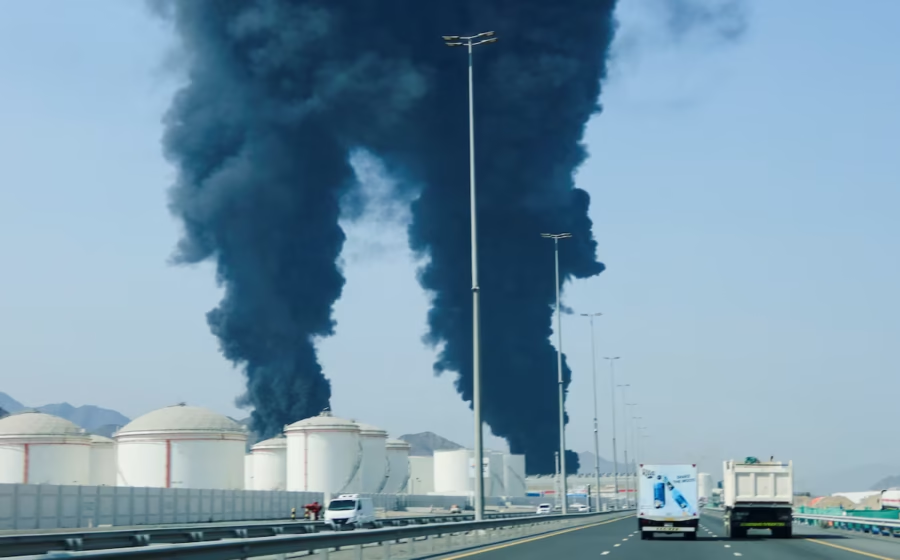


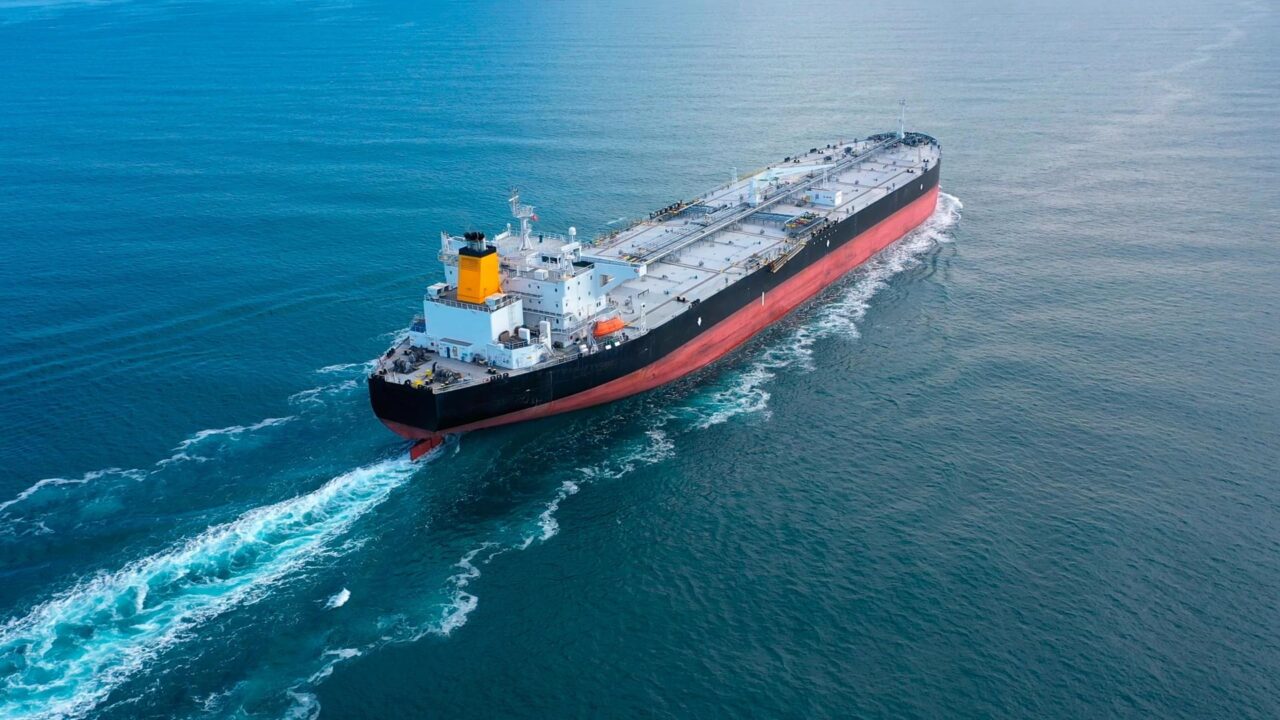
UK maritime authorities say the vessel was hit approximately 72 nautical miles east of Ras al-Khafji, with all crew members accounted for and no environmental impact reported.
A tanker sailing through the Arabian Gulf was struck by two unidentified projectiles approximately 72 nautical miles east of Ras al-Khafji, Saudi Arabia, according to the United Kingdom Maritime Trade Operations (UKMTO), in another incident highlighting the growing risks facing commercial shipping across the Gulf.
The vessel was travelling southeast when the two projectiles struck its port side, UKMTO said in an incident notice published on 2 November. All crew members were accounted for, and there was no reported environmental impact at the time of the agency’s update.
The identity of the vessel, the origin of the projectiles and the circumstances surrounding the incident had not been established in the initial public reporting. No responsibility for the attack had been confirmed.
Although the absence of reported casualties or pollution limited the immediate human and environmental consequences, the location of the incident is significant. The Arabian Gulf is a critical route for energy exports and international maritime trade, and repeated attacks on commercial vessels have increased uncertainty for ship operators navigating the region.
Tanker hit on port side east of Ras al-Khafji
UKMTO said it had received a report of an incident involving a tanker approximately 72 nautical miles east of Ras al-Khafji, a Saudi coastal location near the country’s border with Kuwait.
According to the agency, the vessel was heading southeast through the Arabian Gulf when two unidentified projectiles struck its port side. The initial assessment indicated that all crew members were safe and that no environmental impact had been reported.
UKMTO advised vessels operating in the area to transit with caution and report suspicious activity. Authorities were expected to investigate the circumstances of the incident.
The agency’s notice did not identify the projectiles as missiles, drones or any other specific weapon. It also did not establish whether the tanker had sustained significant structural damage or whether its voyage had been interrupted.
That distinction matters. In a region where military forces, commercial vessels and energy infrastructure operate in close proximity, the identification of a weapon and the attribution of responsibility require evidence beyond the fact that a vessel has been struck.
The absence of a confirmed perpetrator also means the incident cannot yet be conclusively linked to any particular government, armed group or military operation.
A wider pattern of maritime insecurity
The latest incident comes amid a series of security alerts involving commercial vessels in and around the Strait of Hormuz and the wider Gulf.
On 1 November, UKMTO reported a separate incident within the Strait of Hormuz after the master of a merchant vessel relayed a Mayday call from another vessel that had reportedly been struck by an unidentified projectile. UKMTO advised ships to remain cautious while authorities investigated.
The two incidents are geographically distinct and should not be treated as a single attack. However, their timing highlights the pressure facing maritime operators as vessels continue to navigate a region affected by the wider confrontation involving Iran and the United States.
UKMTO had also reported other maritime security incidents in October, including attacks involving tankers and commercial vessels in the Strait of Hormuz and nearby waters. The repeated alerts have made the security environment increasingly difficult for shipping companies to assess.
For vessel operators, the challenge is not limited to the possibility of a direct attack. Uncertainty over safe routes, the risk of delays and the potential for further military escalation can complicate voyage planning and crew safety decisions.
Why the location matters for global energy trade
The Arabian Gulf and the Strait of Hormuz are among the world’s most strategically important maritime corridors.
The Strait of Hormuz connects the Gulf with the Gulf of Oman and the wider Indian Ocean. A substantial share of internationally traded oil and liquefied natural gas passes through this narrow waterway, making it particularly sensitive to military confrontation or prolonged disruption.
Ras al-Khafji lies along Saudi Arabia’s Gulf coast, meaning an incident 72 nautical miles to its east raises concerns beyond the immediate safety of the affected vessel. It adds to the perception that commercial shipping risks are not confined to the narrowest part of the Strait of Hormuz.
Any sustained deterioration in maritime security could affect the cost and availability of shipping services. Shipowners and charterers may need to reconsider routes, security arrangements and voyage schedules. Longer journeys or operational delays can increase fuel consumption, freight costs and the time required to deliver energy supplies.
Insurance is another important consideration. Vessels operating in areas classified as high risk may face additional war-risk premiums or more restrictive insurance conditions. The scale of any adjustment depends on the circumstances of individual incidents, the vessel’s route and assessments by insurers. It would therefore be premature to attach a specific financial cost to the latest attack without market data.
For energy-importing economies in Asia, including India, continued uncertainty in Gulf shipping lanes is particularly important. Disruption to oil and gas deliveries could increase exposure to price volatility and complicate procurement planning, especially if incidents become more frequent or begin affecting the movement of energy cargoes.
Shipping companies face difficult security decisions
The latest attack places renewed attention on the responsibilities of shipowners, operators and maritime security agencies.
Companies operating in the Gulf must monitor official navigation warnings, assess the risks along planned routes and maintain communication with their vessels. UKMTO’s advice to transit with caution reflects the need for heightened awareness while investigations continue.
Crew welfare is also a central concern. Seafarers working on commercial vessels can find themselves exposed to military activity despite having no role in the conflict. Even when attacks do not result in casualties, the threat of explosions, fires or damage to a vessel can create serious risks for people on board.
Shipping companies may also face difficult decisions about whether to continue voyages, delay departures or change routes. Those decisions involve balancing crew safety, contractual obligations, insurance requirements and the wider consequences of disrupting cargo deliveries.
The latest incident does not, by itself, establish that commercial shipping through the Arabian Gulf has been suspended. Nor does it confirm a disruption to Saudi oil exports. However, repeated attacks can affect confidence even when vessels remain operational.
Investigation and regional security remain central
The immediate questions surrounding the tanker incident remain unanswered: who launched the projectiles, what type of weapons were used, how much damage the vessel sustained and whether the attack was deliberate.
Those details will be important in determining whether the incident represents a targeted operation or part of the broader pattern of maritime insecurity in the region.
The attack also comes at a sensitive moment for regional diplomacy. Efforts to reduce tensions between Washington and Tehran have continued through diplomatic channels, while the security of the Strait of Hormuz remains central to discussions about regional stability and global energy supplies.
For Gulf governments, the protection of commercial shipping is both an economic and a security priority. For international operators, the central concern is whether the maritime environment can remain predictable enough for vessels and crews to operate safely.
For now, UKMTO’s report confirms that a tanker was struck by two unidentified projectiles near Saudi Arabia, while its crew remained accounted for and no environmental impact was reported. The investigation will need to establish what happened next. Until responsibility and the circumstances are clarified, the incident is likely to reinforce concerns over the security of one of the world’s most important energy-trading regions.