

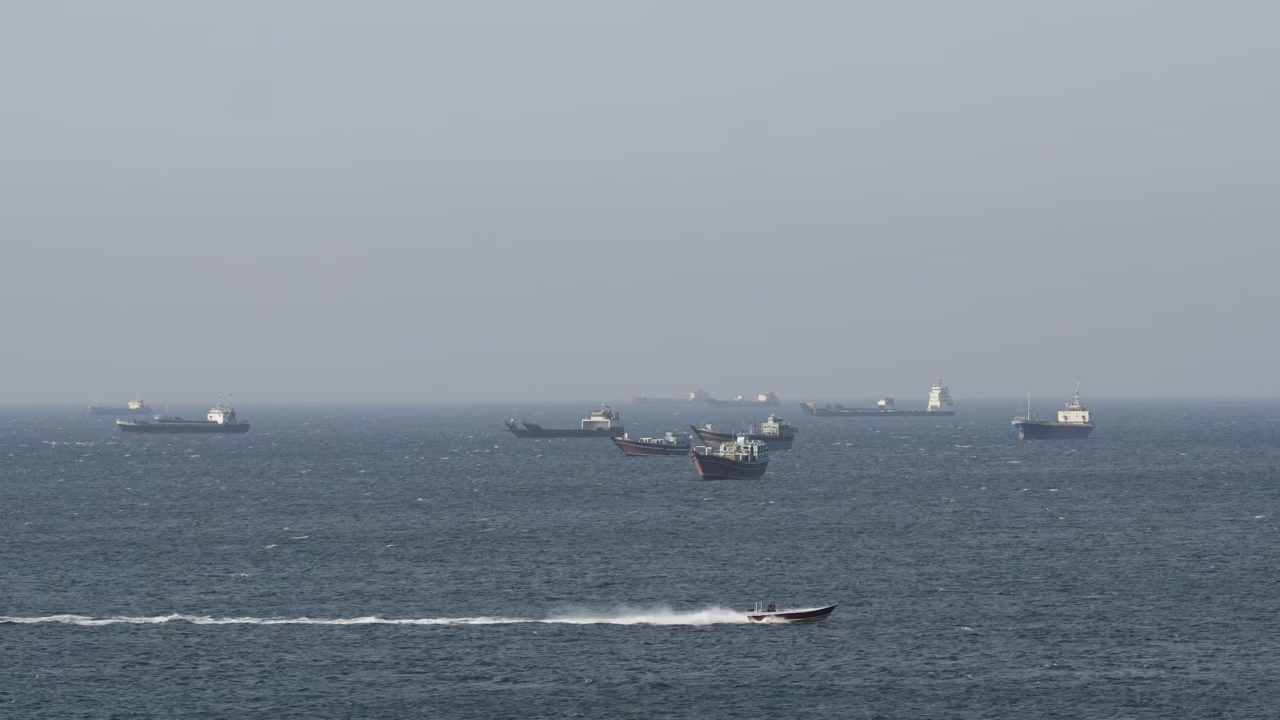
DOHA — Four oil and gas tankers turned back from the Strait of Hormuz after vessel attacks, adding a new layer of pressure to the Gulf’s most important maritime energy corridor.
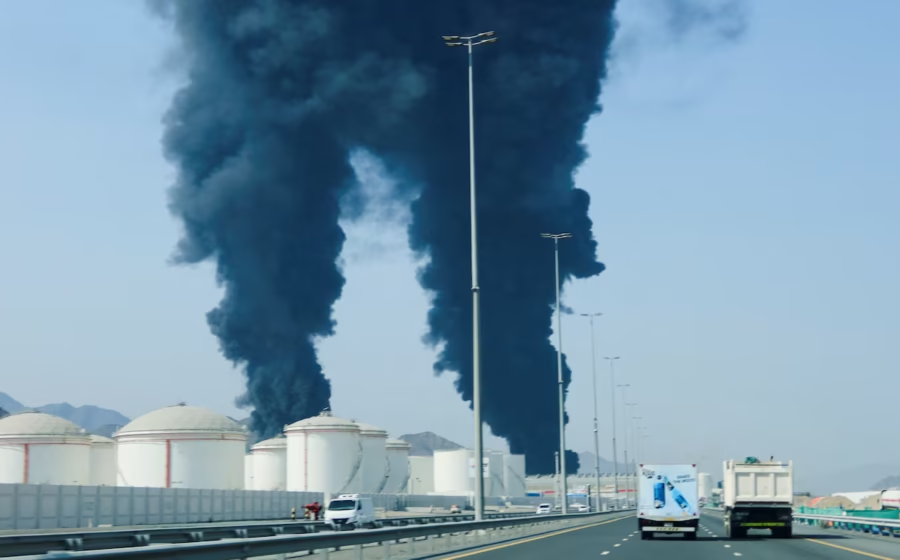
Reuters reported that the tankers reversed course after attacks on vessels near the strait. The move followed a sharp rise in risk assessments after a Qatari LNG tanker was reported to be at risk of explosion and a Saudi crude tanker was damaged near the same corridor.
What changed
The turnback shows that commercial shipping decisions can change before governments declare a formal crisis. Shipowners, charterers and insurers do not wait for a full closure of a waterway. If the perceived danger is high enough, vessels can delay, reroute or abandon a voyage.
That behaviour can be economically significant even when production continues. Oilfields and gas trains may operate normally, but exports depend on ships, crews, insurance cover, port access and confidence in maritime protection. When any of those elements becomes uncertain, the cost of delivering energy rises.
Why it matters for the Gulf
The Strait of Hormuz connects the Gulf to global energy markets. Qatar’s LNG, Saudi crude, UAE crude and refined products, and other regional cargoes depend directly or indirectly on the corridor. Alternative pipelines can reduce exposure for some crude flows, but they cannot replace the strait for every commodity or every exporter.
LNG is especially sensitive because it relies on specialised vessels, planned delivery windows and dedicated receiving terminals. A delayed cargo can affect utilities, industrial buyers and price expectations in Asia or Europe. Crude oil markets can also react quickly when traders fear cargo delays or insurance premiums will rise.
The economic reading
The immediate economic effect may be limited if the vessels resume their voyages quickly. The larger issue is whether the turnback becomes a pattern. Repeated reversals would signal that maritime actors are reassessing the region’s risk environment and could force buyers and sellers to revise contracts.
Energy companies, shipping firms and insurers will now be watched closely. Freight rates, war-risk premiums and voyage scheduling may provide a clearer reading of market anxiety than political statements. Investors will also examine whether Gulf exporters activate contingency routes or adjust loading programmes.
What to watch next
The key indicators are whether more tankers turn back, whether naval escorts increase, whether insurers raise risk levels further and whether buyers seek alternative cargoes. Markets will also monitor official responses from Qatar, Saudi Arabia, Oman and the United States.
The tanker reversal is a reminder that energy security is not only about reserves or production capacity. It is also about the ability to move cargoes safely through contested waters. For the Gulf, maritime trust is now as important as upstream strength.
The Telegraph Middle East reading
The tanker reversal should be understood as an operational warning rather than a full energy-supply rupture. The Gulf has managed episodes of maritime pressure before, but the current environment is sensitive because shipping, sanctions, insurance and military signalling are moving together. That combination can produce market reactions larger than the immediate physical disruption.
Energy buyers will now pay closer attention to the reliability of delivery windows. Sellers will examine whether loading schedules require greater flexibility. Insurers will review whether the risk premium attached to Gulf transits should increase. These adjustments can raise costs even when cargoes ultimately arrive.
For Gulf exporters, the strategic lesson is clear: production capacity must be matched by route resilience. Pipelines, storage, naval coordination, port security and transparent communication with customers are now part of the region’s energy value proposition. In a contested maritime environment, reliability itself becomes a competitive asset.
The story will remain important because it connects policy decisions with boardroom planning. Companies operating in the Gulf increasingly need to understand not only what happened, but how it changes risk, cost, demand and the timing of investment decisions across the region.
The story will remain important because it connects policy decisions with boardroom planning. Companies operating in the Gulf increasingly need to understand not only what happened, but how it changes risk, cost, demand and the timing of investment decisions across the region.
The story will remain important because it connects policy decisions with boardroom planning. Companies operating in the Gulf increasingly need to understand not only what happened, but how it changes risk, cost, demand and the timing of investment decisions across the region.