

RIYADH — July 4, 2026: A Reuters survey shows a major recovery in OPEC production after months of disruption, led by Gulf producers and a gradual reopening of regional shipping routes. The development is relevant to Telegraph Middle East readers because it connects directly with the publication’s core coverage of Gulf business, public policy, investment, markets and regional affairs.
The story is not only about a headline figure or a single official decision. It is about how the Middle East is adjusting to a period in which energy routes, capital flows, government policy, consumer confidence and geopolitical risk are moving together. In that environment, a development in one sector can quickly shape decisions in another.
Reuters reported that OPEC output rose sharply in June to 19.43 million barrels per day among surveyed members.
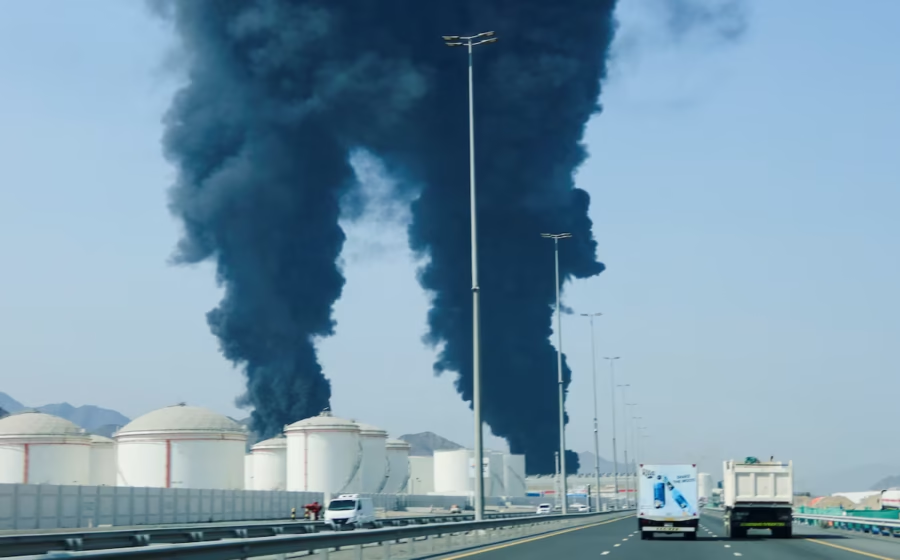
The increase followed the return of barrels previously constrained by regional conflict and shipping disruption.
Kuwait and Iran were among the largest contributors to the rebound, while Saudi Arabia and Iraq also raised output.
The survey excluded the UAE after its reported exit from OPEC.
Taken together, these details indicate that the region is moving through a phase of cautious adjustment rather than simple recovery or deterioration. The facts point to measurable activity, but they also show why decision-makers remain careful about treating one week of data as a lasting trend.
Energy markets in the Gulf are no longer being shaped by quotas alone. They are also being shaped by route security, shipping insurance, the ability of producers to move cargoes when the Strait of Hormuz is under pressure and the willingness of Asian buyers to absorb additional barrels. For an exporter, higher physical movement can support revenue even when benchmark prices soften. For a buyer, the same movement can reduce scarcity premiums and widen negotiating power. That is why the latest data matter beyond the oil desk.
The immediate market reaction should be read with caution. A restored flow of cargoes does not mean the entire risk structure has disappeared. Tanker owners, insurers, refiners and sovereign buyers will continue to watch whether the recovery can survive another round of military threats, port restrictions or diplomatic setbacks. In practical terms, a stable market requires not only barrels available for sale, but ships able to load, crews willing to sail and contracts that can be honoured without emergency clauses being triggered.
For Gulf fiscal policy, the lesson is equally direct. Producing countries need a balance between volume, price and reliability. A surge in exports can help repair monthly revenue, but if too many producers rush to monetise barrels at the same time, discounts may widen and the price benefit of restored routes may weaken. This is the tension now running through energy capitals from Abu Dhabi and Riyadh to Kuwait City, Doha and Baghdad.
Higher output points to a regional effort to monetise reserves while demand remains available.
A supply recovery may calm consumers but can also place downward pressure on prices if demand growth does not keep pace.
For fiscal planners across the Gulf, production volumes and realised prices now matter together.
For policymakers, the priority is to preserve confidence while avoiding overstatement. For companies, the priority is operational flexibility: the ability to adapt procurement, pricing, staffing, financing and customer strategy as conditions change. For investors, the key question is whether short-term uncertainty is masking durable structural growth or exposing weaknesses that were previously hidden by abundant liquidity.
The next indicators to watch will be official follow-up data, sector-level statements, shipping and travel activity, lending conditions, company guidance and the tone of regional diplomacy. Telegraph Middle East will continue to treat confirmed data as the basis for analysis and will avoid presenting projections or source-based claims as settled outcomes.
The wider context is that the Gulf is attempting to protect its reputation as a reliable centre for capital, trade and services while operating in a region where security developments can change the cost of doing business quickly. The strongest economies will be those able to maintain institutional clarity, transparent communication and practical continuity during periods of stress. That is why today’s news should be read as part of a wider operating picture rather than as an isolated event.