

DUBAI — Oil prices fell sharply as expectations of a United States–Iran agreement strengthened, creating a more complicated outlook for Gulf markets than the headline move suggests.
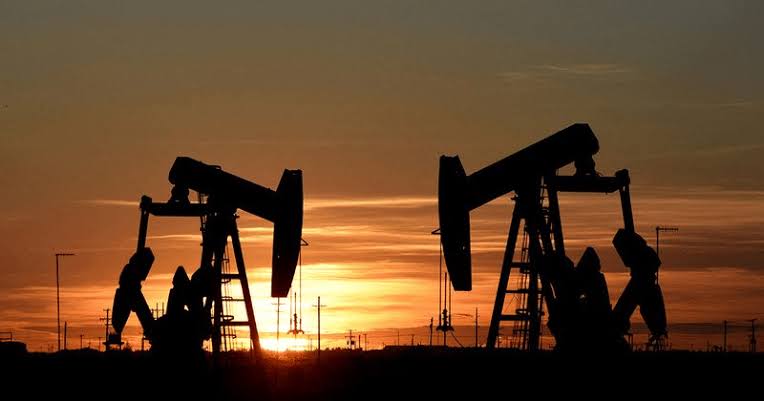
Brent crude settled at $87.33 a barrel on June 12, according to Reuters, its lowest closing level since early March. The decline reflected the possibility that the Strait of Hormuz could reopen more fully and that disrupted supply routes might normalise.
For Gulf investors, the diplomatic development removes one risk while introducing another. Lower regional tension supports business confidence, shipping, aviation and tourism. Lower oil prices can reduce hydrocarbon revenue, energy-company earnings and the fiscal resources available for public investment.
The risk premium is falling first
During conflict, oil contains both a supply component and a geopolitical-risk premium. Markets price the possibility of lost exports even before all physical barrels disappear.
As negotiations advance, that premium can unwind quickly. The price response may therefore be larger and faster than the actual change in daily exports.
This explains why oil fell even though Hormuz traffic remained constrained and the agreement was not final. Traders were adjusting the probability of a prolonged disruption.
Lower tension benefits non-oil sectors
A sustained reduction in conflict risk would be positive for airlines, airports, hotels, tourism companies, logistics operators, real estate and consumer businesses. These sectors are sensitive to travel confidence, insurance, freight routes and the movement of people and goods.
Banks could also benefit from lower credit risk and improved business activity, although the effect would differ according to loan exposure, interest rates and capital-market conditions.
For the UAE and Qatar, normal shipping and aviation networks are particularly important because their economic models depend on international connectivity. Saudi Arabia’s tourism, entertainment and investment programmes also benefit from a stable regional environment.
Energy companies face a different calculation
Lower oil prices reduce revenue for upstream producers unless they are offset by higher output. Integrated energy companies may have refining, trading or petrochemical businesses that respond differently, but the direction of crude prices remains central to earnings.
Investors should distinguish between a one-day price fall and a new medium-term range. The fiscal and corporate effects become more important when lower prices persist.
Fiscal sensitivity varies across the Gulf
Gulf governments have different fiscal break-even prices, reserve positions, debt levels and spending commitments. A decline from conflict-driven highs can still leave oil at a historically supportive level.
The question is whether prices settle high enough to fund budgets and strategic projects without increasing borrowing or delaying expenditure. Governments with large financial buffers have more flexibility, but even they must prioritise when revenue changes.
Saudi Arabia’s transformation programme, for example, includes major infrastructure and development commitments. The UAE has stronger diversification and financial buffers, but oil still contributes to public-sector capacity. Qatar’s gas revenues follow a different pricing and contract structure, yet shipping access remains essential.
Equity-market sector rotation is likely
If a peace agreement holds, investors may rotate away from defensive energy exposure and toward sectors that benefit from lower risk and stronger mobility. Airlines, property developers, ports, banks and consumer businesses could attract interest.
That rotation is not automatic. Valuations, earnings quality and balance sheets still matter. Some non-oil companies have already priced in aggressive growth expectations.
Bond and sukuk markets could gain from stability
Reduced geopolitical risk can support regional debt markets by narrowing risk premiums and improving foreign demand. Sovereign and high-grade corporate issuers may find a more favourable environment, particularly if global interest-rate expectations also ease.
Lower oil revenue can create additional borrowing needs, however. That may increase issuance even as pricing conditions improve.
The World Bank’s warning remains relevant
The World Bank said the conflict had materially reduced the 2026 growth outlook for the region, with the largest downgrade concentrated in GCC economies and Iraq. A durable settlement would improve that outlook, but lost activity is not recovered instantly.
Shipping schedules, tourism bookings, investment decisions and project timelines take time to normalise. Businesses may also retain higher contingency costs after experiencing the disruption.
What investors should monitor
The first indicator is physical Hormuz traffic. The second is war-risk insurance. The third is the shape of the oil futures curve, which shows how traders price supply over time. The fourth is government communication on budgets and project priorities.
Equity investors should watch earnings guidance from banks, airlines, energy companies, logistics operators and developers. Debt investors should track sovereign issuance and spreads.
A more balanced interpretation
A US–Iran agreement would be broadly positive for Gulf economic confidence. It would reduce the probability of severe disruption and improve the operating environment for non-oil sectors.
But falling oil prices are not unambiguously positive for hydrocarbon exporters. The market effect depends on the level at which prices stabilise, the speed of shipping recovery and how governments adjust spending.
The most likely outcome is not a single Gulf-wide trade. It is a sector rotation: lower security risk supporting connectivity and domestic-demand businesses, while energy and fiscal expectations are recalibrated to a less elevated oil price.
Interest rates and currencies complicate the picture
Most GCC currencies are pegged to the US dollar, so regional monetary conditions are strongly influenced by the Federal Reserve. A peace agreement that lowers energy prices could ease global inflation pressure and strengthen the case for lower US rates, although the timing would depend on broader data.
Lower rates would generally support credit growth, property demand and equity valuations. Yet a rapid fall in oil revenue could offset part of that benefit by reducing fiscal momentum. Investors should therefore consider the interaction between oil, interest rates and government spending rather than treating each variable independently.
Banks face both opportunity and risk
Gulf banks could benefit from improved business confidence, stronger transaction volumes and lower geopolitical risk. Trade finance and cross-border payments may recover as shipping normalises.
At the same time, lower interest margins can reduce profitability when policy rates decline. Loan quality may improve if the operating environment strengthens, but banks with concentrated exposure to contractors or energy-linked borrowers could still face pressure if budgets are revised.
Real estate and infrastructure may diverge
Lower risk premiums can support foreign property demand, particularly in Dubai, Abu Dhabi and Riyadh. Financing costs may also become more favourable if interest rates fall.
Infrastructure projects are more sensitive to public prioritisation. Governments may continue strategic transport, energy and digital projects while slowing schemes with weaker economic returns. Contractors and suppliers should examine funding certainty and payment schedules rather than relying only on announced project value.
Three scenarios for investors
1. Durable agreement and normal shipping
In the strongest scenario, Hormuz traffic and insurance capacity normalise, oil settles at a moderate level and governments retain confidence in strategic spending. Airlines, tourism, logistics, banks and domestic-demand equities could outperform.
2. Partial agreement with repeated disruptions
A framework may reduce major attacks without removing maritime uncertainty. Oil would remain volatile, insurers would price persistent risk and investors would favour companies with strong balance sheets and diversified revenue.
3. Negotiations fail
A breakdown could restore the risk premium quickly. Energy producers may gain from higher prices, but regional equities, aviation and project finance would likely face renewed pressure.
Portfolio implications
Investors should avoid assuming that peace automatically means lower returns for the Gulf. The region’s non-oil growth, demographic change and investment programmes remain important. The question is which assets benefit when the risk premium falls and which depend on unusually high oil prices.
Balanced exposure may therefore matter more than a directional bet. Banks, logistics, telecoms, utilities and high-quality consumer businesses can provide different sensitivities to the same macroeconomic shift. In fixed income, duration, sovereign quality and issuance calendars require separate analysis.
The central conclusion
A credible agreement would improve the Gulf’s risk profile, but the market response will not be uniform. The winners will be businesses that benefit from restored connectivity and lower financing risk without relying on unsustainably high public spending.
The appropriate investment approach is scenario-based, source-led and attentive to implementation. Headlines can move prices in hours; the economic transition will unfold through shipping data, budgets, earnings and policy decisions over months.