

RIYADH — July 4, 2026: International capital accounted for about 60% of Saudi private-market investment in 2025, underlining the Kingdom’s shift from regional opportunity to global allocation destination. The development is relevant to Telegraph Middle East readers because it connects directly with the publication’s core coverage of Gulf business, public policy, investment, markets and regional affairs.
The story is not only about a headline figure or a single official decision. It is about how the Middle East is adjusting to a period in which energy routes, capital flows, government policy, consumer confidence and geopolitical risk are moving together. In that environment, a development in one sector can quickly shape decisions in another.
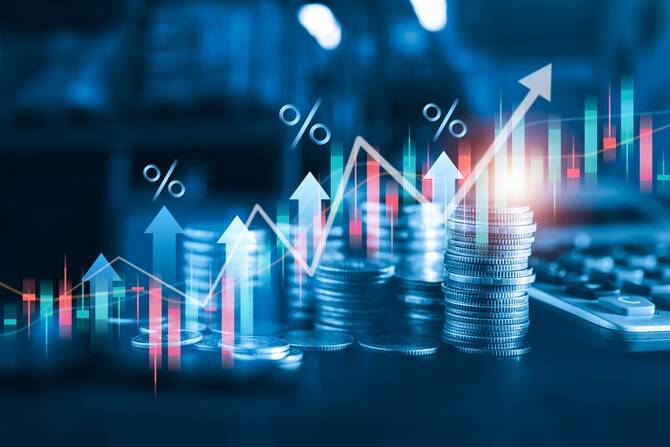
Foreign private capital investment in Saudi private markets reached SR20 billion, or $5.3 billion, in 2025.
The amount represented about 60% of total private capital investment in the Kingdom.
More than SR40 billion in foreign private capital has been invested in Saudi private markets since 2019.
The foreign investor base expanded from 28 investors in 2019 to 148 in 2025.
Taken together, these details indicate that the region is moving through a phase of cautious adjustment rather than simple recovery or deterioration. The facts point to measurable activity, but they also show why decision-makers remain careful about treating one week of data as a lasting trend.
Markets across the Gulf have become highly sensitive to the intersection of geopolitics and monetary policy. Investors are watching US interest-rate expectations, oil prices, company earnings and diplomatic signals at the same time. When any one of those variables changes sharply, local indices can move even if the underlying corporate story has not changed. This creates volatility but also opportunities for investors with longer time horizons.
The strongest companies in this environment are those with visible cash flows, manageable debt, credible government relationships and exposure to sectors supported by national transformation agendas. Banks, utilities, infrastructure operators and large property developers can all benefit from the region’s spending cycle, but they are also exposed to confidence shocks when conflict headlines intensify.
For international investors, the Gulf remains attractive because it combines liquidity, state-backed projects and structural growth. The concern is not whether the region has a long-term investment thesis. It does. The question is how much short-term discount should be attached to shipping risk, energy-market uncertainty and the pace at which diplomatic agreements become operational.
The numbers suggest a maturing private-capital ecosystem rather than isolated deal enthusiasm.
Venture capital remains the entry point, but private equity and private debt are becoming more relevant.
The next test is whether international capital builds local operating depth, not merely financial exposure.
For policymakers, the priority is to preserve confidence while avoiding overstatement. For companies, the priority is operational flexibility: the ability to adapt procurement, pricing, staffing, financing and customer strategy as conditions change. For investors, the key question is whether short-term uncertainty is masking durable structural growth or exposing weaknesses that were previously hidden by abundant liquidity.
The next indicators to watch will be official follow-up data, sector-level statements, shipping and travel activity, lending conditions, company guidance and the tone of regional diplomacy. Telegraph Middle East will continue to treat confirmed data as the basis for analysis and will avoid presenting projections or source-based claims as settled outcomes.
The wider context is that the Gulf is attempting to protect its reputation as a reliable centre for capital, trade and services while operating in a region where security developments can change the cost of doing business quickly. The strongest economies will be those able to maintain institutional clarity, transparent communication and practical continuity during periods of stress. That is why today’s news should be read as part of a wider operating picture rather than as an isolated event.
The wider context is that the Gulf is attempting to protect its reputation as a reliable centre for capital, trade and services while operating in a region where security developments can change the cost of doing business quickly. The strongest economies will be those able to maintain institutional clarity, transparent communication and practical continuity during periods of stress. That is why today’s news should be read as part of a wider operating picture rather than as an isolated event.