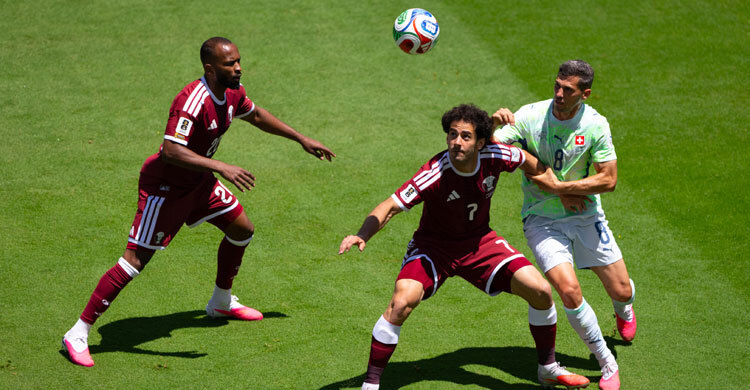



MIAMI — Coach Georgios Donis says the team will play proactively rather than defend passively against a Uruguay side managing key injury concerns.
Saudi intent
Saudi Arabia will approach its World Cup opener against Uruguay with the objective of winning rather than protecting a draw, coach Georgios Donis said before the match.
The statement sets an ambitious tone for a team facing an opponent with deep tournament experience.
Group context
Saudi Arabia and Uruguay are in a group that also includes Spain and Cape Verde. The opening result will influence the pressure and tactical options in the remaining fixtures.
A positive start would create momentum before the group’s later challenges.
Domestic league confidence
Donis pointed to the development of the Saudi Pro League and the experience Saudi players gain alongside high-profile international talent.
The important question is how that exposure translates into international tempo, decision-making and collective organisation.
Uruguay’s injury concerns
Uruguay has been managing injuries involving important players, including defensive and creative options. Coach Marcelo Bielsa has defended the team’s preparation and medical processes.
Injuries can change the balance of the match, but Uruguay’s depth and established style remain significant.
Tactical questions
Saudi Arabia must decide how aggressively to press and how to protect space when possession is lost. Uruguay is capable of attacking quickly and competing strongly in midfield.
Set pieces, second balls and game management are likely to be important.
Beyond the result
The match will attract attention across the Gulf because Saudi football has become a major investment and branding platform.
The national team’s performance will be assessed separately from the league’s commercial expansion, but the two narratives are increasingly connected.
Editorial context
A World Cup opener influences more than the group table. It shapes confidence, media attention, sponsorship value and the public narrative around a national team. For Saudi Arabia, performance is also viewed alongside the rapid development of the domestic football industry.
What to watch
Tournament football rewards control of risk. Teams must decide when to press, how high to defend and how many players to commit forward. An ambitious approach can create chances, but it must be balanced against transitions and set pieces.
Preparation time matters because international squads have limited opportunities to rehearse patterns. Fitness, travel, club workloads and the availability of key players can influence tactical choices as much as long-term philosophy.
The strongest assessment will come from execution rather than pre-match language: defensive distances, midfield control, chance quality and the ability to manage different phases of the match.
A World Cup opener influences more than the group table. It shapes confidence, media attention, sponsorship value and the public narrative around a national team. For Saudi Arabia, performance is also viewed alongside the rapid development of the domestic football industry.
Tournament football rewards control of risk. Teams must decide when to press, how high to defend and how many players to commit forward. An ambitious approach can create chances, but it must be balanced against transitions and set pieces.
Preparation time matters because international squads have limited opportunities to rehearse patterns. Fitness, travel, club workloads and the availability of key players can influence tactical choices as much as long-term philosophy.
The strongest assessment will come from execution rather than pre-match language: defensive distances, midfield control, chance quality and the ability to manage different phases of the match.
A World Cup opener influences more than the group table. It shapes confidence, media attention, sponsorship value and the public narrative around a national team. For Saudi Arabia, performance is also viewed alongside the rapid development of the domestic football industry.
Tournament football rewards control of risk. Teams must decide when to press, how high to defend and how many players to commit forward. An ambitious approach can create chances, but it must be balanced against transitions and set pieces.
Preparation time matters because international squads have limited opportunities to rehearse patterns. Fitness, travel, club workloads and the availability of key players can influence tactical choices as much as long-term philosophy.
The strongest assessment will come from execution rather than pre-match language: defensive distances, midfield control, chance quality and the ability to manage different phases of the match.
A World Cup opener influences more than the group table. It shapes confidence, media attention, sponsorship value and the public narrative around a national team. For Saudi Arabia, performance is also viewed alongside the rapid development of the domestic football industry.