

DOHA — The index reached 10,544 points in early trading as the regional de-escalation framework improved risk appetite.
Opening move
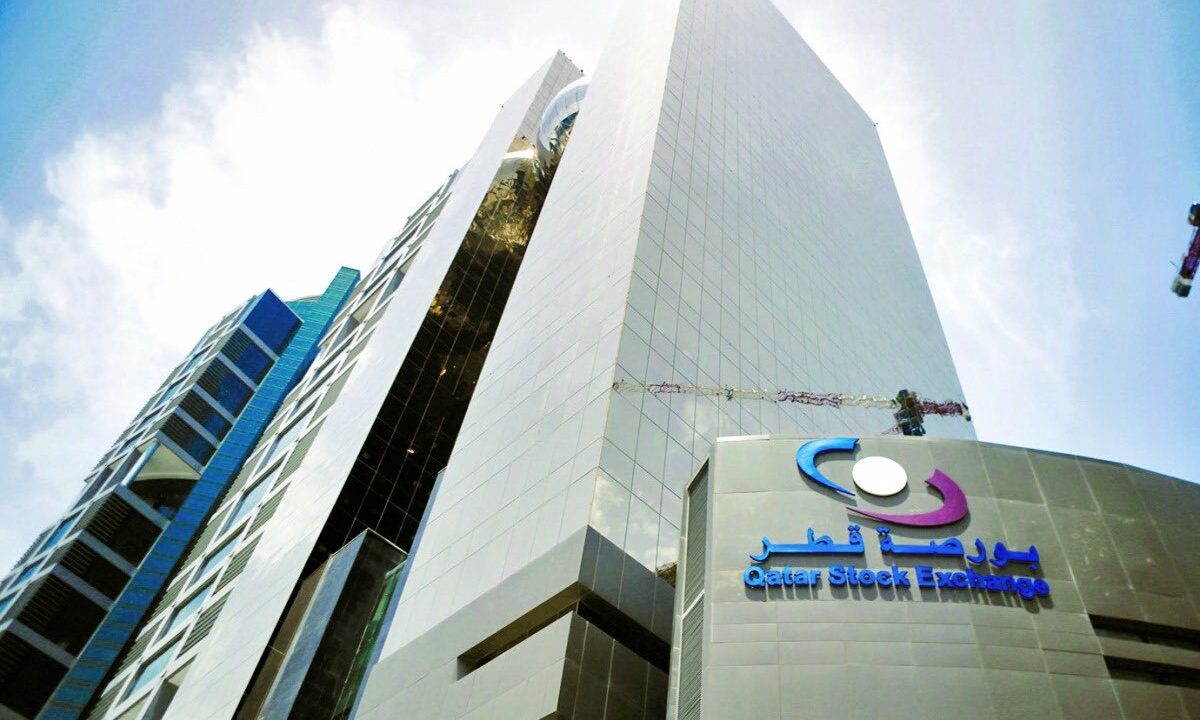
The Qatar Stock Exchange general index opened 83.23 points higher on Monday, a gain of 0.80%, to reach 10,544 points. Qatar News Agency reported that all sectors supported the advance.
The move followed a strong previous session and coincided with wider market relief after the US-Iran framework.
Why Qatar reacted positively
Qatar has direct exposure to Gulf navigation through its LNG trade and regional logistics. A lower risk of prolonged disruption supports the outlook for exports, finance and business confidence.
Banks often have a large influence on the Qatari index, making changes in regional risk and funding expectations especially important.
What an opening gain does not show
Early trading can be influenced by overnight news and may not represent the final session. Turnover, closing breadth and institutional participation provide a better view of conviction.
Investors should also distinguish between a broad recovery and moves concentrated in a small number of large companies.
Energy and interest rates
Lower oil can reduce inflation pressure globally, but Qatar’s market also reflects the revenue and investment implications of energy prices. The effect is not uniformly positive or negative.
Changing global bond yields can affect valuations and foreign flows into regional equities.
Next indicators
The closing index, trading value and performance of banks, industrials, transport and real estate will show whether the opening strength was sustained.
News on Hormuz shipping and the formal signing of the framework will remain central.
Editorial context
The first market reaction is a repricing of probability, not proof that every economic consequence has disappeared. Investors reduce the premium attached to war, disrupted shipping and higher inflation. They then reassess earnings, interest rates, government spending and the speed at which supply chains can return to normal.
What to watch
Banks, transport companies and consumer-facing businesses can benefit when geopolitical risk falls, while oil producers may lose some of the windfall associated with elevated crude prices. This produces a mixed regional picture: broader indices can rise even as energy shares weaken.
Central-bank expectations are another transmission channel. Lower oil prices can reduce future inflation pressure, but policymakers will also consider the earlier shock, government subsidies, wage behaviour and the time required to rebuild inventories. One day of market relief does not automatically translate into an immediate change in interest-rate policy.
Liquidity and foreign participation matter as much as index direction. A durable improvement would normally be accompanied by stronger turnover, narrower risk spreads and sustained buying across sectors. A short rally driven mainly by headlines can reverse if implementation is delayed.
The first market reaction is a repricing of probability, not proof that every economic consequence has disappeared. Investors reduce the premium attached to war, disrupted shipping and higher inflation. They then reassess earnings, interest rates, government spending and the speed at which supply chains can return to normal.
Banks, transport companies and consumer-facing businesses can benefit when geopolitical risk falls, while oil producers may lose some of the windfall associated with elevated crude prices. This produces a mixed regional picture: broader indices can rise even as energy shares weaken.
Central-bank expectations are another transmission channel. Lower oil prices can reduce future inflation pressure, but policymakers will also consider the earlier shock, government subsidies, wage behaviour and the time required to rebuild inventories. One day of market relief does not automatically translate into an immediate change in interest-rate policy.
Liquidity and foreign participation matter as much as index direction. A durable improvement would normally be accompanied by stronger turnover, narrower risk spreads and sustained buying across sectors. A short rally driven mainly by headlines can reverse if implementation is delayed.
The first market reaction is a repricing of probability, not proof that every economic consequence has disappeared. Investors reduce the premium attached to war, disrupted shipping and higher inflation. They then reassess earnings, interest rates, government spending and the speed at which supply chains can return to normal.
Banks, transport companies and consumer-facing businesses can benefit when geopolitical risk falls, while oil producers may lose some of the windfall associated with elevated crude prices. This produces a mixed regional picture: broader indices can rise even as energy shares weaken.