


DUBAI — The agreement marks the strongest move towards ending the conflict, but formal signing, implementation and the nuclear question remain unresolved.
What has been agreed
The United States and Iran have announced a preliminary framework intended to halt their conflict, end the American naval blockade of Iranian ports and restore navigation through the Strait of Hormuz. Reuters reported that the memorandum is expected to be formally signed in Switzerland later in the week, meaning the political breakthrough has not yet completed its legal and operational stages.
The framework is described as providing an immediate cessation of military operations and a 60-day period for wider negotiations. Those talks are expected to address Iran’s nuclear programme, sanctions relief and the handling of frozen Iranian assets. Public descriptions from the parties are not identical, so the final signed text will be more important than summaries issued during the announcement phase.
Why Hormuz is central
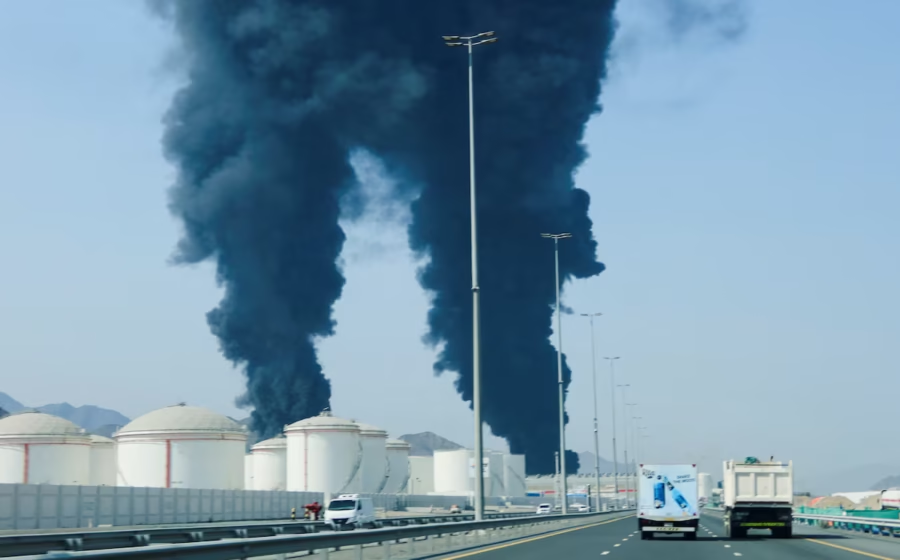
The Strait of Hormuz is the agreement’s most immediate global economic component. The waterway is a critical route for oil and liquefied natural gas exports from the Gulf. Disruption has affected energy prices, shipping schedules, insurance and inflation expectations far beyond the region.
Political leaders have spoken about reopening the strait, but commercial traffic will depend on mine clearance, navigation rules, naval coordination and insurance approval. The distinction between declaring the route open and restoring normal traffic is therefore significant.
What remains unresolved
Iran’s nuclear programme remains the largest strategic issue. The framework creates time for negotiation but does not by itself settle enrichment, stockpiles, inspections or the sequence of sanctions relief. Those subjects have derailed earlier diplomatic efforts and will require technical as well as political agreements.
Israel was not presented as a direct party to the framework and has resisted calls to withdraw from security zones in Lebanon, Syria and Gaza. That creates a risk that a bilateral US-Iran understanding may not immediately end every regional front.
What happens next
The next test is whether the memorandum is signed as planned and whether military activity stops in practice. Editors should monitor official statements from Washington, Tehran, Islamabad, Doha and the governments directly affected by the conflict.
Commercial indicators will also be useful: verified vessel transits, lower war-risk premiums, reopened ports and the restoration of airline schedules would provide evidence that de-escalation is moving from diplomacy into the real economy.
Editorial context
Implementation will matter more than announcement language. A memorandum, framework or political understanding may establish direction, but governments, armed actors, regulators and commercial institutions still need a shared sequence for carrying it out. The most credible indicators will be observable steps: a durable halt in attacks, formal instructions to forces, access for monitors, published sanctions decisions and safe commercial movement through the Strait of Hormuz.
What to watch
The distinction between a ceasefire, a preliminary memorandum and a final settlement is especially important in a fast-moving regional crisis. Markets can reprice immediately, while security arrangements and legal obligations take much longer. Telegraph Middle East therefore treats claims about future implementation as conditional until they are confirmed by the responsible institutions and reflected in events on the ground.
Regional diplomacy is also linked directly to economic confidence. Airlines, insurers, shipping companies, banks and investors respond not only to the wording of an agreement but to whether it reduces operational risk. A diplomatic breakthrough can improve sentiment within hours, yet the recovery of physical trade, transport and investment may require weeks of verified stability.
For Gulf governments, the immediate objective is to convert de-escalation into predictable rules. That includes freedom of navigation, protection of civilian infrastructure, clear communication between militaries and a process for resolving alleged violations. Without those mechanisms, even a limited incident could revive uncertainty and delay commercial normalisation.