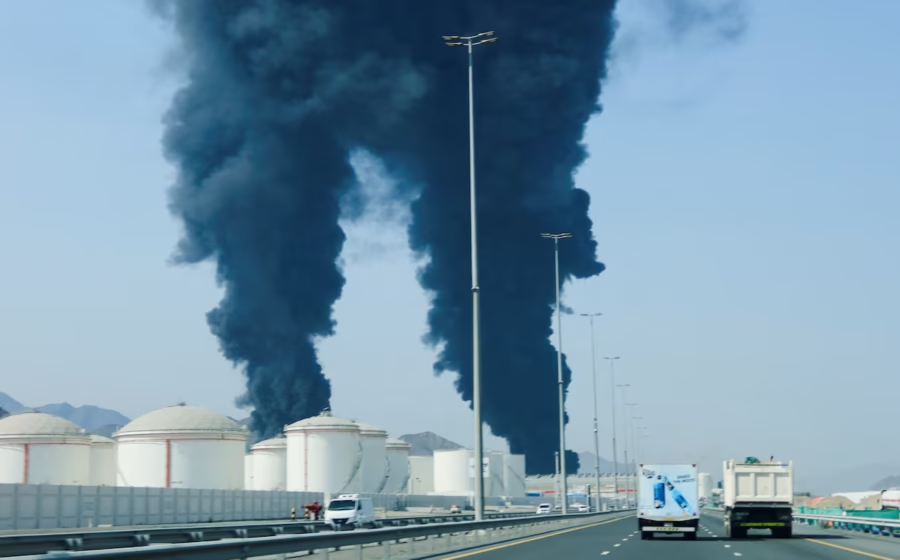


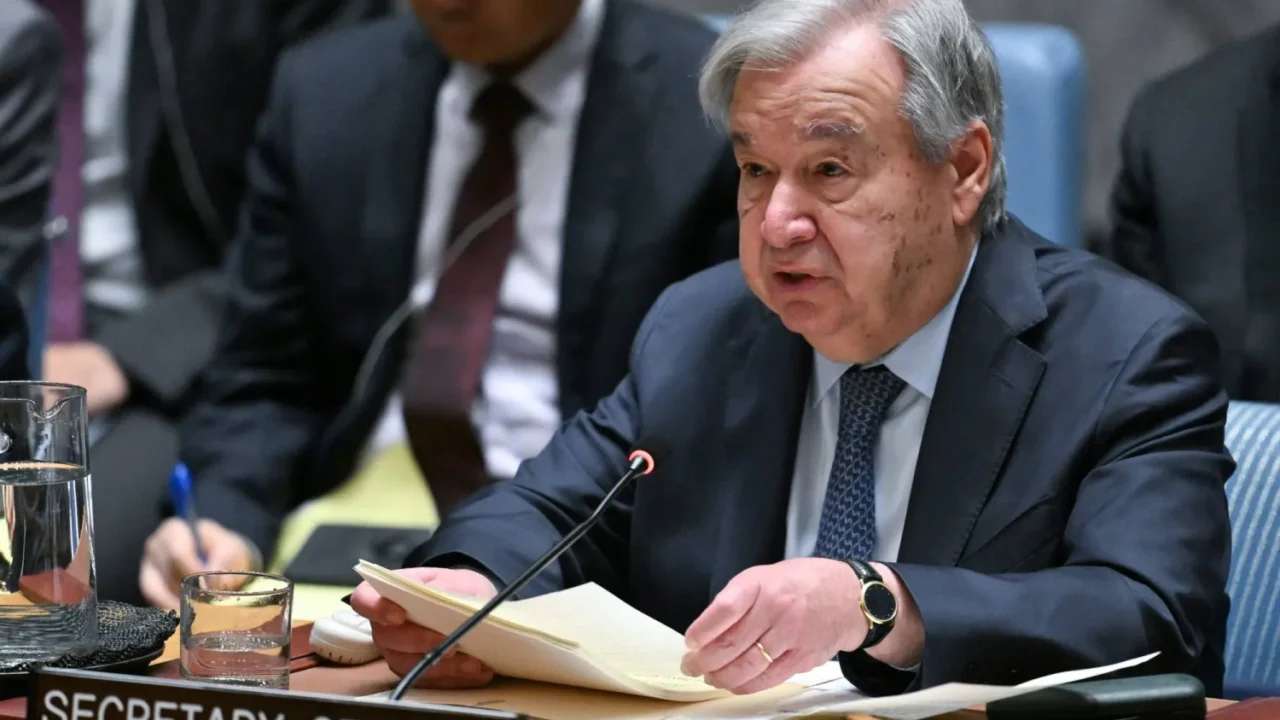
DUBAI — Antonio Guterres warned that renewed escalation could produce severe and unpredictable regional consequences. According to reporting by Reuters, the latest development adds a new layer to an already fast-moving regional story.
What happened
The UN secretary-general urged all parties to restore full ceasefire compliance. He highlighted risks across Iran, Lebanon and Gaza.
The UN also continued to call for humanitarian access and a broader Gulf security framework. The public record should be read carefully because developing stories can change as agencies, governments or institutions release additional information.
Why it matters
Regional economic normalisation depends on practical compliance across multiple conflict fronts, not one diplomatic announcement.
For Gulf states, diplomacy is inseparable from trade routes, energy security, aviation and investor confidence. A public statement can move markets immediately, while implementation normally depends on several institutions and verification mechanisms.
For policymakers, the challenge is to communicate clearly enough that institutions, businesses and the public understand what has changed and what has not. Uncertainty can itself become an economic cost when it delays travel, hiring, investment or purchasing decisions.
What to watch next
Monitor humanitarian access, reported violations and Security Council diplomacy.
Editors should continue to compare subsequent announcements with the original source. Any material change to the date, figure, legal status, attribution or operational outcome should be reflected in the article’s updated time and, where necessary, a visible correction or clarification note.