


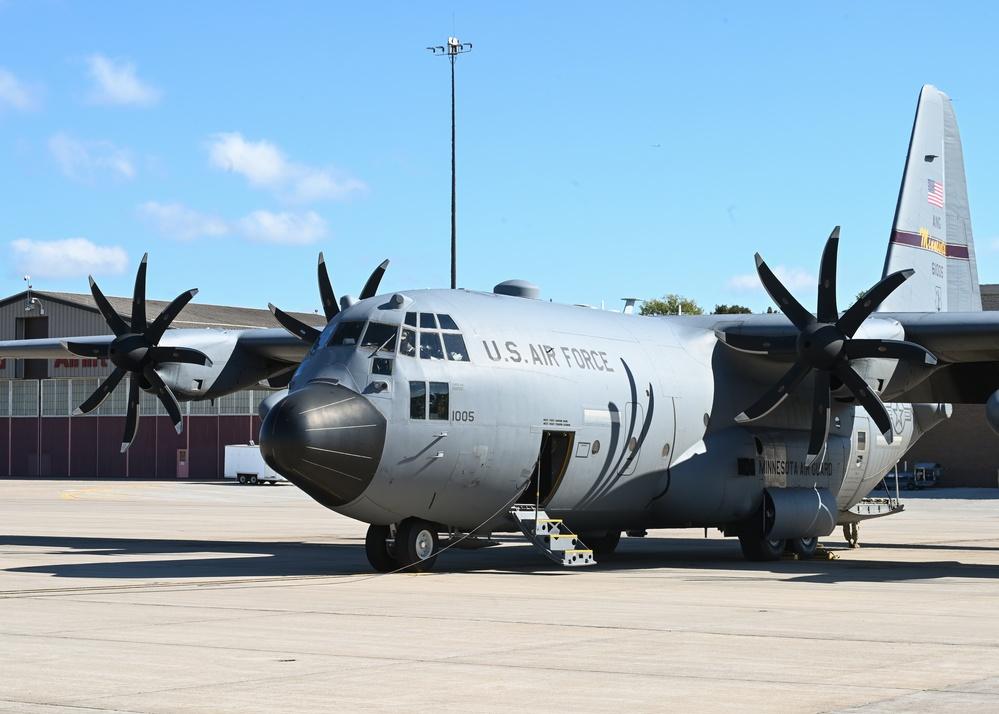
An Irish national has been indicted in the United States over the alleged destruction of a US Air National Guard aircraft valued at approximately $60 million at Shannon Airport in County Clare, Ireland. The indictment, unsealed in New York on 17 November, accuses 48-year-old Daithi O’Corrain, also known as David Curran, of breaking into the C-130H Hercules aircraft and causing damage that left it permanently inoperable.
US prosecutors allege that O’Corrain breached the airport’s security perimeter on 11 April 2026, entered the aircraft and spent several hours damaging its internal systems and exterior. He faces a charge of destruction of government property, which carries a maximum potential sentence of 10 years in prison if he is convicted.
The case has attracted attention on both sides of the Atlantic because of the scale of the alleged damage, the aircraft’s military role and wider questions about security at Shannon Airport, a significant transit point for US military personnel and equipment travelling between North America and overseas deployments.
Prosecutors describe a carefully prepared operation
According to the indictment filed in the US District Court for the Southern District of New York, O’Corrain entered Shannon Airport during the early hours of 11 April and made his way towards a C-130H parked on a taxiway.
The aircraft belonged to the US Air National Guard and was reportedly travelling to another country on a military assignment. Prosecutors allege that O’Corrain forced open its rear crew door by breaking the locking mechanism before barricading himself inside with tools and other materials he had brought to the airport.
The indictment describes extensive damage to the aircraft’s internal systems. Prosecutors allege that wire bundles and hydraulic lines were cut, cockpit instruments were destroyed and air ducts were punctured. They also say that a liquid oxygen line was crimped, rather than cut, and that capsules containing gallium were brought aboard.
Gallium is a metal that can damage aluminium and other materials under certain conditions. Prosecutors allege that its presence was part of an effort to inflict extensive damage on an aircraft whose structure is substantially made from aluminium.
The indictment further states that the aircraft’s crew returned several hours later and noticed O’Corrain through a cockpit window. They alerted airport security after spotting him inside.
Crew alerted security after discovering the intruder
US prosecutors allege that, after being discovered, O’Corrain climbed out through a hatch in the aircraft’s roof. Members of the crew reportedly saw him striking the aircraft’s exterior with an axe.
He is also accused of pouring unidentified substances into the aircraft and placing objects, including ball bearings, inside its fuel tanks.
Irish law enforcement officers arrived shortly afterwards and apprehended him. The aircraft was subsequently assessed as beyond operational repair.
According to the US Department of Justice, the damage rendered the C-130H inoperable and it will not return to active flight status. Prosecutors estimate its value at approximately $60 million.
The indictment also alleges that the operation followed months of preparation. Investigators say O’Corrain searched online for information about the aircraft’s construction, acquired tools and materials, researched locations where the airport perimeter could be breached and subscribed to an application tracking aircraft movements.
Prosecutors further allege that he researched previous security incidents involving US military aircraft at Shannon and attempted to contact someone associated with an earlier incident.
FBI officials described the alleged conduct as deliberate and planned rather than spontaneous vandalism. The indictment, however, represents the prosecution’s allegations and does not establish guilt.
Irish and US authorities pursue the case
O’Corrain was arrested by Irish authorities following the April incident and faced proceedings in Ireland. The US indictment now adds a federal charge of destruction of government property.
The charge was announced by Jamie McDonald, the US Attorney for the Southern District of New York, alongside James C. Barnacle Jr, the FBI’s assistant director in charge of its New York field office.
The US Department of Justice said the investigation involved cooperation between American agencies and the Irish government. The FBI, US Air Force Office of Special Investigations and other federal bodies assisted the inquiry, according to the department.
The maximum sentence for the US charge is 10 years’ imprisonment. That figure is the statutory maximum, not a prediction of the sentence that would be imposed if O’Corrain were convicted.
As of the announcement on 17 November, US authorities had not publicly confirmed a date for his arraignment on the new charge. The Associated Press reported that he was not in US custody at that time. The public announcement also did not set out whether an extradition request had been made or what steps would follow in relation to the American proceedings.
The case therefore involves legal processes in two jurisdictions, with the Irish proceedings and any potential US prosecution subject to their respective legal requirements.
Shannon Airport’s security record under scrutiny
The incident has renewed attention on security at Shannon Airport, which has long been an important stopover and transit facility for US military aircraft and personnel.
The US indictment refers to three earlier incidents at the airport during 2025. In May of that year, three people were arrested after a van was allegedly driven through the airport’s perimeter fence. Later that month, three people allegedly entered the runway area and sprayed paint on a US military aircraft, temporarily making it inoperable.
A further breach was reported in November 2025, when three people allegedly entered a restricted area in a van and approached a US military C-40 aircraft before being intercepted by airport security.
The incidents differ in their alleged circumstances and severity, but their inclusion in the indictment places the April case within a broader pattern of unauthorised access incidents at the facility.
Shannon’s role in military transit has also made it a focus of political debate in Ireland. Critics of the airport’s use by US forces have raised concerns about Ireland’s military neutrality and the country’s relationship with American overseas operations. Supporters of O’Corrain have described him as an independent peace activist and linked the alleged attack to opposition to US involvement in conflicts in the Middle East.
Those political claims provide context for the public debate surrounding the case, but they do not determine the criminal allegations or establish the defendant’s motive. The US indictment focuses on the alleged breach, the damage to government property and the preparations prosecutors say preceded the incident.
A costly loss for the US military
The destruction of a C-130H represents a significant loss of military equipment. The Hercules is a four-engine turboprop transport aircraft widely used by US forces for carrying personnel, cargo and equipment, as well as supporting a range of operational and logistical missions.
The aircraft’s ability to operate from a variety of airfields has made the C-130 family a longstanding part of military transport fleets. Its use in overseas assignments means that the loss of an individual aircraft can have implications for logistical planning and operational availability.
In this case, US prosecutors say the aircraft was worth approximately $60 million and will not return to service. The department has not publicly provided a detailed breakdown of the valuation or explained whether the aircraft will be replaced.
The incident also raises questions about the protection of military assets while they are parked at civilian airports outside the United States. Shannon is a civilian international airport, but its role in transatlantic military movements means that security arrangements must account for a range of aircraft and passengers.
The investigation and subsequent legal proceedings may provide further information about how the breach occurred, the security response and the coordination between Irish and US authorities.
For now, O’Corrain remains accused rather than convicted. The US case will have to establish the allegations in court, while any further proceedings in Ireland will follow the country’s own legal process. The indictment marks a significant escalation in the legal consequences of the April incident, but the final outcome will depend on the evidence and the decisions of the courts.