

The Qatari-owned vessel was struck by unidentified objects in the Arabian Gulf on 30 October. Doha has launched an investigation, while the UAE warns that attacks on energy carriers threaten maritime security and international supplies.
Qatar has strongly condemned an attack on its liquefied natural gas (LNG) carrier Al Mayeda in the Arabian Gulf, warning that the incident threatens commercial shipping, regional stability and the security of global energy supplies.
The vessel, owned by Qatar Gas Transport Company, commonly known as Nakilat, was struck by unidentified objects while sailing in Gulf waters on the evening of 30 October, according to a company announcement reported by the Qatar News Agency and Anadolu Agency.
Nakilat said there were no injuries among the crew and no environmental damage was reported. However, the company did not disclose the exact location of the incident or identify the objects responsible for striking the vessel.
Qatar’s Ministry of Foreign Affairs condemned the attack on 1 November, describing it as a dangerous act that threatens maritime navigation and international energy security. The ministry also said the relevant authorities had initiated investigations to establish the circumstances of the incident and identify those responsible.
The United Arab Emirates joined Qatar in condemning the attack on 2 November, expressing solidarity with Doha and warning of the potential consequences for commercial shipping and energy transportation.
The incident has renewed concerns about the vulnerability of energy carriers operating in the Arabian Gulf, particularly as tensions involving Iran, the United States and other regional actors continue to affect maritime security.
Qatar warns of risks to energy supplies and maritime navigation
In its official statement, Qatar’s Ministry of Foreign Affairs said the attack represented a serious threat to the safety of maritime navigation and the security of global energy supplies.
Doha also stated that it reserved the right to take all necessary measures, in accordance with international law and the United Nations Charter, to protect its assets, safeguard its interests and ensure the safety of its vessels and crews.
The ministry warned that attacks on energy carriers could have consequences extending beyond the immediate damage to individual ships. It specifically highlighted the potential environmental risks associated with attacks on LNG vessels and the possible impact on the marine environment and water security in the region.
LNG carriers transport natural gas in liquid form at extremely low temperatures. Although the precise risks depend on the nature of an incident and the condition of the vessel, damage to specialised containment systems or associated infrastructure can create serious safety and environmental challenges.
Qatar’s emphasis on environmental consequences reflects the strategic importance of protecting vessels carrying large quantities of energy products through heavily trafficked maritime corridors.
The ministry did not publicly attribute the attack to any country or armed group. The investigation is expected to establish the circumstances of the incident before responsibility can be determined.
What happened to the Al Mayeda?
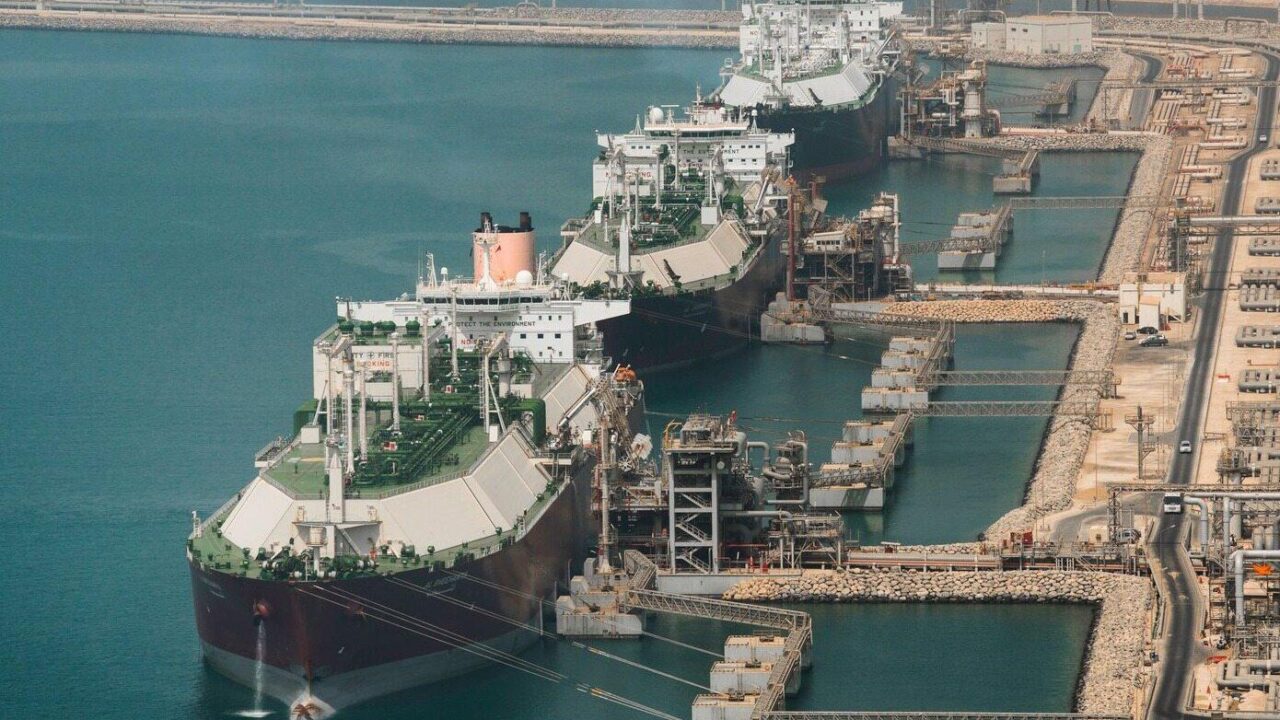
Al Mayeda is owned by Nakilat, a Qatari company that plays a central role in transporting LNG as part of the country’s energy supply chain.
The company announced that the vessel had been struck by unidentified objects while sailing in the Arabian Gulf on Friday evening, 30 October. The incident was subsequently reported by the Qatar News Agency and international media.
Nakilat confirmed that all crew members were safe and that there had been no environmental impact. However, it did not specify whether the objects were missiles, drones, projectiles or another type of weapon.
The absence of an identified weapon or confirmed perpetrator makes it difficult to establish whether the vessel was deliberately targeted or caught up in a wider military operation.
The lack of a publicly disclosed precise location also limits the ability to connect the incident to a particular maritime route or military activity.
For now, the confirmed information remains limited: the LNG carrier was struck, the crew were unharmed, no environmental damage was reported and an investigation was initiated.
These distinctions are important because speculation about the weapon, intended target or responsibility could distort the wider security assessment.
UAE joins Qatar in condemning the attack
The United Arab Emirates condemned the targeting of Al Mayeda on 2 November, describing the incident as a serious threat to maritime navigation and global energy supplies.
In a statement, the UAE Ministry of Foreign Affairs expressed solidarity with Qatar and called for international law to be respected. It also stressed the importance of protecting commercial vessels, energy carriers and their crews.
Abu Dhabi warned that attacks on vessels operating through critical waterways could undermine regional stability and create wider economic consequences.
The UAE’s response is significant because the security of Gulf shipping is a shared concern among regional energy producers. Qatar and the UAE both depend on reliable maritime routes to support international trade, energy exports and wider economic activity.
Although the two countries have separate energy infrastructure and export systems, instability in the Arabian Gulf can affect shipping confidence across the region.
The coordinated concern expressed by Doha and Abu Dhabi also highlights the diplomatic importance of preventing further attacks on commercial vessels, regardless of their ownership or destination.
Why LNG shipping matters to the global economy
Qatar is one of the world’s leading LNG exporters, making maritime security an essential component of its economic and energy strategy.
Unlike pipeline exports, LNG transportation depends on specialised vessels capable of carrying liquefied natural gas across international shipping routes. Any disruption to these vessels can complicate delivery schedules and create uncertainty for buyers.
The Arabian Gulf is particularly important because commercial vessels operating from regional energy terminals must navigate a maritime environment increasingly affected by geopolitical tensions.
The Strait of Hormuz, which connects the Gulf with the Gulf of Oman and the wider Indian Ocean, is among the world’s most important energy chokepoints. Disruption to traffic through the strait can affect the movement of oil, LNG and other essential commodities.
An attack on a Qatari LNG carrier therefore carries significance beyond the immediate safety of one vessel. It raises questions about the security of the infrastructure and transportation networks that support international gas markets.
For importing economies in Asia, including India, Qatar’s LNG exports are an important component of energy procurement. Prolonged disruption to shipping could complicate supply arrangements, increase transportation costs and add pressure to energy markets.
However, the Al Mayeda incident has not, on the available evidence, established a disruption to Qatar’s LNG production or export volumes. Nor has it demonstrated that LNG deliveries have been suspended.
The distinction between a security incident involving an individual carrier and a wider interruption to energy supplies is important when assessing the economic consequences.
Maritime tensions add to pressure on Gulf security
The attack comes amid continuing maritime security concerns across the Arabian Gulf, the Strait of Hormuz and the Gulf of Oman.
Commercial vessels have faced repeated security incidents in recent months as the wider confrontation involving Iran, the United States and regional actors has affected the maritime environment.
These developments have increased the responsibilities of shipping companies, maritime authorities and governments responsible for protecting commercial navigation.
For shipowners, the risks extend beyond the possibility of direct attacks. Uncertainty over safe routes, insurance conditions, voyage schedules and crew welfare can influence decisions about operating in high-risk waters.
War-risk insurance premiums may also increase when insurers reassess the security environment. Any such changes depend on the severity and frequency of incidents, the vessel’s route and the assessments of individual underwriters.
For Gulf governments, protecting maritime traffic is not simply a commercial responsibility. It is closely connected to national security, energy exports and regional diplomatic relations.
The attack on Al Mayeda has also raised questions about how governments should respond when commercial energy infrastructure becomes exposed to military confrontation.
Qatar’s decision to reserve its right to take measures under international law indicates that Doha considers the incident a matter of national interest. However, the government has not publicly announced a military response or attributed responsibility.
Investigation will determine the next steps
The immediate priority remains establishing how Al Mayeda was struck and identifying those responsible.
The investigation will need to clarify the nature of the unidentified objects, the precise location of the incident and whether the vessel sustained damage that could affect its future operations.
The findings may also influence how Qatar and other Gulf states approach maritime security cooperation and the protection of energy carriers.
For now, the incident has not resulted in reported crew casualties or environmental damage. Nevertheless, the attack has drawn strong diplomatic reactions from Qatar and the UAE because of the wider implications for shipping and energy security.
As regional tensions continue, the safety of commercial vessels will remain a central concern for Gulf governments and international energy markets.
The Al Mayeda incident is a reminder that the consequences of regional conflict are not confined to military installations or national borders. Commercial vessels carrying essential energy supplies can also become exposed to the risks of escalation, with potential consequences for international trade and economies far beyond the Gulf.