

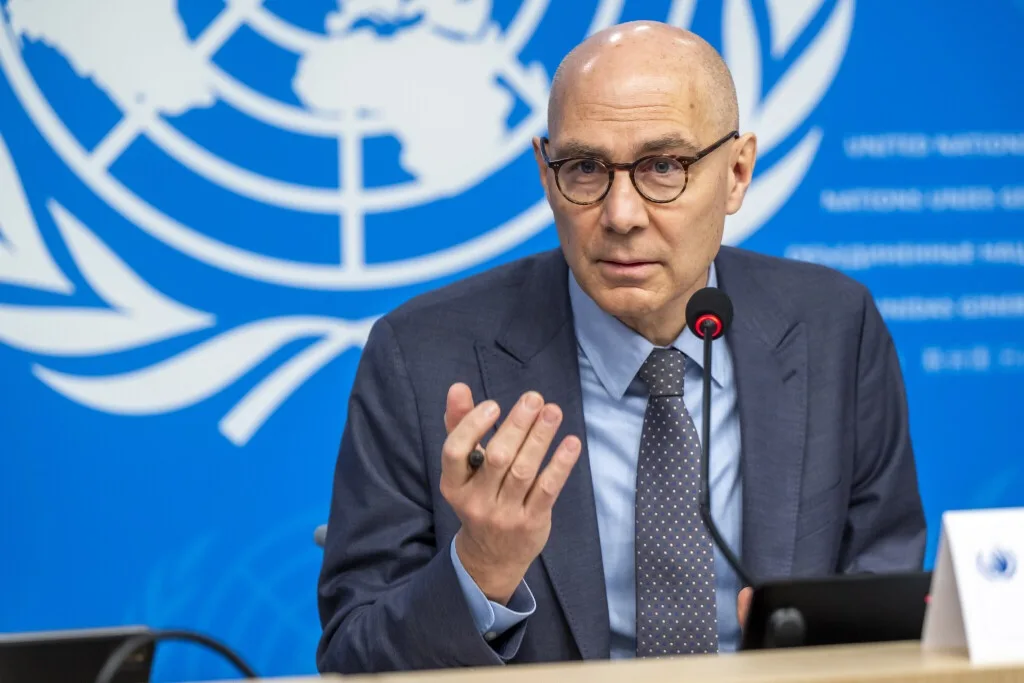
GENEVA — Volker Türk called for good-faith implementation while raising concern over continuing violence and the humanitarian impact across the region.
A cautious welcome
The United Nations human rights chief has welcomed the US-Iran framework while urging restraint and rapid implementation in good faith. Reuters reported that Volker Türk presented the agreement as an opportunity to move towards a lasting resolution after months of conflict and severe regional disruption.
His response focused on the need to convert political commitments into protection for civilians. That emphasis is important because a pause between governments does not automatically end violence involving other states or armed groups.
Human rights and accountability
Türk also raised concern about Israeli strikes in Lebanon and attacks by Hezbollah. He called for hostilities to stop and for alleged breaches of international law to be investigated.
Accountability can become politically difficult during negotiations, but it remains relevant to victims, displaced communities and the legitimacy of any settlement. A peace process that ignores documented harm may struggle to build public confidence.
Civilian protection
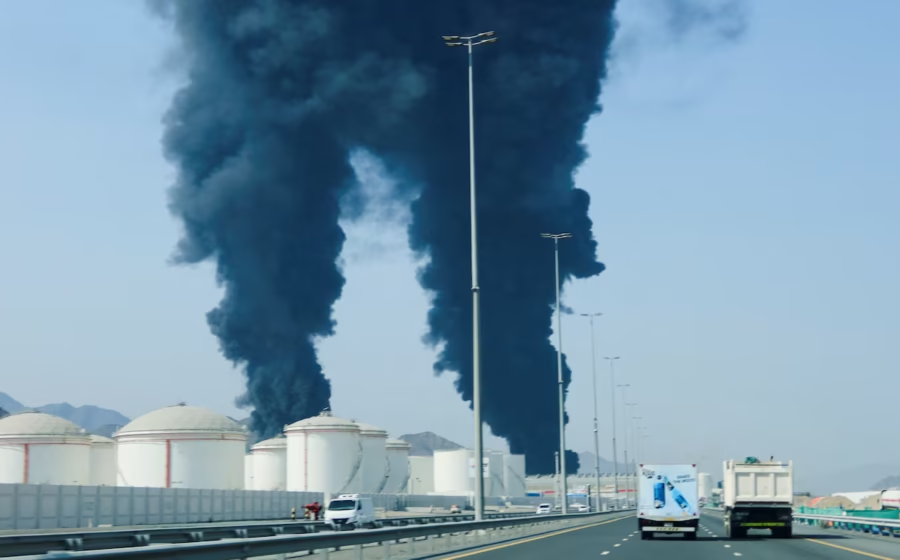
The humanitarian effects of the conflict include deaths, displacement, damage to homes and infrastructure, and disruption to access to services. The first measure of success will therefore be a reduction in civilian exposure, not only improved diplomatic language.
Humanitarian organisations need safe access, predictable movement and reliable communication. Those requirements should be incorporated into implementation rather than treated as a later stage.
Technology and warfare
The UN rights chief also used his wider address to highlight concern about drone warfare and autonomous systems. The regional conflict has shown how rapidly remotely operated and increasingly automated weapons can expand the geographic reach of hostilities.
Human oversight, transparent rules and investigation mechanisms are likely to become more prominent in future security discussions.
The next UN role
The United Nations may support monitoring, humanitarian coordination and diplomatic follow-up, although the exact role will depend on the parties. Any mandate should be clearly defined to avoid duplication and political disagreement.
The strongest signal would be consistent compliance across regional fronts. Continued attacks would weaken the credibility of the framework and increase pressure for international intervention.
Editorial context
Implementation will matter more than announcement language. A memorandum, framework or political understanding may establish direction, but governments, armed actors, regulators and commercial institutions still need a shared sequence for carrying it out. The most credible indicators will be observable steps: a durable halt in attacks, formal instructions to forces, access for monitors, published sanctions decisions and safe commercial movement through the Strait of Hormuz.
What to watch
The distinction between a ceasefire, a preliminary memorandum and a final settlement is especially important in a fast-moving regional crisis. Markets can reprice immediately, while security arrangements and legal obligations take much longer. Telegraph Middle East therefore treats claims about future implementation as conditional until they are confirmed by the responsible institutions and reflected in events on the ground.
Regional diplomacy is also linked directly to economic confidence. Airlines, insurers, shipping companies, banks and investors respond not only to the wording of an agreement but to whether it reduces operational risk. A diplomatic breakthrough can improve sentiment within hours, yet the recovery of physical trade, transport and investment may require weeks of verified stability.
For Gulf governments, the immediate objective is to convert de-escalation into predictable rules. That includes freedom of navigation, protection of civilian infrastructure, clear communication between militaries and a process for resolving alleged violations. Without those mechanisms, even a limited incident could revive uncertainty and delay commercial normalisation.
Implementation will matter more than announcement language. A memorandum, framework or political understanding may establish direction, but governments, armed actors, regulators and commercial institutions still need a shared sequence for carrying it out. The most credible indicators will be observable steps: a durable halt in attacks, formal instructions to forces, access for monitors, published sanctions decisions and safe commercial movement through the Strait of Hormuz.
The distinction between a ceasefire, a preliminary memorandum and a final settlement is especially important in a fast-moving regional crisis. Markets can reprice immediately, while security arrangements and legal obligations take much longer. Telegraph Middle East therefore treats claims about future implementation as conditional until they are confirmed by the responsible institutions and reflected in events on the ground.
Regional diplomacy is also linked directly to economic confidence. Airlines, insurers, shipping companies, banks and investors respond not only to the wording of an agreement but to whether it reduces operational risk. A diplomatic breakthrough can improve sentiment within hours, yet the recovery of physical trade, transport and investment may require weeks of verified stability.