

Skip to content
Middle East Edition
Developing Lebanon Fighting Eases, but Displaced Families Are Warned Not to Rush Home 5 minutes ago

Geopolitics & Diplomacy

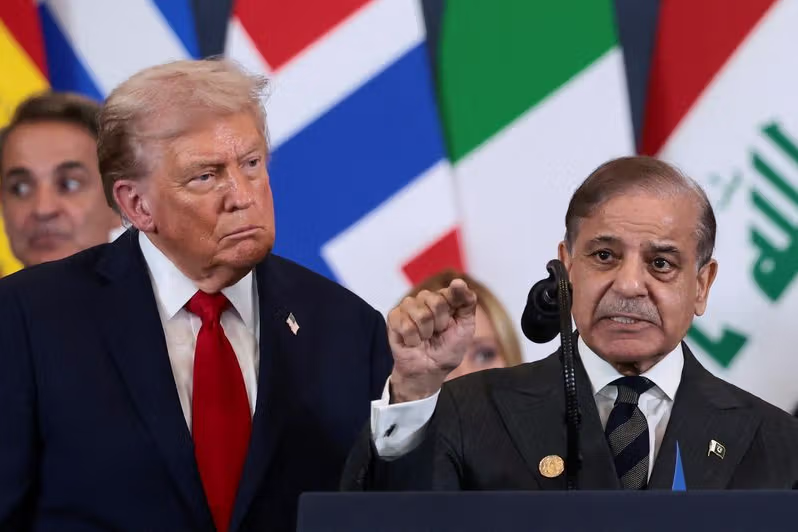
Pakistan Says Final US–Iran Text Is Ready as Tehran Questions the Timetable

Pakistan’s prime minister said the wording was agreed and electronic signing was expected within 24 hours.

Geopolitics & Diplomacy Desk Published June 14, 2026 · 7:28 am Updated June 14, 2026 · 7:40 am 2 min read
Pakistan Says Final US–Iran Text Is Ready as Tehran Questions the Timetable
Telegraph Middle East editorial artwork — Telegraph Middle East editorial artwork
Quick Read Newsroom reviewed
  • Pakistan said the final wording of the proposed framework had been reached.
  • The government described electronic signing as the next expected step.
  • Iranian messaging was more guarded, showing that mediator statements were moving faster than Tehran’s public confirmation.

DUBAI — Pakistan’s prime minister said the wording was agreed and electronic signing was expected within 24 hours. Reuters reported the underlying development, which Telegraph Middle East has reviewed for its regional business and policy significance.

What happened

Pakistan said the final wording of the proposed framework had been reached. The government described electronic signing as the next expected step.

Iranian messaging was more guarded, showing that mediator statements were moving faster than Tehran’s public confirmation. The public record should be read carefully because developing stories can change as agencies, governments or institutions release additional information.

Why it matters

Pakistan’s central mediation role gives its statements weight, but a durable settlement requires identical commitments and interpretations from the parties themselves.

For Gulf states, diplomacy is inseparable from trade routes, energy security, aviation and investor confidence. A public statement can move markets immediately, while implementation normally depends on several institutions and verification mechanisms.

For readers, the distinction between an announcement, a draft, a signed decision and implemented policy is essential. Telegraph Middle East will update this article if the source, timeline, figure or legal status changes materially.

What to watch next

The initial signal is therefore important but not conclusive. The durable economic effect will depend on implementation, institutional capacity and whether the development changes real behaviour rather than only public expectations.

Monitor whether the same text is released by all sides and whether follow-on negotiations cover sanctions, nuclear restrictions, shipping and enforcement.

Editors should continue to compare subsequent announcements with the original source. Any material change to the date, figure, legal status, attribution or operational outcome should be reflected in the article’s updated time and, where necessary, a visible correction or clarification note.
Author

  • Geopolitics & Diplomacy Desk

    The Geopolitics & Diplomacy Desk is a collaborative Telegraph Middle East editorial desk responsible for diplomacy, security, conflict, sanctions and international relations. Reporting is developed from official statements, regulatory records, company disclosures, recognised data sources and attributable expert commentary. The desk distinguishes confirmed developments from projections and updates material information when reliable new evidence becomes available.

Source file

Sources and methodology

This article was independently rewritten from the listed source and reviewed for clear attribution, dates and the distinction between confirmed facts, reported claims and future implementation.

Reporting desk

Geopolitics & Diplomacy Desk

The Geopolitics & Diplomacy Desk is a collaborative Telegraph Middle East editorial desk responsible for diplomacy, security, conflict, sanctions and international relations. Reporting is developed from official statements, regulatory records, company disclosures, recognised data sources and attributable expert commentary. The desk distinguishes confirmed developments from projections and updates material information when reliable new evidence becomes available.

This is a collaborative editorial desk identity used for diplomacy, security, conflict, sanctions and international relations. It does not represent a single individual journalist.

The Gulf Brief

The Middle East, explained before the working day begins.

A concise briefing on the business, policy, investment and geopolitical developments shaping the Gulf.

Join the briefing