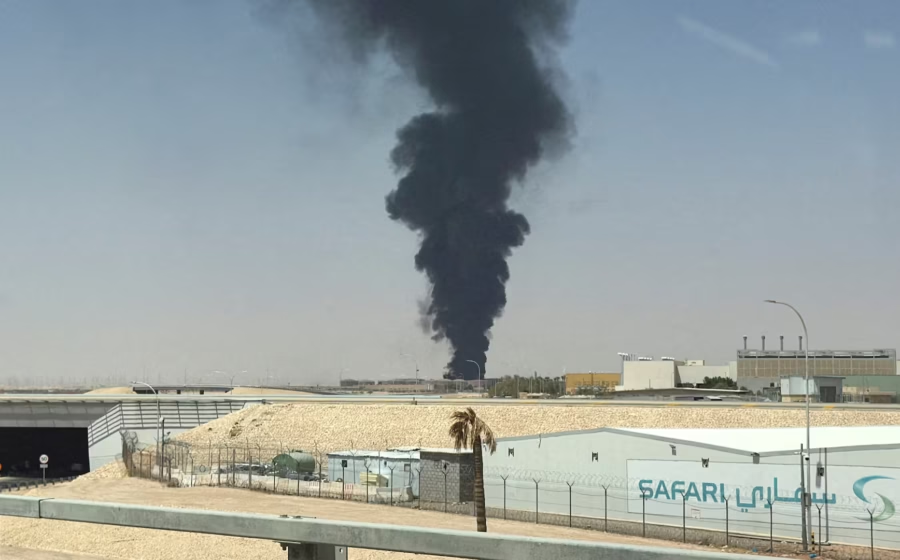


Aerial attacks on Saudi Arabia’s energy infrastructure have intensified after a projectile struck Saudi Aramco’s Jazan refinery on Thursday, killing a Nepalese worker, injuring several others and temporarily disrupting operations at the facility.
The attack occurred on 26 November at the refinery in southwestern Saudi Arabia, close to the country’s border with Yemen. Saudi Arabia’s Ministry of Energy confirmed that the projectile caused a fire, which emergency teams subsequently brought under control.
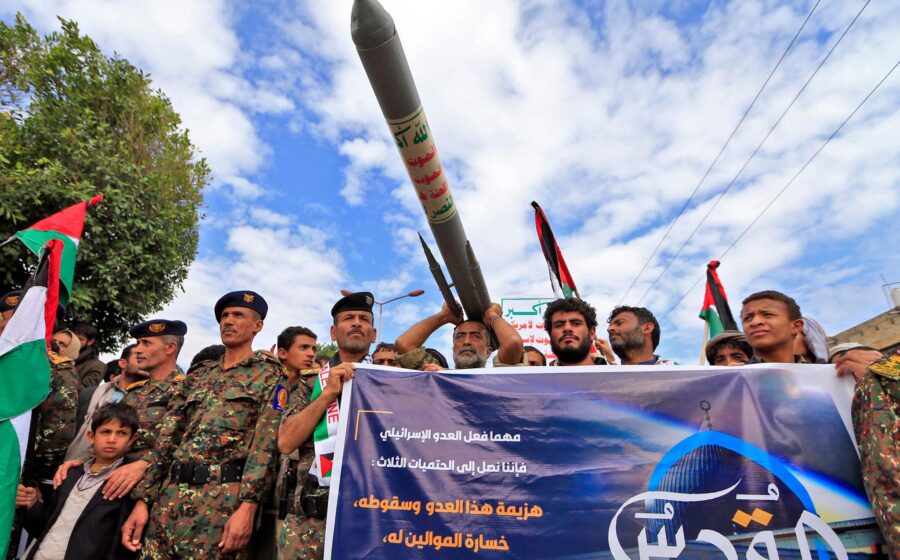
The Saudi-led military coalition fighting Yemen’s Houthi movement blamed the group for the attack. Its spokesperson, Major General Turki Al-Malki, said the refinery had been targeted by the Houthis and warned that attacks against civilian facilities would trigger a military response.
The coalition later announced that its forces had destroyed a ballistic missile launch platform in Yemen’s Hodeidah governorate, which it claimed had been used in the attack.
The incident represents another serious threat to Saudi Arabia’s energy infrastructure as fighting between the Houthis and Saudi-backed Yemeni forces intensifies. It also raises concerns about the security of oil installations near the Red Sea and the potential consequences for international energy supplies.
Nepalese worker killed as fire breaks out
Saudi Arabia’s Ministry of Energy confirmed that one Nepalese worker died following the attack on the Jazan refinery.
The ministry said the projectile struck the facility on Thursday, causing a fire and temporarily forcing the suspension of some operations. Several other workers, belonging to different nationalities, sustained injuries of varying severity.
The injured workers were taken for medical treatment. Authorities did not initially disclose the exact number of people wounded or provide detailed information about their conditions.
Emergency response teams and specialist technical personnel were dispatched immediately after the incident. Their responsibilities included bringing the fire under control, assessing the damage and checking whether the affected refinery facilities were safe to operate.
The ministry expressed condolences to the family of the deceased worker and wished those injured a speedy recovery.
The incident also highlighted the exposure of foreign workers employed in Saudi Arabia’s industrial and energy sectors. Thousands of international employees work across the Kingdom’s oil, construction and manufacturing industries, including at facilities that are increasingly exposed to regional security threats.
The identity of the worker was not immediately released in the ministry’s initial announcement.
Saudi-led coalition blames Yemen’s Houthis
The question of responsibility became central to the response following the strike.
The Saudi-led coalition supporting Yemen’s internationally recognised government accused the Houthi movement of attacking the Jazan refinery.
Coalition spokesperson Major General Turki Al-Malki announced the accusation on Thursday, warning that attacks on civilian infrastructure would be met with a firm military response.
The coalition subsequently said it had destroyed a ballistic missile launch platform in Yemen’s western Hodeidah governorate.
According to Al-Malki, the platform had been used by the Houthis to launch the attack against the Saudi refinery.
However, the Saudi Energy Ministry’s initial statement described the weapon only as a hostile aerial projectile. It did not specify whether the projectile was a missile or drone, nor did it identify the attacker.
The coalition’s identification of the Houthis therefore remains an attributed military assessment. Independent technical confirmation of the launch platform’s role and the weapon’s origin had not been publicly established by 27 November.
There had also been no immediate detailed statement from the Houthis regarding the Jazan refinery strike.
The distinction between the Energy Ministry’s confirmation of the physical attack and the coalition’s attribution is important when assessing the available evidence.
Jazan refinery is a major Saudi energy facility
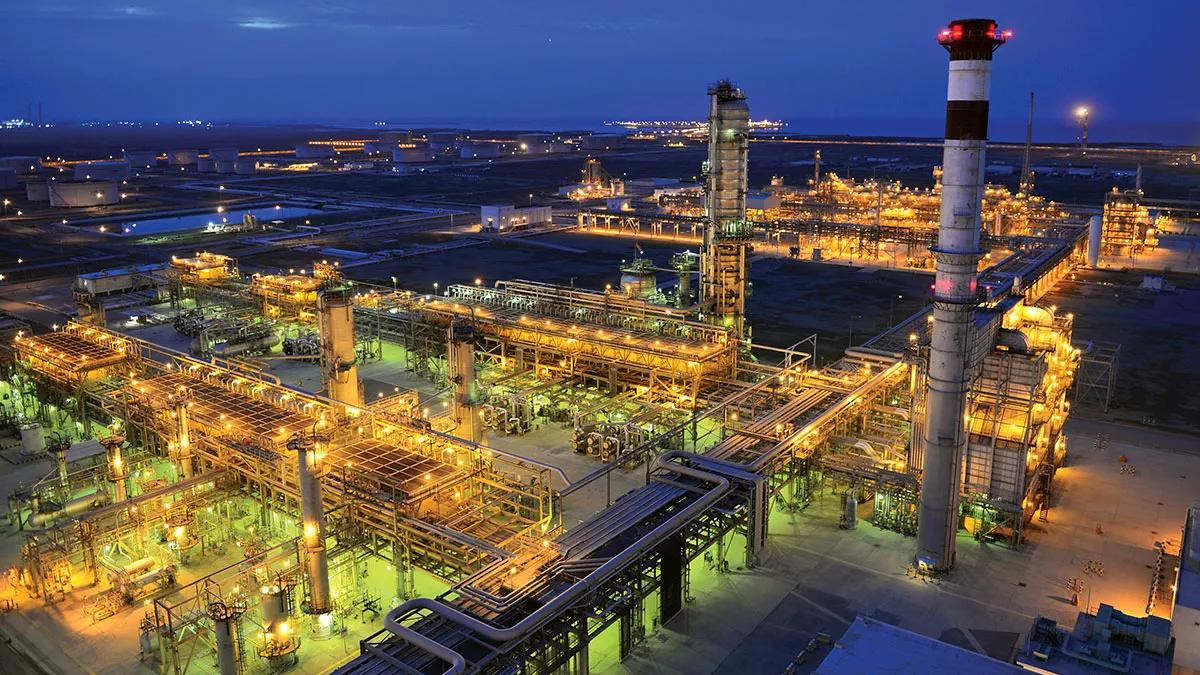
The Jazan refinery is one of Saudi Aramco’s important downstream energy projects.
Located on the Kingdom’s southwestern Red Sea coast, near the Yemeni border, the complex forms part of a wider industrial development designed to support energy production, refining and petrochemical manufacturing.
The refinery has a designed processing capacity of up to 400,000 barrels of crude oil per day.
Its production includes fuels such as gasoline, diesel and other refined petroleum products. It also supplies feedstock to an integrated gasification and power-generation facility.
The complex is particularly important because it combines refining operations with industrial electricity generation. Its integrated gasification combined-cycle plant has a capacity of up to 3.8 gigawatts.
Saudi Aramco developed the facility as part of a broader investment programme intended to diversify the economy of Jazan province and strengthen the country’s downstream energy industry.
The scale of the complex makes it an important component of Saudi Arabia’s industrial infrastructure.
Any prolonged interruption could affect refinery output, fuel availability and associated industrial operations.
However, Saudi officials said the latest incident temporarily halted only some operations. The ministry had not announced a complete shutdown of the refinery.
Technical teams were still assessing damage and checking the safety of the affected facilities.
Houthi attacks on Saudi energy infrastructure intensify
The Jazan incident came amid a wider increase in attacks targeting Saudi Arabian infrastructure.
On 25 November, the Houthi movement claimed attacks involving Ras Tanura refinery and the Red Sea ports of Jeddah and Jazan.
Ras Tanura is Saudi Arabia’s largest refinery and an important crude oil export hub. The facility occupies a strategic position along the Kingdom’s eastern coastline.
The Houthi claims came as fighting between the group and Saudi-backed Yemeni government forces intensified.
The latest attacks have raised concerns about the security of oil installations, transport facilities and commercial infrastructure across the Kingdom.
Saudi Arabia has repeatedly faced threats from missiles and drones launched from Yemen during the country’s long-running conflict.
The renewed escalation has also affected aviation and international business activity. Previous attacks have disrupted parts of Aramco’s operations and contributed to the cancellation of major international events.
The Jazan attack is particularly significant because of the refinery’s location close to Yemen. Its geographical position makes it vulnerable to aerial threats originating from across the southern border.
The latest incident has therefore strengthened pressure on Saudi Arabia to protect critical infrastructure against increasingly sophisticated aerial weapons.
Hodeidah launch platform reportedly destroyed
Following the refinery attack, the Saudi-led coalition announced that its forces had destroyed a ballistic missile launch platform in Hodeidah.
The coalition said the platform had been used by the Houthi movement to carry out the attack against Jazan.
Hodeidah is an important Red Sea port city in western Yemen and remains under Houthi control.
The city and its surrounding coastline have strategic significance because of their proximity to major international shipping routes.
The coalition’s announcement indicates that its military response is extending beyond defensive interception towards targeting infrastructure it says supports Houthi missile operations.
However, the announcement did not provide a complete independent assessment of the destruction of the platform or the military damage caused.
The development increases the possibility of further strikes against military positions in western Yemen.
Any expansion of military operations around Hodeidah could create additional risks for civilians and humanitarian organisations operating in the area.
The port is an important entry point for commercial goods and humanitarian supplies, making its security particularly important for Yemen’s population.
The wider threat to Red Sea energy and shipping routes
The latest attacks have wider implications because of the strategic importance of the Red Sea to international trade.
Saudi Arabia’s western coastline provides access to major shipping routes connecting the Middle East with Europe, Africa and Asian markets.
The Bab el-Mandeb Strait, located between Yemen and the Horn of Africa, is one of the world’s most important maritime passages.
Oil exporters and shipping companies use the route to move energy products between the Red Sea, the Suez Canal and international markets.
The Houthi movement has repeatedly threatened shipping and commercial vessels during periods of regional conflict.
Its military capabilities include ballistic missiles, cruise missiles and unmanned aerial systems.
These weapons create security challenges for energy infrastructure, shipping companies and countries operating across the Red Sea.
The risks are not limited to the direct destruction of industrial assets. Even unsuccessful attacks can force companies to suspend operations, increase security spending and reassess shipping and insurance arrangements.
For energy companies, the protection of workers and industrial infrastructure has therefore become a major operational priority.
Saudi Arabia faces pressure to protect oil operations
The attack on Jazan has renewed attention on Saudi Arabia’s wider energy-security strategy.
The Kingdom remains one of the world’s largest oil producers and plays a central role in international crude supply.
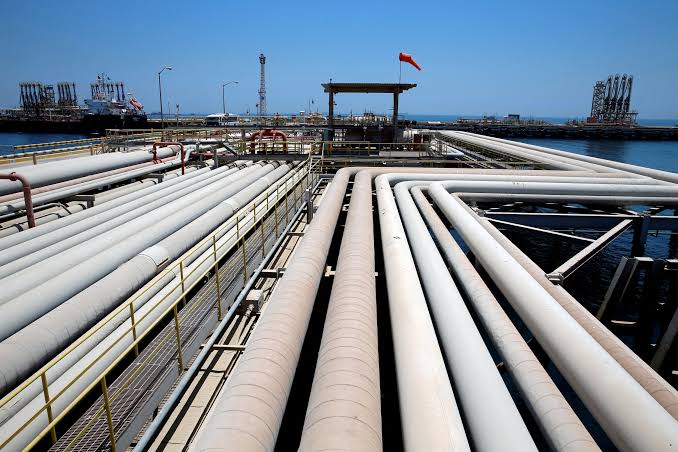
Its energy infrastructure includes refineries, export terminals, pipelines, storage facilities and industrial complexes spread across several regions.
Protecting these facilities requires a combination of radar surveillance, air-defence systems, intelligence sharing and emergency response arrangements.
Saudi Arabia has invested heavily in modernising its defence capabilities and developing systems to detect and intercept incoming missiles and drones.
However, the continuing attacks demonstrate the difficulty of protecting a large network of energy installations against multiple forms of aerial threat.
Facilities located near conflict zones face additional challenges because of their proximity to areas where armed groups operate.
The Jazan incident also demonstrates that air-defence interceptions and emergency measures cannot eliminate every risk to personnel working at industrial facilities.
The death of the Nepalese worker has placed the human cost of the confrontation at the centre of the latest incident.
Oil markets watch for further disruption
The Jazan refinery’s designed capacity of 400,000 barrels per day makes the incident relevant to international energy markets.
However, the temporary suspension of some operations should not be interpreted as the loss of the refinery’s entire processing capacity.
The actual effect on Saudi oil-product supplies will depend on the extent of the damage, the duration of the operational restrictions and how quickly the affected units can safely resume activity.
Saudi Aramco’s wider refining and export network provides the Kingdom with several facilities and routes for managing disruptions.
Nevertheless, repeated attacks could increase uncertainty for traders and energy companies.
Investors are particularly sensitive to threats affecting infrastructure near major maritime routes because prolonged disruption can influence shipping costs, insurance premiums and regional supply expectations.
A sustained escalation could also increase pressure on governments to coordinate naval protection and air-defence arrangements across the Gulf and Red Sea.
For now, there is insufficient publicly available information to calculate the volume of production lost as a result of the Jazan attack.
Yemen’s conflict enters another dangerous phase
The strike comes as Yemen’s civil war continues to shape security across the Arabian Peninsula.
The Houthi movement controls the capital, Sanaa, and large parts of northern and western Yemen. It has fought forces supporting Yemen’s internationally recognised government for years.
Saudi Arabia led a military coalition that intervened in Yemen in 2015 in support of the internationally recognised government.
Although a period of relative calm followed the 2022 truce, fighting intensified again during 2026.
The renewed violence has included territorial advances, missile launches, drone attacks and military operations around strategically important areas along Yemen’s Red Sea coast.
The conflict has also become more closely connected to the wider confrontation involving Iran, the United States and Israel.
The Houthis maintain close political and military links with Tehran, although the extent of Iranian operational involvement in individual attacks remains a matter requiring separate evidence.
The latest strike against Jazan has therefore become part of a broader regional security challenge rather than an isolated incident involving one industrial facility.
What happens next?
The immediate priority for Saudi authorities is to complete the technical assessment of the damaged refinery and determine when the affected operations can safely resume.
Investigators will also need to establish the nature of the projectile, its flight path and the circumstances surrounding the attack.
The coalition’s claim that a Houthi missile launch platform was destroyed in Hodeidah may lead to further military activity in western Yemen.
At the diplomatic level, Saudi Arabia may face renewed pressure to coordinate with neighbouring Gulf states and international partners to strengthen protection of energy infrastructure.
The incident also raises questions about the safety of foreign workers employed at strategic facilities across the region.
For international energy markets, attention will remain on whether attacks continue and whether additional restrictions affect Saudi production, refining or shipping.
The death of the Nepalese worker underlines the human consequences of the latest escalation. While governments assess the military and economic implications, families of industrial workers are facing the direct cost of the violence.
The Jazan attack has demonstrated how quickly regional conflict can threaten critical energy infrastructure. Whether further strikes occur will depend on the military and political developments unfolding across Yemen, Saudi Arabia and the wider Gulf.