


Air defences say they intercepted three missiles and a drone over Saudi territory, while Houthi-run media reports separate strikes on fuel and oil-company facilities in Yemen’s capital.
Saudi Arabia’s air defences intercepted three missiles and a drone on Tuesday, including two missiles reportedly heading towards Riyadh and another directed at the kingdom’s southern region, according to the Saudi-led coalition fighting Yemen’s Houthi movement.
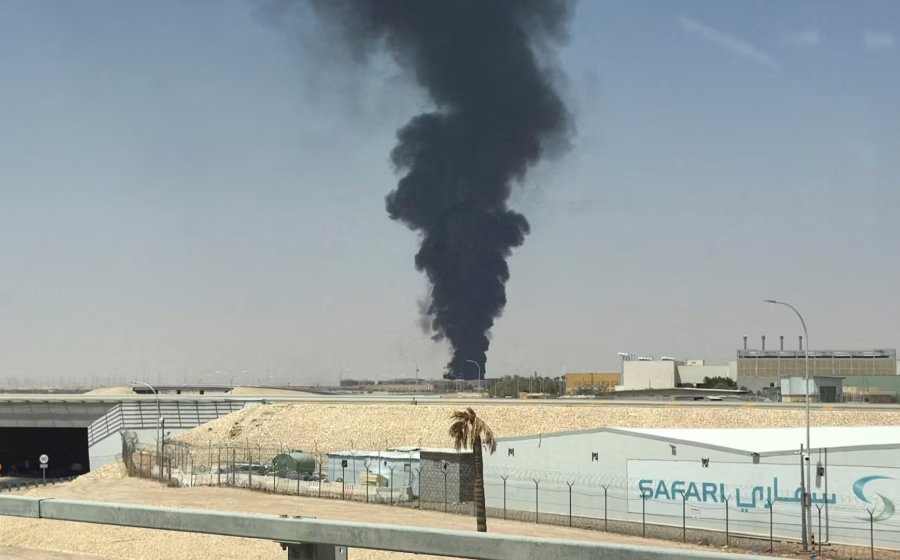
The interceptions came during a fresh escalation in hostilities between the coalition and the Iran-aligned group, with Saudi authorities issuing security alerts in several parts of the country. Separately, Yemen’s Houthi-run Saba news agency reported that Saudi-led coalition airstrikes had struck a fuel facility and a building belonging to the country’s state oil company in the capital, Sanaa.
The reported strikes in Yemen had not been independently verified, and Saudi authorities had not immediately confirmed the account. The competing reports highlighted the continued expansion of military activity around Saudi territory and the potential risks to critical infrastructure across the region.
Missiles intercepted over Riyadh and southern Saudi Arabia
The Saudi-led coalition said its air-defence systems intercepted and destroyed two missiles fired towards Riyadh. According to the coalition, the incoming weapons consisted of one ballistic missile and one cruise missile.
In a separate statement, the coalition said it had intercepted and destroyed another ballistic missile launched towards southern Saudi Arabia, which shares a border with Yemen.
Saudi Civil Defence had issued early-warning alerts for Riyadh before subsequently announcing that the immediate threat had passed. Residents in the southwestern cities of Abha and Khamis Mushait also received warnings as the authorities responded to the reported missile activity.
The French news agency AFP, in reporting carried by Al Jazeera, said multiple explosions were heard in Riyadh. Residents also received text-message alerts instructing them to seek shelter because of an aerial threat.
The warnings were later lifted, with Saudi Civil Defence informing residents that the danger had passed.
The coalition subsequently announced another interception, saying that its forces had destroyed a drone over the kingdom’s oil-rich Eastern Province.
Taken together, the coalition’s statements described three missile interceptions and one drone interception across different parts of Saudi Arabia.
The coalition attributed the missile launches to the Houthis. However, the group had not immediately claimed responsibility for the launches or issued a detailed response to the latest allegations when the initial reports were published.
No independently confirmed casualty figures or comprehensive damage assessment relating to Tuesday’s interceptions were available in the reports reviewed.

Houthi media reports strikes on fuel facilities in Sanaa
While Saudi Arabia reported the interceptions, developments in Yemen suggested that military activity was continuing on the other side of the border.
Saba, a news agency operated by the Houthi authorities, reported that Saudi-led coalition aircraft had carried out strikes on locations in Houthi-controlled Sanaa.
According to the agency, one of the reported targets was the al-Mufazir gas facility in the Jadar district, north of the capital. Another strike reportedly hit a building belonging to Yemen’s state oil company in southern Sanaa.
Saba subsequently reported that civil-defence teams were working to extinguish a fire involving gas trailers at the al-Mufazir facility.
The reported strikes had not been immediately confirmed by Saudi authorities or the coalition. Consequently, the full extent of the damage, the circumstances surrounding the reported attacks and any possible casualties remained unclear.
The distinction is important because the available information came primarily from Houthi-controlled media rather than an independently verified account of the incidents.
The reported targeting of fuel and oil-related facilities nevertheless adds to concerns about the vulnerability of energy infrastructure as the fighting intensifies.
Fuel installations are particularly important in Yemen, where prolonged conflict has already affected transportation, electricity generation and the distribution of essential goods.
Any sustained damage to fuel infrastructure could create further difficulties for civilians and businesses, particularly in areas already experiencing economic and humanitarian pressure.
Renewed fighting puts pressure on Saudi Arabia
Tuesday’s developments follow several weeks of growing hostilities between Saudi Arabia and the Houthis.
The group has increasingly targeted Saudi airports, ports and energy facilities with missiles and drones. Saudi Arabia, meanwhile, has intensified airstrikes against Houthi positions in Yemen while supporting the internationally recognised Yemeni government.
The latest escalation follows Houthi advances towards the Bab el-Mandeb Strait in September, according to Reuters reporting.
The strategic waterway lies at the southern entrance to the Red Sea and connects the Gulf of Aden with one of the world’s most important international maritime shipping corridors.
Its significance extends beyond Yemen and Saudi Arabia. Ships travelling between Asia and Europe through the Suez Canal must pass through the Bab el-Mandeb Strait.
Disruption to the route can force commercial vessels to travel around the Cape of Good Hope in southern Africa, increasing journey times and shipping expenses.
The possibility of greater instability around the strait has therefore raised concerns among energy producers, shipping companies and governments that rely on the uninterrupted movement of goods.
The renewed Saudi-Houthi fighting has also effectively undermined the 2022 United Nations-brokered truce, which had largely halted hostilities between the coalition and the Houthi movement.
The broader regional conflict has added another dimension to the situation, particularly as security concerns around the Strait of Hormuz continue to affect energy and maritime trade.
Energy infrastructure remains a major concern
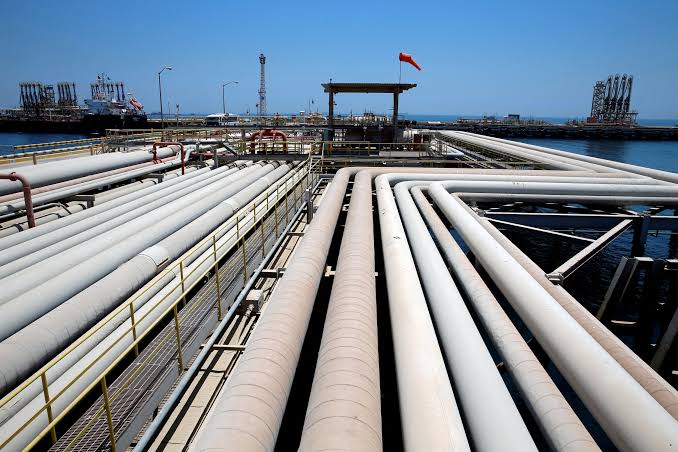
Saudi Arabia’s Eastern Province is particularly important because it contains most of the kingdom’s oil and gas reserves and is home to the headquarters of Saudi Aramco.
The region has faced repeated attacks in recent weeks, according to Reuters, while southern Saudi Arabia has also experienced missile and drone threats targeting military installations and energy infrastructure.
The significance of Tuesday’s reported drone interception over the Eastern Province therefore extends beyond the immediate security incident.
Saudi Arabia is a major global energy supplier, and any sustained disruption to its production or export infrastructure could have consequences for international oil markets.
Riyadh has invested heavily in protecting its energy facilities and developing alternative export routes. However, the escalation demonstrates the continuing security challenges facing infrastructure located within range of missile and drone attacks.
The situation also creates difficulties for international shipping companies, which must assess the risks associated with operating in and around the Red Sea and Gulf regions.
Although an intercepted weapon does not necessarily result in damage to infrastructure, repeated attacks and security alerts can increase uncertainty for businesses and investors.
Uncertainty remains over the next phase of the conflict
The latest interceptions and reported strikes illustrate the increasingly dangerous pattern of military exchanges between Saudi Arabia and the Houthis.
However, several important details remain unresolved.
Saudi Arabia and the coalition have attributed the incoming missiles and drone to the Houthis, but the group had not immediately acknowledged responsibility for those specific launches.
Similarly, the reported strikes on Sanaa were carried by Houthi-run media and had not been independently confirmed by Saudi authorities or the coalition.
There was also no complete assessment of casualties or damage associated with the reported strikes on the fuel and oil-company facilities.
The immediate priority for the region remains preventing further attacks on civilian areas, transport infrastructure and energy installations.
The situation around the Bab el-Mandeb Strait will also require close attention, given its importance to international shipping and the wider regional economy.
For now, the latest military activity represents another serious escalation in a conflict that has increasingly extended beyond Yemen’s borders. Whether diplomatic efforts or further military operations shape the next stage will depend on decisions by the parties involved and the ability of regional governments to prevent the fighting from spreading further.