

Israeli airstrikes and gunfire killed 10 Palestinians across the Gaza Strip on Thursday, including a senior Hamas official and his wife, according to hospital officials. The attacks have intensified tensions surrounding the Gaza ceasefire, with Hamas leader Khalil al-Hayya announcing that the organisation is consulting other Palestinian factions about a possible response.
The latest violence occurred on 26 November, during the third consecutive night of Israeli air attacks across the territory. The most prominent strike targeted an apartment in Deir al-Balah, in central Gaza, killing Khaled Abu Nada, a Hamas political office member and the group’s deputy education minister, along with his wife.
Israeli Prime Minister Benjamin Netanyahu and Defence Minister Israel Katz confirmed the killing. The Israeli military described Abu Nada as an important figure in Hamas’s financial operations, alleging that he managed banking and investment networks used to support the organisation’s military capabilities.
Palestinian medical officials reported additional deaths in Gaza City and the Bureij refugee camp. The casualties have prompted renewed criticism of the ceasefire’s implementation and raised concerns about whether the agreement can prevent further escalation.
Hamas political leader Khalil al-Hayya said the group would discuss with other Palestinian factions how to respond to what it described as continued Israeli violations.
The latest developments have placed the internationally backed ceasefire under renewed pressure, more than a year after it came into effect in October 2025.
Ten Palestinians killed across Gaza
Hospital officials in Gaza reported that five Israeli strikes and a separate shooting killed 10 Palestinians across the territory.
The most prominent incident occurred in Deir al-Balah, where an Israeli airstrike struck an apartment in a residential building. The attack killed Khaled Abu Nada and his wife, according to medical officials at Al-Aqsa Martyrs Hospital.
Israeli leaders subsequently confirmed that Abu Nada was among those killed. Netanyahu and Katz said the strike formed part of a wider campaign against senior Hamas figures.
Three additional airstrikes killed seven people in different parts of Gaza City, including the Tuffah neighbourhood, Beach refugee camp and Sheikh Radwan area, according to medical officials cited by Reuters.
Later on Thursday, a 62-year-old Palestinian man was killed by Israeli gunfire in the eastern part of the Bureij refugee camp, hospital officials said.
The Israeli military said one of the strikes had targeted three militants but did not immediately provide detailed explanations for all the other reported attacks or the shooting.
The casualty figures were reported by medical authorities at Shifa and Al-Aqsa Martyrs hospitals, where the victims were taken.
The attacks have added to the growing number of Palestinians killed since the ceasefire began. They have also intensified concerns about civilian protection and the continuing insecurity faced by people living in residential neighbourhoods.
Israel confirms killing Hamas official Khaled Abu Nada
Khaled Abu Nada held positions within Hamas’s political administration and served as deputy minister of education in the Gaza government.
Israel identified him as a senior figure responsible for the organisation’s economic operations.
According to the Israel Defense Forces, Abu Nada managed Hamas’s banking and investment networks and directed financial resources towards the group’s activities and military development.
The Israeli military said his death would weaken Hamas’s ability to manage its finances and support its military capabilities.
Netanyahu also confirmed the operation, describing it as part of a series of targeted killings against Hamas officials.
He said Israel had killed approximately 80 Hamas militants during the preceding month and warned that senior members of the organisation would remain targets of Israeli operations.
Hamas confirmed Abu Nada’s death and described him as a member of its political office. The organisation condemned the attack, accusing Israel of targeting academics and civilian officials.
Hamas did not immediately respond publicly to the Israeli military’s specific allegations concerning Abu Nada’s alleged role in managing financial networks.
The competing descriptions reflect the wider disagreement over the status of Hamas officials and the military objectives of Israel’s continuing operations in Gaza.
Israel regards Hamas’s political and military structures as interconnected. Hamas, meanwhile, has repeatedly condemned the targeting of its political and administrative figures.
Hamas considers response to Israeli attacks
The latest strikes prompted a public warning from Khalil al-Hayya, head of Hamas’s political bureau and one of the organisation’s most senior remaining leaders.
Al-Hayya said the continuing killings and restrictions were incompatible with the Gaza ceasefire agreement.
He announced that Hamas was consulting other Palestinian factions about how to respond to the latest developments.
The statement did not identify specific measures or indicate whether Hamas was preparing to resume military operations.
However, it represented a significant warning that the organisation may reconsider its approach if Israeli attacks continue.
Al-Hayya also criticised the international bodies and governments responsible for supporting the ceasefire arrangements.
He accused the US-backed Board of Peace and the agreement’s guarantors of remaining silent while Palestinians continued to be killed.
The comments reflect growing frustration within Hamas over the inability of international mediators to prevent further violence.
The organisation has argued that the ceasefire was intended to stop the fighting and allow humanitarian assistance to reach Gaza. It maintains that continued Israeli military operations undermine those objectives.
Israel, by contrast, argues that its operations are necessary to prevent Hamas from rebuilding its military capabilities and conducting further attacks.
The latest statements suggest that the ceasefire dispute is increasingly centred on the interpretation of its security provisions and the limits of military action permitted under the agreement.
A ceasefire that has failed to end the violence
The Gaza ceasefire took effect in October 2025 following diplomatic efforts backed by US President Donald Trump and several regional mediators.
The agreement was intended to reduce fighting, facilitate hostage and detainee arrangements, expand humanitarian access and establish a framework for the future administration and reconstruction of Gaza.
However, violence has continued despite the agreement.
Israel has carried out repeated airstrikes and military operations, arguing that it is responding to security threats and violations by Hamas.
Palestinian authorities and the organisation have accused Israel of repeatedly breaching the ceasefire through attacks on residential areas and the killing of Hamas members and civilians.
The latest casualties underline the gap between the agreement’s intended objectives and conditions on the ground.
According to figures cited by Reuters, Palestinian and Israeli tallies indicate that at least 1,600 Palestinians and five Israeli soldiers have been killed since the ceasefire was agreed.
The two sides maintain different accounts of responsibility for the deaths and the circumstances surrounding individual incidents.
The ceasefire has also failed to resolve major political questions concerning Gaza’s future. These include the presence of Israeli troops, Hamas’s disarmament, the administration of the territory and the arrangements necessary for long-term reconstruction.
Israeli forces continue to control approximately two-thirds of Gaza, while Hamas retains control over a narrower area along the coastal strip.
These unresolved issues have made the implementation of the agreement increasingly difficult.
Civilian protection remains a major concern
The latest attacks have renewed concerns about the protection of civilians in Gaza.
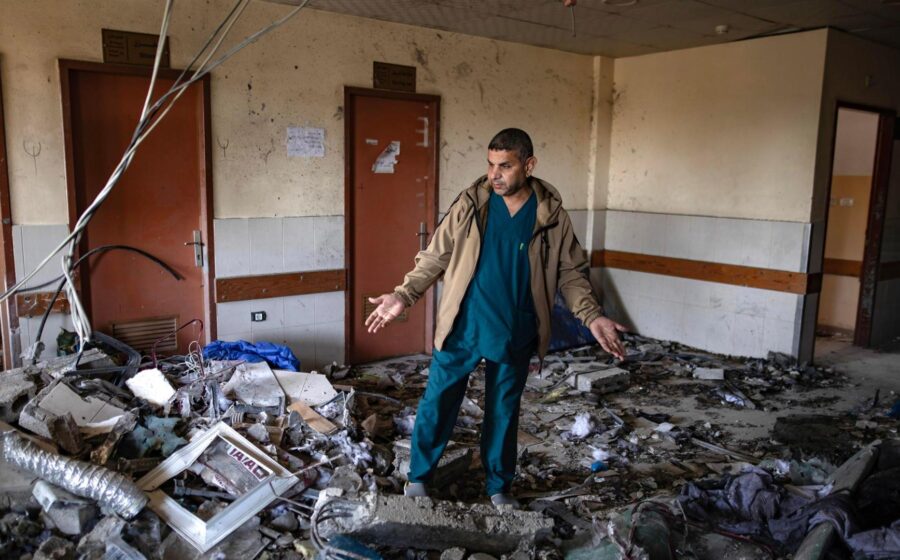
The territory has suffered extensive destruction since the war began in October 2023. Residential buildings, hospitals, schools, roads and essential public infrastructure have sustained severe damage.
Thousands of families remain displaced, while access to adequate healthcare, electricity, clean water and essential supplies continues to be a major challenge.
The death of Abu Nada’s wife alongside him has also drawn attention to the consequences of strikes involving residential apartments.
Israel has not provided a detailed public explanation of the civilian circumstances surrounding every reported strike on 26 November.
International humanitarian law requires parties to a conflict to distinguish between civilians and combatants and to take precautions to minimise harm to civilian populations.
The legality of an individual attack depends on its circumstances, including the intended target, available intelligence, expected civilian harm and the military advantage anticipated.
The available reports do not provide enough independent technical evidence to reach a legal conclusion about each of the latest strikes.
Nevertheless, the number of reported civilian casualties and the continued attacks on populated areas have increased pressure on international mediators to strengthen civilian-protection arrangements.
Gaza’s wider humanitarian crisis deepens
The latest violence comes as Gaza continues to face the consequences of more than three years of war.
According to the Palestinian Health Ministry, the death toll from the conflict since October 2023 has exceeded 74,000. The ministry operates under the Hamas-led government, but its casualty records are widely used by international humanitarian organisations. Its figures do not consistently distinguish between civilians and combatants.
The war began after the Hamas-led attack on southern Israel on 7 October 2023, which killed approximately 1,200 people and resulted in the abduction of more than 250 others.
Israel launched its military campaign in Gaza in response, stating that its objectives included dismantling Hamas’s military capabilities and securing the release of hostages.
The conflict has since caused extensive destruction and a major humanitarian emergency.
The October 2025 ceasefire created an opportunity to reduce violence and establish a framework for recovery. However, repeated military incidents have prevented the agreement from delivering lasting security.
The latest attacks have further complicated efforts to move towards reconstruction and stable administration.
International mediators face renewed pressure
The ceasefire’s continued implementation depends heavily on international diplomatic involvement.
The United States played a central role in securing the agreement, while Qatar, Egypt and other regional partners have been involved in negotiations and efforts to maintain communication between the parties.
The latest statements from al-Hayya have increased pressure on the guarantors to respond to the continued attacks.
Hamas has specifically criticised the Board of Peace, which forms part of the US-backed framework for overseeing the Gaza plan.
The organisation argues that the body must do more to prevent Israeli military operations and ensure that the ceasefire’s provisions are implemented.
For Israel, the challenge is to maintain its security objectives while avoiding further deterioration of the agreement.
For the mediators, the immediate priority is to prevent retaliatory actions from triggering a wider escalation.
Diplomatic efforts will also need to address the underlying disputes over Israeli troop deployments, Hamas’s future role and the conditions required for rebuilding Gaza.
Without progress on these issues, the ceasefire risks remaining a limited arrangement that reduces neither the underlying political tensions nor the threat of renewed fighting.
What happens next?
The immediate focus is on the consultations announced by Hamas leader Khalil al-Hayya.
Hamas is expected to discuss possible responses with other Palestinian factions, although no specific decision has been publicly announced.
The organisation’s next steps could influence the security situation across Gaza, particularly if Israeli operations and Palestinian resistance activity continue.
Israeli leaders have also indicated that targeted operations against Hamas officials will continue.
International mediators now face renewed pressure to prevent further attacks and maintain the ceasefire framework.
The situation remains particularly sensitive because the agreement has already struggled to establish a stable security environment despite more than a year of implementation.
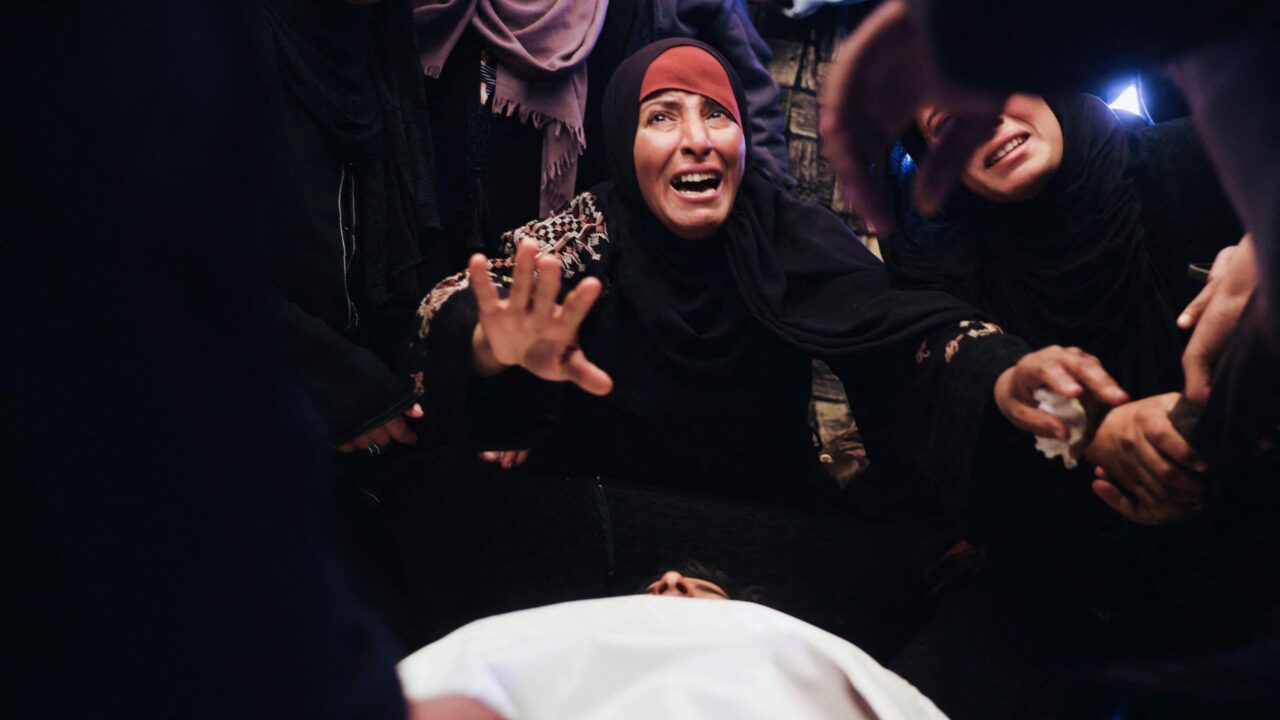
For Palestinians in Gaza, the latest casualties mean another period of mourning and uncertainty. For the region, the danger is that repeated attacks and retaliatory threats could undermine diplomatic efforts and return the territory to a wider cycle of military escalation.
The deaths of 10 Palestinians on 26 November have therefore become more than another episode in the conflict. They represent another test of whether the ceasefire can survive continued military operations and deep disagreements over its terms.
Until the parties and international guarantors establish a credible mechanism to prevent further violence, Gaza’s fragile ceasefire will remain vulnerable to collapse.