

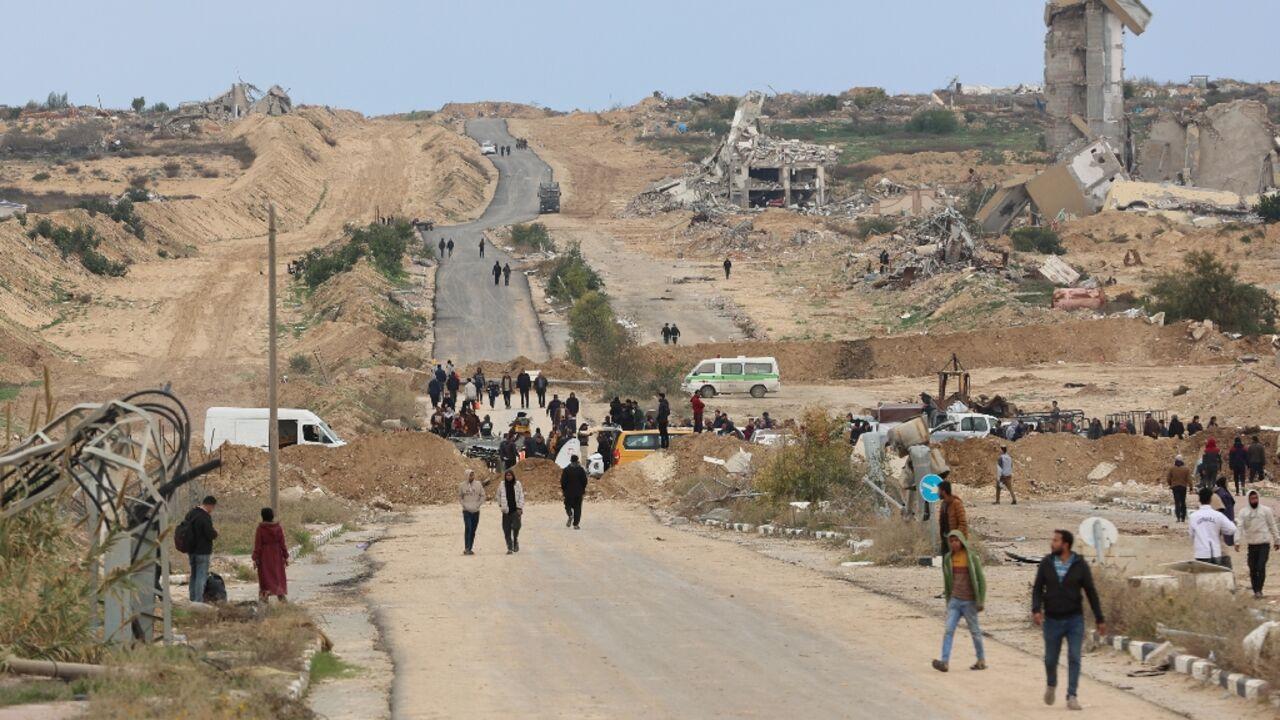
Israeli forces have launched a rare ground operation beyond the so-called Yellow Line in central Gaza, sending tanks and military vehicles into an area from which Israel had withdrawn under the October 2025 ceasefire. The advance near the Nuseirat and Bureij refugee camps forced dozens of displaced Palestinian families to leave their shelters, while gunfire, artillery and airstrikes were reported in the surrounding area.
The Israeli military says the operation is intended to destroy a tunnel that poses an immediate threat to its troops. Hamas has condemned the incursion and the evacuation orders as a violation of the ceasefire. Israeli media, citing military sources, reported that the operation was coordinated in advance with the United States and could continue for several days.
The offensive, which began on Wednesday, 18 November, is being closely watched as one of the most significant publicly reported Israeli ground incursions into Hamas-controlled territory since the truce began. Its timing has added to concerns about the future of an agreement that has struggled to deliver a lasting end to hostilities.
Tanks advance near Nuseirat and Bureij
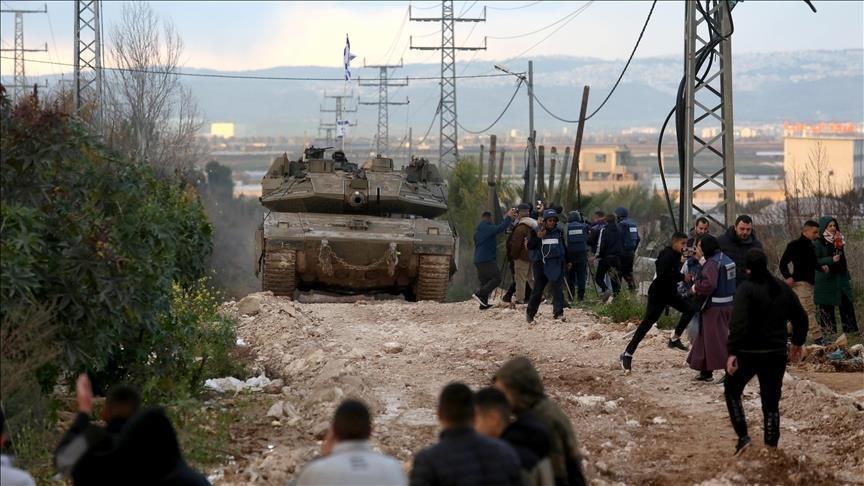
Israeli tanks and other military vehicles advanced into central Gaza on Wednesday, moving west of the Yellow Line near the Nuseirat refugee camp and the Bureij area.
The advance included movements around al-Mughraqa, the Wadi Gaza bridge on Salah al-Din Road and the al-Dawa neighbourhood north of Nuseirat, according to reporting from the area. Witnesses described military vehicles and bulldozers moving amid heavy gunfire and artillery shelling.
Reuters reported that Israeli tanks rolled along sections of Salah al-Din Road, the main north-south route through Gaza. The movement marked a rare development because the area had been outside the zone occupied by Israeli forces under the ceasefire arrangements.
The Israeli military confirmed that troops and intelligence personnel were conducting a targeted operation west of the Yellow Line. It said the objective was to dismantle a tunnel that posed an immediate and direct threat to Israeli forces.
The military did not publicly provide a detailed account of the tunnel’s location, dimensions or the evidence behind its assessment that it threatened troops.
Israeli Army Radio correspondent Doron Kadosh reported, citing security sources, that the operation was limited to an area extending approximately 300 to 400 metres beyond the Yellow Line. The report said the military intended to destroy the tunnel and expected the operation to last several days.
The reported distance and expected duration have not been independently confirmed by the Israeli military.
Evacuation orders force families to leave
Before the operation, Israel’s Coordinator of Government Activities in the Territories, known as COGAT, issued evacuation instructions in Arabic to residents in three designated blocks in the Bureij and Nuseirat area.
The warnings identified blocks 660, 661 and 666 and instructed civilians to stay away from locations where Israeli forces were operating. COGAT also announced that sections of Salah al-Din Road would be closed during the operation.
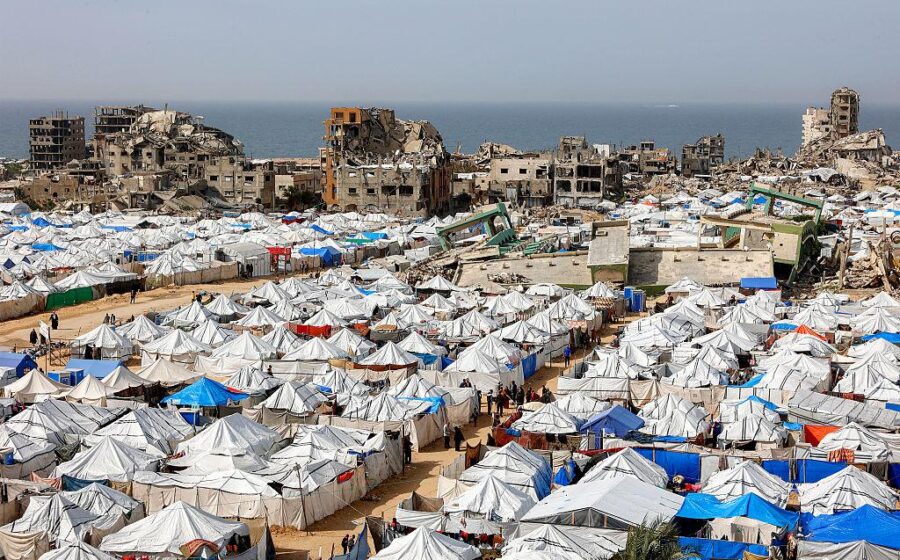
The military said the warnings were intended to reduce the risk to civilians. However, the orders forced families already living in temporary shelters to move again, adding to the displacement experienced by many Palestinians since the war began in October 2023.
Dozens of residents packed their belongings onto cars, motorcycles, bicycles and other available transport as they left the affected areas. Some families were seen carrying mattresses and essential possessions, while others struggled to move with limited transport.
Residents told Reuters that repeated displacement had left them exhausted and reluctant to leave once more. One woman, Salam Aql, said her family had initially wanted to remain in the area despite the evacuation warning. She described gunfire beginning nearby and said a boy was struck in the leg by a bullet, prompting them to leave.
The reported movement of tanks and the sound of shelling heightened fears that the operation could develop into a wider military assault.
Casualties reported as fighting continues
Palestinian medics reported that one person was killed in an Israeli airstrike near the location of the ground operation on Wednesday.
Two additional deaths were reported in separate incidents elsewhere in Gaza. Medics said one person was killed in Deir al-Balah and another in Gaza City.
The Israeli military said it was unaware of the reported incident in Deir al-Balah. Regarding Gaza City, it said it had struck a militant.
The three deaths were therefore reported across separate incidents and should not be treated as a confirmed toll from the ground operation itself.
The military activity has nevertheless added to the casualty burden since the October 2025 ceasefire. Gaza health authorities have reported that at least 1,600 Palestinians have been killed since the agreement came into effect. Israel’s military has said five Israeli soldiers have died during the same period, according to figures cited by Reuters in its reporting on Wednesday’s operation.
The ceasefire has reduced the scale of major fighting but has not ended Israeli strikes or resolved disagreements over armed groups, security arrangements and the future administration of Gaza.
What the Yellow Line means
The Yellow Line was established as part of the ceasefire arrangements announced in October 2025. It separates areas in which Israeli forces remain deployed from other parts of the Gaza Strip where Palestinians are permitted to move and where Hamas retains control.
The line was intended to provide a framework for the withdrawal and repositioning of Israeli troops under the agreement. It has, however, become a source of continuing tension, with disputes over military movements, civilian access and the precise areas in which people are permitted to travel.
Israel has retained control over a large proportion of Gaza during the ceasefire period. Reuters reported that Israeli forces remained in control of well over half the territory, with the area under their control having expanded to around two-thirds. Hamas retains control over a smaller area along the coast.
The latest operation is significant because Israeli tanks crossed into territory west of the line, an area from which Israeli forces had withdrawn under the truce. Residents described the advance as the first of its kind since the agreement began.
The boundary is not an internationally recognised border. It is a military demarcation associated with the ceasefire, and its implementation remains disputed.
Hamas accuses Israel of violating the ceasefire
Hamas condemned the ground operation and the forced displacement of civilians, describing the incursion as a serious violation of the ceasefire agreement and a dangerous escalation.
The Palestinian armed group has accused Israel of using continued military operations to undermine the US-brokered arrangement. Israel, meanwhile, has argued that its actions are necessary to prevent threats to its troops and respond to what it describes as Hamas activity and violations of the truce.
The disagreement reflects a wider problem that has repeatedly obstructed the ceasefire’s implementation: both parties accuse the other of failing to honour commitments.
Israel has maintained that Hamas is attempting to regroup and rebuild its military capabilities. Hamas has rejected the legitimacy of continued Israeli military activity in areas it considers covered by the ceasefire.
The current operation has brought these competing positions into sharper focus, particularly because it involves a ground advance rather than the airstrikes and other military incidents that have continued since the agreement took effect.
US involvement adds diplomatic significance
The operation has also raised questions about Washington’s role in overseeing the ceasefire.
Israeli Army Radio reported that the operation had been coordinated in advance with the United States and that American officials had been briefed on developments before the ground advance began.
The report cited Israeli security sources and did not provide a detailed account of what Washington had approved or whether the United States had directly endorsed the military action. No independent confirmation of the reported coordination was established in the reporting available at the time.
The reported US involvement is particularly significant because Washington has played a central role in negotiating and overseeing the ceasefire framework. The agreement was intended to create conditions for an end to major fighting, the release of hostages, the introduction of transitional arrangements and, eventually, reconstruction.
However, those plans have faced serious obstacles.
A report from President Donald Trump’s Board of Peace, delivered to the United Nations Security Council this week, warned that the ceasefire could collapse unless Israel and Hamas made progress on their commitments.
The report criticised continued Israeli strikes, Hamas military activity and restrictions affecting humanitarian supplies. It also warned that the distance between the agreement’s stated objectives and conditions on the ground remained a major threat to the process.
The board said Israel had not approved the arrangements necessary for an interim civilian administration and the training and deployment of civilian police in Gaza. Those delays have also affected plans for an international stabilisation force, which is linked to Israeli troop withdrawal, Hamas disarmament and reconstruction.
The assessment suggests that the latest ground operation is taking place against a broader backdrop of stalled diplomatic progress.
Humanitarian conditions remain critical
The renewed displacement is unfolding as Gaza faces an increasingly difficult humanitarian situation.
Families already living in temporary shelters have been affected by damaged infrastructure, limited access to clean water, shortages of medical supplies and the destruction of homes and public services.
Winter conditions have intensified the problems. In its 13 November humanitarian situation report, the United Nations Office for the Coordination of Humanitarian Affairs said heavy rainfall had flooded and damaged tents, shelters and service facilities. The organisation reported that around 46,000 households had been affected by flooding and more than 40,000 family shelters damaged.
The UN also warned that humanitarian organisations faced serious operational constraints, including shortages of essential supplies and equipment.
Further displacement around Nuseirat and Bureij could complicate efforts to deliver food, medical care and other assistance. The temporary closure of Salah al-Din Road is also significant because it is an important route connecting different parts of the enclave.
Humanitarian organisations have repeatedly called for safe access, protection of civilians and the removal of unnecessary restrictions on aid deliveries.
Ceasefire faces another difficult test
The central Gaza operation is a fresh test of an agreement that has yet to deliver the security and political arrangements envisaged by its sponsors.
The ceasefire was intended to move beyond a pause in fighting towards a more permanent settlement. Its broader framework included the withdrawal of Israeli forces, the disarmament of Hamas and other armed groups, the establishment of transitional Palestinian administration and the eventual reconstruction of Gaza.
Those objectives remain difficult to achieve. Disagreements over security, governance and the timing of troop withdrawals have prevented the process from advancing as planned.
For Palestinians living near the Yellow Line, the latest incursion has created immediate uncertainty over whether their homes and shelters remain safe. For Israel, the military says the operation is necessary to remove a tunnel that poses a direct threat to its forces.
With Israeli sources indicating that the operation could continue for several days, attention is now focused on whether the military will withdraw after destroying the tunnel or whether the incursion could lead to further operations in central Gaza.
The broader question is whether the ceasefire can survive repeated military confrontations and stalled negotiations. The latest advance has shown how fragile the agreement remains, while the displacement of families highlights the continuing human cost of a truce that has yet to bring lasting security to Gaza.