

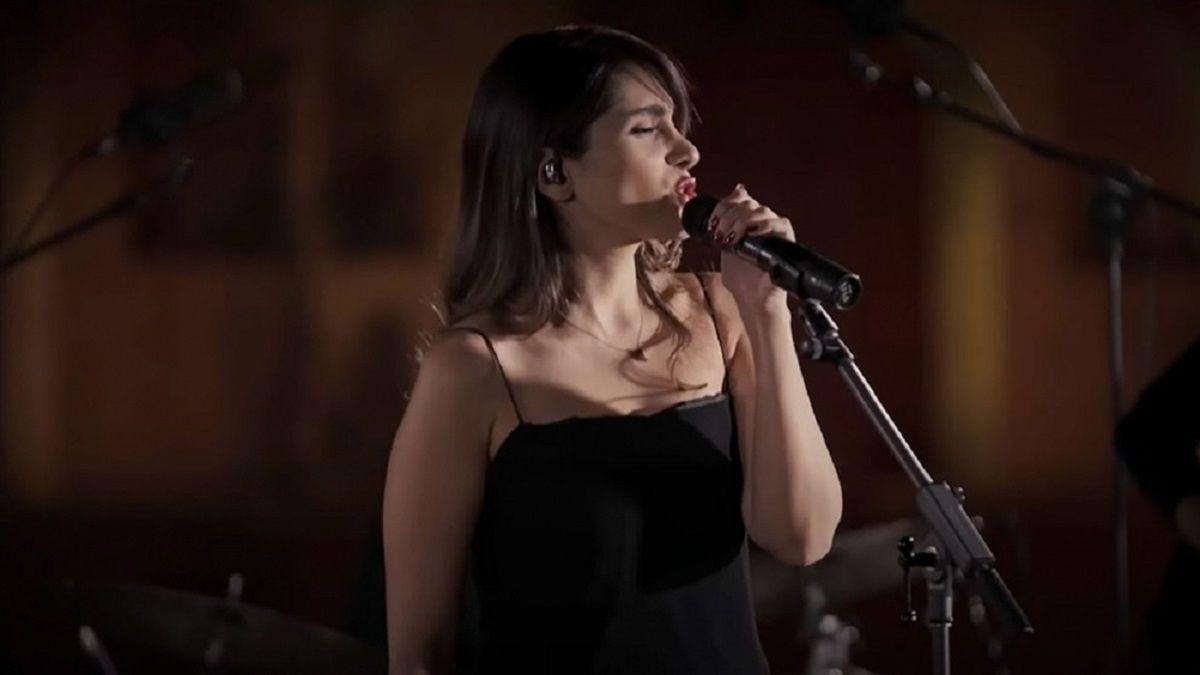
Iranian singer Parastoo Ahmadi and four members of her concert team have each received 74 lashes after Iranian authorities enforced a court sentence linked to an online performance in which she sang without wearing a compulsory headscarf.
The punishment was carried out in the city of Qom on Monday, 23 November, according to lawyer Mostafa Nili, who was quoted by Iranian news website Emtedad. The five people named in the reports are Ahmadi, musicians Soheil Faghih-Nasiri, Amin Taheri and Amirali Pirnia, and concert organiser Mohsen Lashkari.
The case began after Ahmadi published a performance on YouTube in December 2024. Filmed at a historic caravanserai near Qom, the concert showed her singing alongside male musicians without a hijab. It was recorded without a live audience but attracted millions of online views.
The enforcement of the sentence has renewed international criticism of Iran’s treatment of female performers and the use of corporal punishment against artists. It has also brought renewed attention to restrictions on women’s clothing, public singing and artistic expression in the country.
Five artists receive 74 lashes each
The sentence was enforced at the office responsible for carrying out criminal penalties under the Qom prosecutor’s office, according to the account provided by Nili.
Each of the five named individuals received 74 lashes. They were also subject to a two-year ban on artistic and musical activities and a two-year restriction on leaving Iran.
The punishment followed a ruling by Branch 122 of Qom Criminal Court II. In June 2026, the court convicted the defendants of what it described as offending public decency through the production and publication of obscene and immoral content online.
The court’s ruling was later upheld by Branch 16 of the Qom Provincial Court of Appeal, which referred the case for enforcement, according to reports from the lawyer and human rights organisation Hengaw.
Nine people were reportedly sentenced in the original case. However, the enforcement confirmed on 23 November involved Ahmadi and four members of her team. Reports had not established whether the remaining four defendants had also received their punishment.
The distinction matters because the confirmed execution of five sentences should not be presented as proof that all nine defendants have already been flogged.
The online concert that triggered the case
The legal proceedings followed a performance filmed on 11 December 2024 at the historic Deir Gachin Caravanserai near Qom.
Ahmadi appeared in a long black dress without a headscarf and performed alongside male musicians. The venue had no live audience. Instead, the performance was broadcast online through her YouTube channel.
She described it as an imaginary or hypothetical concert. The video showed the singer performing on a dimly lit stage, with a traditional Persian carpet forming a central part of the setting.
The performance attracted around three million views in the days after its release. By November 2026, reports put its total audience at more than 3.2 million views.
The recording drew attention because it challenged two major restrictions affecting women in Iran: compulsory hijab rules and restrictions on female singing in public settings involving men.
Iranian authorities subsequently opened a criminal case against Ahmadi and people involved in the production. The venue was also sealed by the judiciary, according to reports from Euronews.
Why Iran prosecuted the performance
Iranian law requires women to observe the country’s mandatory dress code in public, including wearing a headscarf. Women also face restrictions on performing solo in public settings where men are present.
The authorities prosecuted Ahmadi and her colleagues under public-decency and online-content provisions. The court described their conduct as the production and publication of obscene and immoral material.
The wording of the charges is important. The case was not presented by the court simply as a dispute over a headscarf. Prosecutors treated the recording and its publication as conduct that violated public-decency rules.
Rights advocates have challenged the use of such provisions against artistic expression. They argue that a peaceful musical performance should not be treated as criminal or obscene simply because a woman appeared without a hijab and sang alongside male musicians.
The case also highlights the wider restrictions facing female artists in Iran. Women have limited opportunities to perform solo for mixed audiences, while those who challenge official dress and cultural rules can face prosecution, professional restrictions or pressure from security authorities.
Appeals fail to stop the punishment
The original ruling was issued in June 2026. Ahmadi and the other defendants challenged the verdict, but an appeals court in Qom upheld the sentences in September.
The decision made the punishments enforceable under the Iranian judicial process, according to reporting by Iranian media and rights organisations.
Before the sentences were carried out, Amnesty International called on Iranian authorities to stop the planned flogging of Ahmadi and eight others. The organisation described flogging as cruel, inhuman and degrading punishment and urged Iran to abandon the use of corporal punishment.
The defendants’ legal challenge did not prevent enforcement. Lawyer Nili later confirmed that the sentences against Ahmadi and four colleagues had been carried out.
The available reports do not provide a detailed independent medical assessment of the five people after the punishment. Iranian authorities had not immediately responded to Reuters’ request for comment on the case.
Human rights groups condemn corporal punishment
The enforcement has drawn renewed criticism from human rights advocates, who say flogging violates basic protections against torture and other cruel treatment.
Amnesty International had warned that carrying out the sentence would amount to a serious violation of the prohibition on torture and other ill-treatment. Western governments and human rights organisations have also criticised the use of judicial flogging in Iran.
Iran has repeatedly rejected allegations that it violates human rights, arguing that Western countries should address their own records rather than criticise its legal system.
The latest case is part of a broader debate over the treatment of artists, women and people who challenge state-imposed social rules. The use of corporal punishment for an online performance has raised particular concern because the concert was recorded without a live audience and distributed through a digital platform.
Artists and activists have condemned the punishment on social media. Iranian singer Mehdi Yarrahi, who was himself sentenced to 74 lashes in 2025 over a protest song challenging compulsory hijab, shared footage of Ahmadi’s performance in a show of solidarity.
The response has reinforced the view among critics that restrictions on music and women’s public expression remain a major issue in Iran.
The wider legacy of the Woman, Life, Freedom movement
The case also recalls the protests that followed the 2022 death of Mahsa Amini, a 22-year-old Kurdish Iranian woman who died in custody after being detained over an alleged violation of the dress code.
Her death triggered the nationwide Woman, Life, Freedom movement, which challenged compulsory hijab rules and broader restrictions on women’s rights.
The protests became one of the most significant challenges to Iran’s leadership in recent decades. Demonstrators demanded greater personal freedoms, accountability for security-force violence and an end to compulsory dress regulations.
Although the scale of street protests later declined, resistance to the hijab rules has continued. More women have appeared in public without headscarves, particularly in major cities, while enforcement has at times become more selective.
Ahmadi’s performance became part of that wider cultural challenge. By singing without a headscarf in a recorded performance with male musicians, she tested rules that have long restricted women’s participation in public cultural life.
The punishment now imposed on her and four colleagues shows that, despite changes in everyday behaviour, the legal risks for artists who challenge those restrictions remain substantial.
What happens next?
The immediate concern is the status of the four other people reportedly sentenced alongside Ahmadi and her colleagues in June. Public reporting has confirmed the punishment of five defendants, but has not established whether the remaining four sentences have been enforced, postponed or otherwise changed.
The two-year restrictions on artistic and musical activity and international travel also remain significant. They limit the professional opportunities and freedom of movement of those affected, beyond the physical punishment already imposed.
The case is likely to remain a point of criticism for international rights organisations and governments monitoring freedom of expression in Iran. It may also influence how artists and online creators assess the risks of challenging official cultural restrictions.
For Ahmadi, the online concert that reached millions of viewers has now resulted in a severe legal punishment. For Iran’s authorities, the enforcement of the sentence demonstrates the continued use of public-decency laws and corporal punishment against conduct they regard as unacceptable.
The wider question remains whether artists in Iran will be able to perform, publish and express themselves without facing criminal penalties for challenging state-imposed rules. The flogging of Ahmadi and four colleagues has made that question more urgent.