

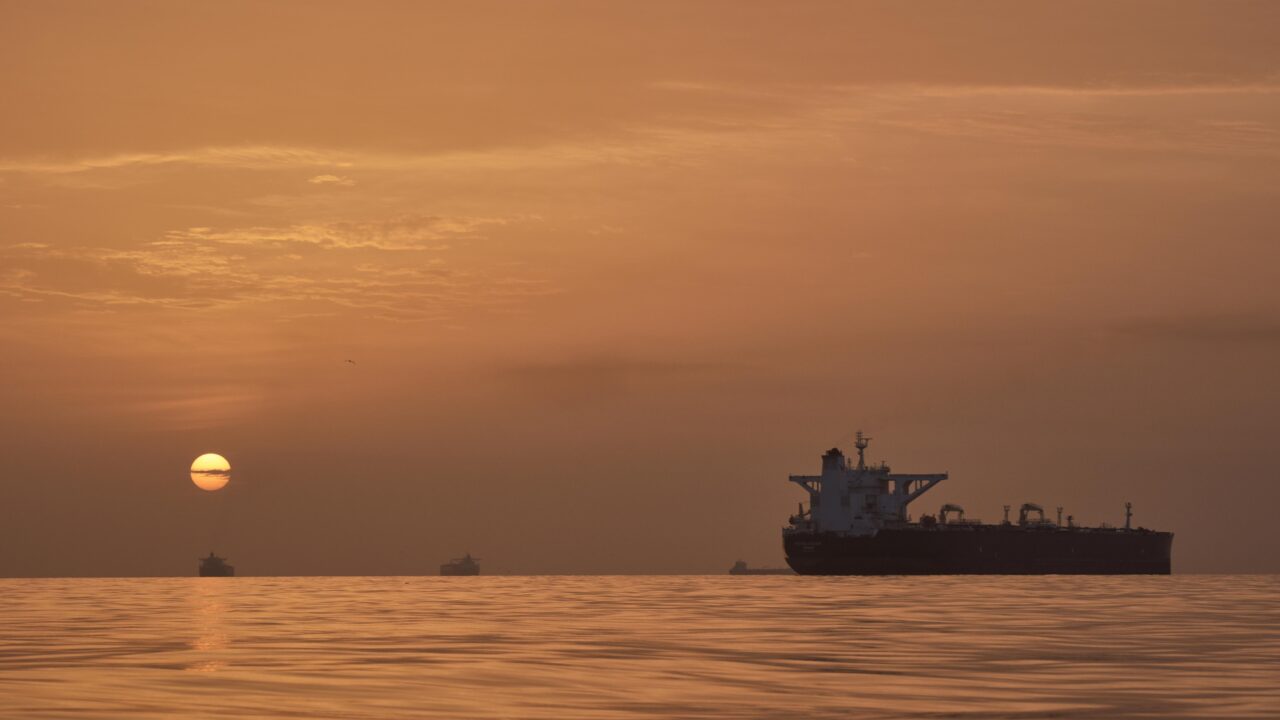
Two oil supertankers were disabled by explosions in the Strait of Hormuz on Wednesday night, according to Iran’s Islamic Revolutionary Guard Corps (IRGC) Navy, which said the vessels had ignored warnings against using an unauthorised shipping route.
The announcement, made on Thursday, 12 November, adds to growing concerns over the safety of commercial vessels passing through the strategic waterway, where attacks, unexplained explosions and competing military claims have disrupted maritime traffic during the conflict involving Iran, the United States and Israel.
The IRGC Navy said the two vessels had been travelling through the southern part of the strait despite repeated warnings from its maritime traffic control centre. It described the passage as unauthorised and unsafe, adding that explosions had left both tankers unable to continue moving.
Iranian state media subsequently reported that the vessels had struck naval mines and broadcast footage it described as showing the explosions. The IRGC Navy said the two supertankers were carrying a combined total of more than four million barrels of oil and claimed they were burning following the incidents.
The identities of the vessels, their flags, ownership and exact positions were not disclosed in the initial announcement. There has also been no independent confirmation of the reported mine strikes, the fires or the condition of the crews.
Iran attributes explosions to unauthorised passage
In a statement carried by Iranian media, the IRGC Navy said the tankers had ignored repeated warnings from its Strait of Hormuz Traffic Control Centre about the risks of travelling through the southern maritime route.
The force described the vessels as having violated Iranian navigation regulations and said the explosions brought them to a standstill. Its public relations office also warned that vessels switching off their navigation systems and cooperating with the United States military to pass through routes it considers unauthorised could face similar consequences.
Iran has increasingly sought to exercise control over commercial shipping through the strait during the conflict. Tehran has argued that vessels should coordinate their movements with Iranian military authorities and use routes designated as safe by its forces.
The Iranian account, however, does not establish precisely what caused the explosions. While state media attributed the incidents to naval mines, the initial IRGC statement described an accident following the vessels’ alleged failure to heed warnings. Neither account has been independently verified.
The reported combined cargo of more than four million barrels would make the incident significant for energy shipping, although the figure comes from the Iranian military statement and has not been independently confirmed.
Maritime authorities report separate tanker incidents
The United Kingdom Maritime Trade Operations agency (UKMTO), which monitors security incidents affecting commercial shipping, has also recorded attacks on vessels in and around the Gulf and the Strait of Hormuz.
Its public incident register includes a report dated 11 November concerning a tanker located approximately 14 nautical miles north-west of Ras al-Khaimah in the United Arab Emirates. The vessel was struck by an unidentified projectile in its engine room at around 1800 UTC, according to UKMTO.
The agency said no casualties had been reported and that all crew members had been evacuated safely. Firefighting operations were under way when the warning was published.
UKMTO did not identify the tanker or connect that incident to the two vessels described by Iran. Its public register therefore does not independently confirm the IRGC’s account of two supertankers being disabled by explosions in the strait.
The agency also recorded a separate incident on 10 November involving a tanker in the Strait of Hormuz. The vessel was struck by an unidentified projectile while transiting the waterway, with all crew members later reported safe.
These reports demonstrate the range of maritime security incidents being recorded in the region. They do not, however, establish that every reported explosion or vessel fire has the same cause or is connected to a single military operation.
Competing claims over naval mines
The Iranian account has also brought renewed attention to conflicting statements from Tehran and Washington over the presence of naval mines in the waterway.
On 25 October, the United States Central Command (CENTCOM) said its forces had cleared the strait’s internationally recognised shipping lanes of sea mines laid by Iran’s Islamic Revolutionary Guard Corps. The command described the main commercial routes as clear and safe for navigation.
The US military also said it had assisted Gulf partners in maintaining commercial passage through the waterway and reported that more than 3,000 commercial vessels had transited the strait with support from CENTCOM forces over the preceding six months.
Iran’s repeated claims that vessels have struck mines while travelling through routes it considers unauthorised stand in contrast to the US position. The latest announcement has not supplied independent evidence that mines caused the reported explosions, while the US statement is an account of its own clearance operations rather than an independent assessment of the latest incidents.
Determining the cause of the explosions would require more information about the vessels, their movements, the location of the incidents and any physical damage assessments. Without those details, it remains unclear whether the explosions were caused by mines, other explosive devices or a different form of attack.
Strait of Hormuz remains vital to global energy supplies
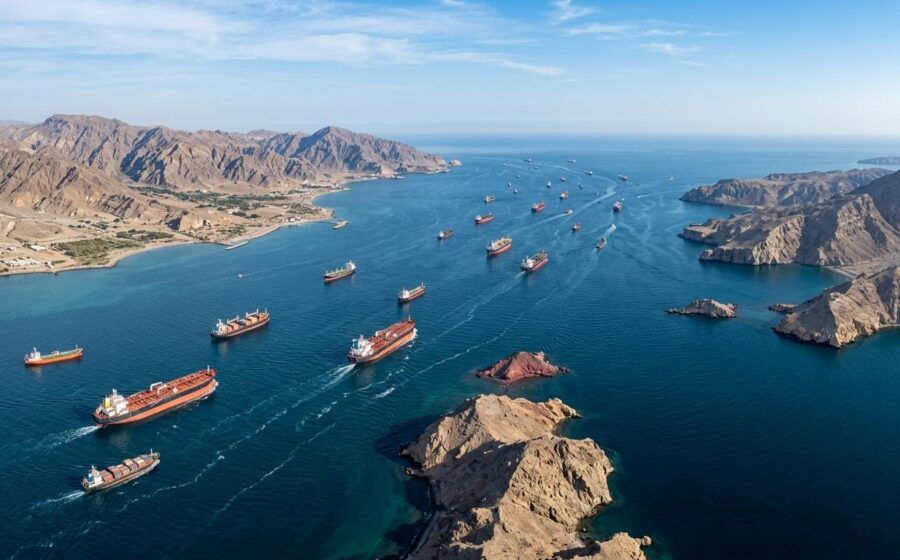
The incidents carry significance beyond the immediate danger to the ships and their crews. The Strait of Hormuz connects the Persian Gulf with the Gulf of Oman and the wider Arabian Sea, making it one of the most important maritime routes for international energy trade.
Under normal conditions, roughly one-fifth of the world’s oil and liquefied natural gas passes through the waterway, according to Reuters. Major energy exporters in the Gulf rely on the route to transport supplies to customers in Asia, Europe and other markets.
Repeated attacks or restrictions on navigation can therefore affect more than the vessels directly involved. Tanker operators may delay voyages, insurers may reassess the risks of entering the area and shipping companies may seek alternative arrangements where available. Such decisions can increase transport costs and complicate the movement of crude oil and other energy products.
The current conflict has already placed commercial shipping under considerable pressure. Iran has sought to restrict passage through the strait, while the United States has imposed a blockade on Iranian ports and carried out operations intended to maintain access for other commercial vessels.
The wider maritime toll has also become a concern. The Associated Press reported on 11 November that the International Maritime Organization had confirmed 130 incidents in the region since the conflict began, most of them attacks, with at least 25 seafarers killed.
The risks extend to environmental damage. A damaged tanker can release oil into surrounding waters, potentially affecting coastlines, marine ecosystems and ports. Recent incidents in the region have raised concerns about oil spills and the difficulty of responding to maritime emergencies while hostilities continue.
Ship identities and crew conditions remain unknown
The lack of information about the two vessels leaves several questions unanswered. The IRGC Navy has not named the tankers or disclosed their flags, owners, operators or intended destinations. It has also not provided independently verifiable information about the crews or the extent of the reported damage.
The distinction between a vessel being disabled, being on fire and having suffered a major structural breach is important. Each carries different implications for the safety of seafarers, the possibility of towing or salvage operations and the risk of an oil spill.
The reported combined cargo of more than four million barrels also raises questions about the potential environmental consequences if the vessels were carrying the quantities claimed by Iran. No confirmed spill or pollution assessment linked to the two reported explosions was available in the initial accounts.
Further information from UKMTO, the vessel operators, coastal authorities or other maritime monitoring organisations could help establish whether the incidents involved two separate tankers and what happened after the explosions.
Shipping security under renewed pressure
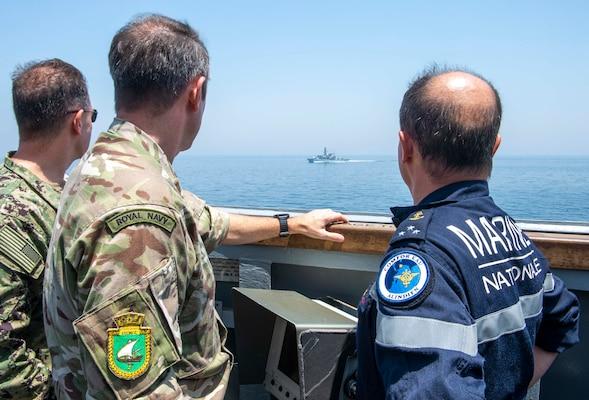
The latest announcement highlights the uncertainty facing commercial operators in the Strait of Hormuz. Ships must navigate an increasingly complex security environment in which military authorities issue competing instructions and reports of attacks can emerge before vessel identities or damage assessments are available.
Iran says the two supertankers ignored warnings and suffered explosions while using a prohibited route. The United States maintains that the principal internationally recognised shipping lanes have been cleared of naval mines, while maritime authorities continue to record attacks involving unidentified projectiles.
Until the circumstances of the latest explosions are independently established, responsibility for the damage and the precise cause of the incidents remain unresolved.
For the shipping industry, the immediate concern is the safety of crews and the ability to move energy supplies through the waterway without further attacks. For governments and energy markets, the continuing uncertainty around access to the strait threatens to prolong disruption to one of the world’s most important trade routes.