

Former Philippine president Rodrigo Duterte is due to appear before the International Criminal Court (ICC) in The Hague on 30 November, as proceedings begin over allegations of crimes against humanity linked to his controversial war on drugs.
The trial marks a major stage in an investigation into killings allegedly committed in the Philippines between November 2011 and March 2019, covering Duterte’s time as mayor of Davao City and his subsequent presidency.
Duterte, 81, faces three counts of crimes against humanity involving murder and attempted murder. Prosecutors allege that he played a central role in a widespread and systematic campaign against civilians, including through operations conducted by police and alleged death squads.
He denies the charges, and his lawyers have challenged the prosecution’s account, the court’s jurisdiction and his ability to participate effectively in the proceedings.
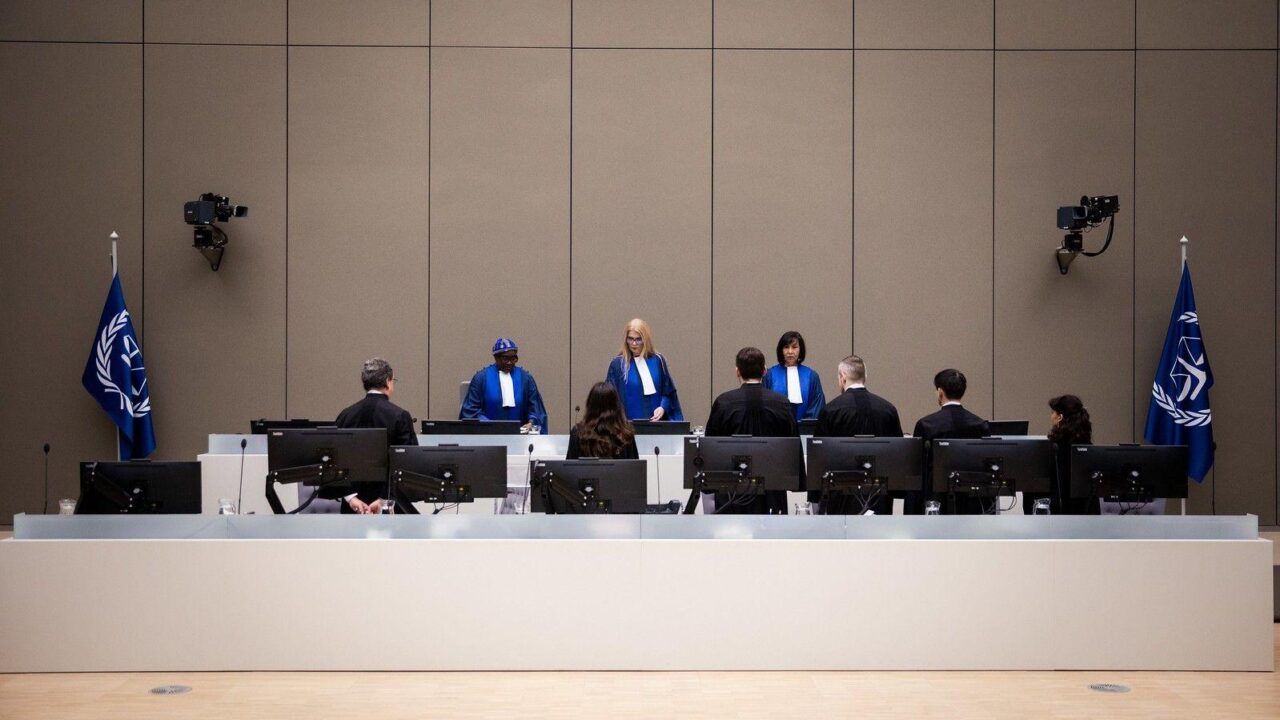
The trial is scheduled to open at 10am local time on Monday, 30 November. Judges will first confirm that Duterte understands the charges and establish his plea before hearing opening statements from the prosecution and representatives of victims.
The proceedings are expected to examine evidence concerning alleged killings during Duterte’s years in local and national government. More than 500 victims have been authorised to participate through legal representatives, while prosecutors anticipate calling approximately 100 witnesses.
The case is expected to continue over several months and could last several years, depending on the evidence and legal issues raised during the hearings.
Three counts of crimes against humanity
The ICC prosecution has brought three counts against Duterte, covering alleged murders and attempted murders committed between 1 November 2011 and 16 March 2019.
The first count concerns killings allegedly committed in and around Davao City during Duterte’s time as mayor. Prosecutors allege that he was associated with the Davao Death Squad, an alleged network accused of carrying out extrajudicial killings.
The second count concerns alleged murders of people classified as high-value targets during his presidency, between approximately July 2016 and July 2017.
The third count concerns alleged murders and attempted murders during police operations known as barangay clearance operations, conducted in locations across the Philippines between approximately July 2016 and September 2018.
The prosecution’s case covers 85 alleged murders and two attempted murders, according to the charges described in recent reporting.
Prosecutors argue that these incidents formed part of a broader, organised attack against a civilian population in the context of the government’s anti-drug campaign.
The allegations concern Duterte’s alleged responsibility for the crimes, including claims that he ordered, encouraged or otherwise contributed to their commission.
The charges do not mean that every death associated with the wider drug war is part of this specific trial. The case concerns particular alleged incidents and the prosecution’s claims about Duterte’s role in them.
On 23 April 2026, ICC Pre-Trial Chamber I unanimously confirmed all three counts and committed Duterte to trial.
That decision meant judges considered there was sufficient evidence to establish substantial grounds to believe that he was responsible for the alleged crimes. It was not a final judgment of guilt.
The prosecution must still prove the charges beyond reasonable doubt during the trial.
What will happen when the trial opens?
The opening hearing is scheduled for 10am on 30 November at the ICC’s headquarters in The Hague, Netherlands.
The first stage will involve judges confirming that Duterte understands the charges and the nature of the proceedings.
He will then be asked whether he admits guilt or pleads not guilty.
The court will subsequently hear opening statements from the prosecution and the Common Legal Representatives of Victims. Duterte’s defence team may also deliver an opening statement.
The prosecution has been allocated six hours for its opening presentation, while the victims’ legal representatives have been granted three hours.
The hearings are divided into four daily sessions:
- 10am–11am
- 11.30am–12.30pm
- 1.30pm–2.30pm
- 3pm–4pm
All times are local to The Hague.
After the opening statements, the first prosecution witness is scheduled to begin giving evidence. The court expects the first five prosecution witnesses to testify before the winter judicial recess, which begins on 18 December.
The prosecution currently anticipates calling approximately 100 witnesses over the course of its case.
The defence will have an opportunity to challenge the evidence, question witnesses and present its own witnesses and arguments.
The final judgment will be delivered after the parties complete their cases and closing arguments. Judges must be satisfied beyond reasonable doubt before they can convict Duterte.
Defence challenges Duterte’s ability to stand trial
The trial preparations have faced renewed uncertainty following a filing submitted by Duterte’s legal team on 25 November.
In the 77-page pre-trial document, lead defence counsel Peter Haynes argued that the former president’s cognitive impairment significantly limits his ability to understand the proceedings and assist his lawyers.
The defence cited difficulties involving short-term memory, concentration, word retrieval and other cognitive functions.
It also argued that the large volume of evidence disclosed by prosecutors makes it difficult for Duterte to provide meaningful instructions. The defence said the evidentiary record contains more than 62,000 items.
The filing raised three broader arguments.
First, Duterte’s lawyers questioned whether he was sufficiently capable of participating effectively in the trial.
Second, they challenged the prosecution’s interpretation of his statements about the anti-drug campaign, arguing that his language reflected his regional speaking style rather than instructions to commit murder.
Third, they disputed the characterisation of the alleged killings as crimes against humanity and argued that the allegations should be addressed by Philippine courts.
These arguments represent the defence’s position and have not been accepted as established findings.
The latest filing comes after a lengthy dispute over Duterte’s fitness to stand trial.
On 8 October 2026, Trial Chamber III ruled that he was fit to participate. The decision followed assessments by a panel of independent medical experts and consideration of submissions from the prosecution and defence.
The judges concluded that Duterte could understand the charges, follow the proceedings, assess evidence and communicate with his legal representatives.
The court also introduced measures to facilitate his participation and ordered continued medical monitoring.
As of 27 November, the court had not publicly announced a new decision overturning its earlier fitness ruling in response to the latest defence filing.
Why the ICC has jurisdiction over Duterte
Another major issue in the proceedings concerns the Philippines’ withdrawal from the Rome Statute, the treaty that established the International Criminal Court.
The Philippines became a member of the ICC on 1 November 2011.
In March 2018, Duterte’s administration notified the United Nations of its decision to withdraw from the treaty. The withdrawal took effect on 17 March 2019.
His legal team has challenged the court’s authority to prosecute him, arguing that the Philippines was no longer an ICC member when the investigation and arrest proceedings advanced.
However, the ICC has rejected this argument.
On 22 April 2026, the Appeals Chamber confirmed that the court retained jurisdiction over alleged crimes committed in the Philippines while the country was still a State Party to the Rome Statute.
The relevant period extends from 1 November 2011 to 16 March 2019.
The court’s reasoning is based on the Rome Statute’s withdrawal provisions, which preserve jurisdiction over alleged crimes committed before a country’s withdrawal takes effect.
This means that leaving the ICC does not automatically remove the court’s authority over crimes allegedly committed while the country was still a member.
The decision was an important procedural development because it removed a central legal obstacle raised by Duterte’s defence.
It does not determine whether the allegations are true. That question must be resolved through the trial itself.
Duterte’s arrest and transfer to The Hague
Duterte was arrested in Manila on 11 March 2025 after the ICC issued a warrant for his arrest.
The warrant had been issued confidentially on 7 March before being made public four days later.
He was transferred to ICC custody in The Hague on 12 March 2025.
The arrest followed years of investigation into the killings associated with the Philippines’ anti-drug campaign.
The ICC’s initial appearance hearing took place on 14 March 2025, when Duterte appeared before the court by video link.
His defence subsequently requested an indefinite postponement of proceedings, arguing that he was not medically fit to participate.
On 26 January 2026, the pre-trial judges rejected the request for an indefinite adjournment after reviewing an independent medical assessment.
The confirmation of charges hearing was eventually held from 23 to 27 February 2026.
On 23 April, judges confirmed all three counts and transferred the case to a trial chamber.
The court also reviewed Duterte’s continued detention. In September 2026, Trial Chamber III decided that he should remain in custody while the proceedings continued.
More than 500 victims authorised to participate
The trial will provide an opportunity for hundreds of people affected by the anti-drug campaign to participate through legal representatives.
The ICC has authorised 539 victims to participate in the proceedings.
They are represented by a common legal team consisting of lawyers Joel Butuyan and Gilbert Andres, alongside Paolina Massidda from the Office of Public Counsel for Victims.
Victims can present observations and communicate their experiences through their representatives during the proceedings.
They may also seek reparations if Duterte is eventually convicted and the court determines that compensation is appropriate.
The court has authorised victims who participated during the pre-trial phase to continue participating in the trial.
Additional applications may also be considered as proceedings advance.
The protection of witnesses has become an important issue before the trial begins.
On 20 November, the victims’ legal representatives supported requests for protective measures, including the use of pseudonyms and closed-door testimony in cases where public identification could create safety risks.
The representatives argued that some witnesses and their families may face threats or intimidation if their identities are disclosed.
These measures are intended to balance public access to proceedings with the need to protect victims and witnesses.
Families of drug war victims prepare to attend
The approaching trial has renewed attention on families who have spent years seeking accountability for relatives killed during the anti-drug campaign.
Among those planning to attend proceedings in The Hague is Llore Pasco, a 72-year-old mother whose two sons were killed during the period covered by the case.
She has described her journey as an opportunity to witness the proceedings and represent families who have waited years for answers.
Other relatives and advocacy groups in the Philippines are also preparing to follow the trial through online broadcasts.
Some families have spoken about the difficulties of speaking publicly because of harassment and hostile reactions from Duterte supporters.
Human rights organisations and religious groups have provided assistance to relatives seeking to participate in the proceedings.
For many families, the trial represents a major opportunity to have their accounts heard before an international court.
However, legal representatives have also cautioned that the process is only one stage of a much longer effort to establish accountability.
A final judgment may take years, and the outcome cannot be assumed before the evidence has been examined.
The scale of the Philippines’ war on drugs
Duterte’s anti-drug campaign began when he assumed the presidency in June 2016.
He had already promoted aggressive anti-crime policies while serving as mayor of Davao City.
The national campaign relied heavily on police operations targeting suspected drug dealers and users.
The Philippine National Police reported that more than 6,200 people were killed during anti-drug operations under Duterte’s presidency between 2016 and 2022.
However, estimates from human rights groups and other organisations are significantly higher because they also include killings attributed to unidentified assailants and people suspected of having links to the campaign.
Human Rights Watch cited estimates ranging from 20,000 to 30,000 deaths involving police and unidentified assailants.
These figures cover different categories and reporting methods, so they should not be treated as a single verified death toll.
The government maintained that police operations were necessary to combat illegal drugs and that officers acted in self-defence when confronted by armed suspects.
Human rights organisations and families of victims have disputed that account, alleging that many people were killed without lawful process.
The ICC investigation examines whether the alleged killings formed part of a widespread and systematic attack against a civilian population.
That legal question is central to determining whether the acts fall within the court’s jurisdiction over crimes against humanity.
Political divisions in the Philippines
The ICC proceedings have also exposed political divisions within the Philippines.
Duterte’s arrest and transfer to The Hague took place during the presidency of Ferdinand Marcos Jr, whose administration allowed the transfer following the execution of the ICC arrest warrant.
The decision generated disagreement among politicians and Duterte supporters, who questioned the government’s handling of national sovereignty.
Vice President Sara Duterte, Rodrigo Duterte’s daughter, has also criticised the international proceedings and challenged the legitimacy of foreign jurisdiction over the former president.
Supporters of the former president have argued that accountability should take place through Philippine institutions rather than an international tribunal.
Victims’ families and human rights advocates, however, have expressed concern about the effectiveness of domestic investigations into the alleged killings.
Human Rights Watch reported on 24 November that only five cases involving nine police officers had resulted in convictions for Duterte-era drug-war killings.
The organisation said this limited record had contributed to victims’ families placing their hopes in the ICC.
The ICC’s involvement therefore reflects not only the alleged crimes themselves but also the dispute over whether domestic institutions have provided meaningful accountability.
Why the trial matters beyond the Philippines
The Duterte proceedings are significant for the future application of international criminal law.
The case involves a former head of state accused of crimes against humanity while overseeing a national anti-drug campaign.
It also tests the ICC’s ability to investigate alleged crimes in a country that subsequently withdrew from the Rome Statute.
The court’s jurisdiction ruling in April 2026 established that withdrawal does not automatically end its authority over alleged crimes committed during a country’s membership.
The proceedings are also significant for victims’ participation.
More than 500 victims have been authorised to take part through legal representatives, providing an important opportunity for those affected to contribute to the international judicial process.
The case may also influence how future investigations examine alleged state responsibility, political leadership and the use of security operations against civilian populations.
However, the trial’s outcome will depend on the evidence presented and the court’s assessment of whether the prosecution has established individual criminal responsibility.
What happens after 30 November?
The opening hearing on 30 November will mark the beginning of the trial phase, rather than the delivery of a verdict.
The prosecution will present its opening statement and begin calling witnesses after the initial proceedings.
The first five prosecution witnesses are expected to testify before the winter judicial recess begins on 18 December.
The prosecution currently anticipates calling approximately 100 witnesses.
The defence will have the opportunity to challenge the prosecution’s case, question witnesses and present evidence in support of Duterte.
The legal representatives of victims will also participate throughout the process.
The court expects the proceedings to take several years because of the number of alleged incidents, the volume of evidence and the need to protect witnesses.
If convicted, Duterte could receive a prison sentence of up to 30 years or, in exceptional circumstances, life imprisonment. The ICC does not impose the death penalty.
If acquitted, he would be released from ICC custody unless another lawful basis for detention applied.
Either side may appeal a final judgment or sentence.
A landmark trial begins after years of investigation
The opening of Rodrigo Duterte’s ICC trial represents a major development for the families of those killed during the Philippines’ war on drugs and for the wider international justice system.
The proceedings will examine allegations involving killings in Davao City and across the country, as well as the possible responsibility of the former president for those crimes.
The defence continues to challenge the prosecution’s account, the court’s jurisdiction and Duterte’s capacity to participate effectively.
The judges will now have to examine the evidence, assess witness testimony and determine whether the charges can be proved beyond reasonable doubt.
For victims’ families, the trial offers an opportunity to present their experiences before an international tribunal after years of waiting.
For Duterte, it represents the beginning of a legal process in which he retains the right to contest the allegations and defend himself.
The opening hearing on 30 November will not provide an immediate answer to the questions surrounding the drug-war killings.
Instead, it will begin a lengthy judicial process whose outcome could have lasting consequences for accountability, political leadership and international criminal law.