

A drone attack on residential areas in Sudan’s Khartoum State has killed three civilians and injured 10 others, including five children, according to local authorities. The strike hit the Karari locality in the greater Omdurman area, adding to growing concerns over the use of drones in a conflict that has increasingly exposed civilians to attacks far beyond the front lines.
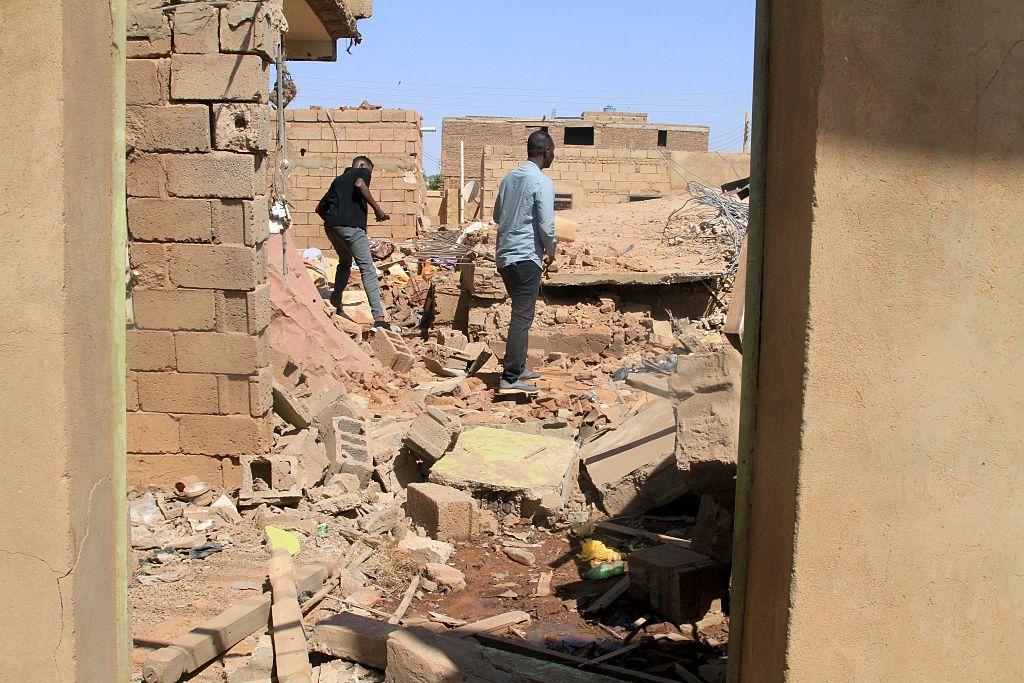
The attack took place on Sunday, 22 November. Survivors told officials that the explosion caused the roof of a room to collapse and damaged nearby walls. Police recovered the bodies of those killed from beneath the rubble, while the injured were transferred to Al-Nao Hospital for treatment.
Khartoum Governor Ahmed Othman Hamza visited the wounded on Monday, accompanied by senior health officials and the hospital’s director. He condemned the attack on people inside their homes and called it an unacceptable act.
The incident formed part of a wider wave of drone activity over the Sudanese capital that also damaged a United Nations facility while humanitarian staff were inside. The separate attacks have renewed warnings about the risks facing civilians and aid workers as Sudan’s war enters another phase of intensified aerial operations.
Five children among the injured
The attack targeted civilian sites in Karari, a locality in the Omdurman area of Khartoum State. Local authorities said three people were killed and 10 were wounded, with five children among those injured.
The explosion caused significant damage to a residential room. Survivors told officials that its roof collapsed and sections of the surrounding walls were damaged. Police personnel subsequently recovered the bodies from beneath the debris and arranged for the injured to receive medical attention.
Governor Ahmed Othman Hamza visited the victims at Al-Nao Hospital on Monday. He was accompanied by Mahmoud Al-Badri, director-general of the Khartoum State Health Ministry, and hospital director Jamal Al-Tayeb.
The governor condemned the targeting of civilians in their homes. His comments reflected growing concerns among local authorities about the consequences of drone attacks in residential neighbourhoods.
The condition of all 10 injured people was not fully detailed in the initial public report. Authorities had also not released a complete account of the damage to surrounding properties or identified all those affected.
A wider wave of drone attacks hits Khartoum
The strike in Karari was one of several drone-related incidents reported across the greater Khartoum area on 22 November.
Explosions and anti-aircraft fire were heard in several parts of the capital during the early morning hours as Sudanese military air defences responded to drones flying over the city. Witnesses reported activity around eastern Khartoum, including areas near the international airport, as well as in Omdurman and other neighbourhoods.
Separate reports recorded further civilian casualties in the wider area. An attack in Jebel Aulia, south of Khartoum, killed a 10-year-old child, according to local reporting. The deaths in Karari and the separate incident in Jebel Aulia brought the reported civilian toll from the attacks across the capital to at least four.
The incidents also raised concerns about the safety of humanitarian personnel. The United Nations said a facility in a residential neighbourhood of Khartoum was damaged while UN colleagues were inside the building.
Denise Brown, the UN Resident and Humanitarian Coordinator in Sudan, said the presence of humanitarian personnel and the location of the damaged premises made the incident particularly serious. She stressed that civilians were not legitimate targets in war and that UN personnel and humanitarian assets were protected under international humanitarian law.
The Sudan Doctors Network later reported that three UN staff members had been injured in the attack on the facility. The UN’s initial statement confirmed damage and the presence of personnel but did not provide a staff casualty figure.
The UN did not identify the party responsible for the strike on its facility. The circumstances of the attack remain a separate matter from the Karari residential strike.
Responsibility remains disputed
The attribution of drone attacks in Sudan has become a central issue in the country’s conflict.
The Rapid Support Forces (RSF), the paramilitary group fighting the Sudanese Armed Forces, have been accused by Sudanese authorities and civil society organisations of carrying out attacks on civilian neighbourhoods and infrastructure. The RSF has denied targeting civilians and says it is acting to protect them.
The Emergency Lawyers group, a Sudanese legal network, attributed the wider series of drone attacks across Khartoum State on 22 November to the RSF. It reported that four civilians, including a child, were killed and 10 others injured in attacks across different locations.
Khartoum’s governor also blamed what he described as a militia for the pattern of attacks against residents. However, the public account of the Karari incident did not provide independently verified technical evidence identifying the drone or establishing its launch location.
The distinction is important. The death toll and damage reported by local authorities are separate from the question of who carried out the attack. Independent confirmation of responsibility is necessary before assigning definitive blame for an individual strike.
The wider conflict has involved drone operations by both the Sudanese military and the RSF. Both sides have been accused of attacks that have harmed civilians and damaged essential infrastructure.
Drone warfare is increasing the civilian toll
The latest attack comes as drones have become a defining feature of Sudan’s war.
A report published by the UN Human Rights Office on 17 November documented more than 2,230 civilian deaths between January and the end of October 2026. More than 1,630 of those deaths were attributed to drone strikes, according to figures the UN said it had been able to verify.
The report found that drones had caused more than 80 per cent of verified civilian casualties in the first half of the year. It also recorded a further increase in drone-related deaths during the following months.
The UN documented attacks affecting markets, hospitals, schools, fuel facilities, water supplies, displacement sites and civilian vehicles. These strikes have damaged services that communities depend on for food, healthcare, electricity and safe drinking water.
The growing use of drones has changed the geography of the conflict. Attacks can reach cities and infrastructure far from conventional front lines, increasing the risks for people who may previously have considered themselves distant from active fighting.
The UN has warned that attacks on civilian facilities and essential services may violate international humanitarian law. High Commissioner for Human Rights Volker Türk has called on the parties to the conflict to protect civilians and respect their legal obligations.
Sudan’s war continues to devastate civilian life
Sudan’s conflict began on 15 April 2023, when fighting erupted between the Sudanese Armed Forces, led by General Abdel Fattah al-Burhan, and the RSF, commanded by Mohamed Hamdan Dagalo, widely known as Hemedti.
The immediate dispute centred on plans to integrate the paramilitary force into the national army. Disagreements over the timetable and command structure escalated into fighting, which spread from Khartoum to other regions.
The war has killed tens of thousands of people and displaced millions inside Sudan and across its borders. Large areas have suffered extensive damage, while hospitals, markets, schools and other civilian facilities have been destroyed or left unable to operate.
Humanitarian organisations have repeatedly warned that civilians are facing shortages of food, clean water and medical care. The spread of drone attacks has further complicated relief work by increasing the danger to aid workers and disrupting essential infrastructure.
The attacks in Khartoum also come as residents have begun returning to parts of the capital after the Sudanese army recaptured the city in May 2025. Renewed aerial attacks threaten that fragile recovery and create fresh uncertainty for families attempting to rebuild their homes and livelihoods.
International concern grows over attacks on civilians
The damage to the UN facility and the latest civilian casualties prompted international concern.
Saudi Arabia and Egypt condemned the drone attacks in the greater Khartoum region and called for the protection of civilians, civilian infrastructure and international personnel. Both governments stressed the importance of respecting international humanitarian law.
The UN has also renewed its warning that humanitarian staff and facilities must be protected. Its humanitarian coordinator said the presence of aid workers in Sudan was intended to support people across the country, making attacks that expose them to danger unacceptable.
The statements reflect a broader concern that continued attacks on residential areas and aid facilities could further restrict humanitarian access at a time when millions of Sudanese people need assistance.
The challenge is not only to identify those responsible for individual attacks, but also to ensure that investigations lead to accountability and that the parties take practical steps to prevent further civilian harm.
A dangerous escalation for Khartoum
The deaths in Karari underline the continuing vulnerability of residents in Sudan’s capital. The injury of five children in a single attack also highlights the human cost of drone warfare in densely populated areas.
For families affected by the strike, the immediate priority is medical treatment, support for the injured and the recovery of homes damaged by the explosion. For local authorities, the incident adds pressure to improve civilian protection while the conflict continues.
The separate damage to a UN facility has raised the stakes for humanitarian organisations operating in the capital. Aid workers must be able to carry out their work without being exposed to attacks on protected facilities.
As drone operations continue across Sudan, the need for independent investigations and stronger protection of civilian infrastructure is becoming increasingly urgent. The latest attack in Karari is another reminder that the consequences of the war are being felt not only by combatants, but also by families, children and humanitarian workers caught in the path of the fighting.