


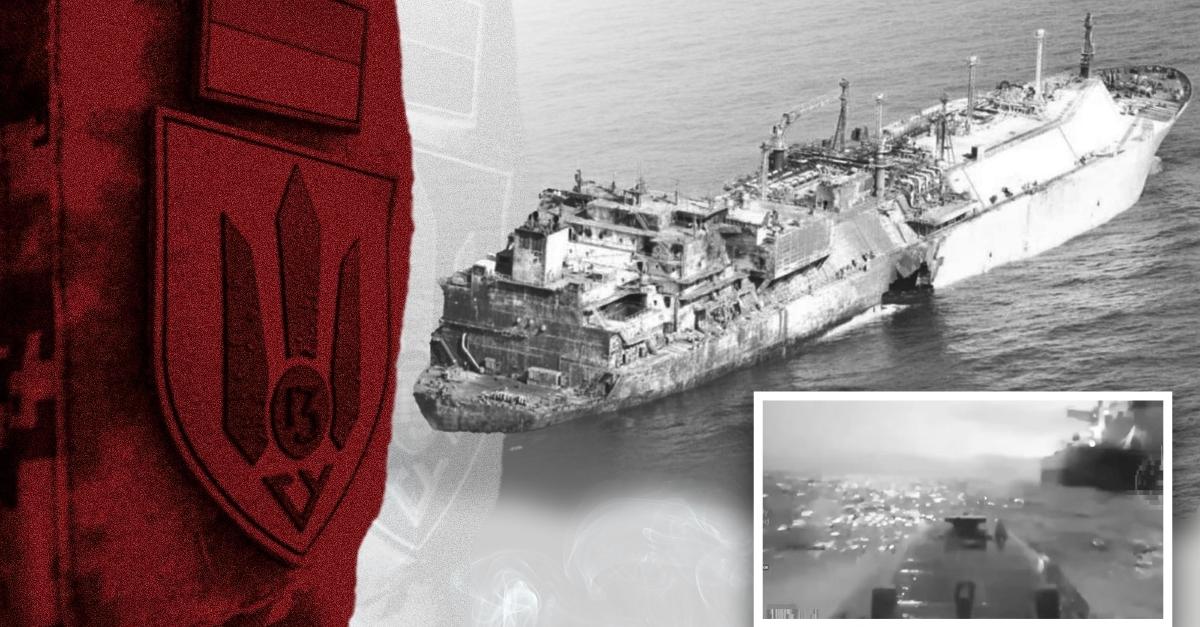
Ukraine has claimed responsibility for sinking a Russian naval corvette at a port in eastern Libya, marking a significant expansion of its long-range military operations beyond the traditional battlefields of the Russia-Ukraine war.
President Volodymyr Zelenskyy confirmed on Monday, 23 November, that Ukrainian forces had launched an attack against Russian naval assets near Benghazi using seven maritime drones. The operation targeted the Russian Navy corvette Merkury, which was docked at a naval facility in the Libyan city.
Satellite imagery showed that most of the vessel had capsized and submerged following explosions and a fire. Ukrainian authorities described the operation as successful, while Libyan officials said the warship had suffered severe damage. At least 10 people, including Russian and Libyan nationals, were reportedly injured.
Ukraine also claimed to have struck a Russian cargo vessel called MV Angara, which Kyiv alleged was involved in transporting military equipment. Zelenskyy additionally said a Russian Ka-27 military helicopter aboard the corvette had been destroyed.
The attack represents a rare direct Ukrainian strike against Russian naval assets in the Mediterranean. It also raises questions about the growing military significance of eastern Libya, Russia’s relationship with local authorities and the possibility that the conflict could increasingly affect shipping and security far beyond the Black Sea.
Ukraine confirms seven-drone operation
The attack took place in the early hours of Sunday, 22 November, at the Benghazi naval base in eastern Libya.
Initial reports from the eastern Libyan administration described an explosion aboard a Russian vessel docked at the port. Officials said a drone attack was suspected and confirmed that emergency teams had responded to a fire.
The eastern administration initially condemned the incident as a violation of Libyan sovereignty and called for an investigation into the circumstances surrounding the explosion.
On Monday, Zelenskyy publicly confirmed Ukraine’s involvement. He said Ukrainian forces had deployed seven domestically manufactured maritime drones and that the operation had achieved its intended objectives.
The Ukrainian president described the Merkury as one of Russia’s newer naval vessels. Commissioned in 2023, the corvette had been operating as part of the Russian Navy’s fleet.
Ukraine’s Security Service, known as the SBU, also released video footage showing maritime drones approaching and striking Russian vessels. The agency said the drones had been transported to a designated location and launched from a larger support vessel, described as a mother ship.
Reuters verified footage released by the Ukrainian authorities showing explosions, fire and smoke associated with the attacks.
The Ukrainian announcement was significant because it represented the first official acknowledgement by Kyiv of an operation against Russian military assets in Libya.
Russian corvette Merkury capsizes at Benghazi
The main target was the Russian Navy corvette Merkury, which had been docked at the Benghazi naval base.
Satellite images released after the attack showed the vessel lying capsized in the harbour. Most of its structure was submerged, with only part of the bow remaining visible above the water.
The imagery also showed debris around the vessel and signs of damage near the pier. Separate images captured smoke rising from the area following the explosion.
According to two Libyan military officials who spoke to the Associated Press, at least four incoming drones were intercepted while two struck the corvette. The officials said the attacks caused serious damage and triggered a fire.
Ukraine’s account went further, claiming that the vessel had been sunk. Although the satellite imagery shows the corvette capsized and largely submerged, its final recovery or destruction status had not been independently established through a full technical assessment by 24 November.
The distinction matters because a capsized vessel may be considered operationally lost even if it remains physically present at its berth. A complete assessment would require information about the extent of underwater damage and whether the ship could be recovered.
The Merkury entered Russian naval service in 2023. Its destruction or permanent loss would represent a material setback for the Russian Navy, particularly because modern naval corvettes are expensive and take considerable time to build.
The vessel’s presence in Benghazi also highlights the growing role of eastern Libya in Moscow’s military and logistical relationships across the Mediterranean.
Cargo ship MV Angara also targeted
Ukraine said the operation involved another Russian-linked vessel, the dry cargo ship MV Angara.
Zelenskyy identified the ship as a second target and alleged that it had been used to transport weapons and military equipment for Russia.
The SBU said the cargo vessel was subject to sanctions and formed part of Russia’s military logistics network. The agency also claimed that the Merkury had escorted Russian cargo ships, including the Angara, during maritime movements.
Video released by Ukraine showed a maritime drone approaching the cargo vessel before an explosion and fire. Reuters verified footage showing smoke and flames aboard the ships.
However, the precise extent of damage to the MV Angara was not independently established in the initial reporting. The claim that the vessel was used to transport weapons was made by Ukrainian authorities and should not be treated as an independently confirmed cargo manifest.
The attacks have drawn attention to the wider network of Russian shipping that transports supplies, equipment and other materials between Russia and overseas destinations.
Such vessels have become increasingly important as Moscow seeks to maintain logistical links with partners and military installations outside its immediate neighbourhood.
At least 10 people reported injured
The attack caused casualties among people connected to the naval facility.
Two Libyan military officials briefed on the operation told the Associated Press that at least 10 people, including Russian and Libyan nationals, were wounded.
The officials were affiliated with the Libyan National Army, which controls eastern and southern Libya, and spoke on condition of anonymity because they were not authorised to speak publicly.
The early statement from the eastern Libyan administration did not provide a confirmed casualty total. It said emergency personnel had brought the fire under control and that port facilities and storage areas were not damaged.
The presence of injured personnel raises concerns about the safety of military and civilian workers at facilities that host foreign naval vessels.
The attack also demonstrated the potential risks associated with maritime drone operations near busy ports. Even when a military ship is the intended target, fires, explosions and debris can threaten nearby infrastructure and personnel.
The eastern administration condemned the strike and said it would pursue legal and diplomatic measures against anyone found responsible.
Russian authorities had not issued a detailed public account of the damage or casualties by 24 November.
Why was a Russian warship in Libya?
The Merkury was not operating in international waters when it was attacked. It had docked at Benghazi to refuel and take on supplies while travelling back towards Russia.
According to the eastern Libyan administration, the visit took place under an existing maritime cooperation arrangement between Russia and the authorities controlling the eastern part of the country.
Eastern Libya is controlled by military commander Khalifa Haftar and the Libyan National Army. The administration based in the east operates separately from the internationally recognised Government of National Unity, which is based in Tripoli.
Russia has developed close relations with Haftar’s forces over several years, providing military assistance and maintaining personnel and logistical networks in the region.
Moscow’s presence in eastern Libya is strategically important because the country provides access to the central Mediterranean and offers routes towards parts of North Africa and the Sahel.
Benghazi and nearby eastern ports can also serve as support points for naval vessels requiring fuel, supplies and maintenance.
The arrangement has attracted attention from European governments because a stronger Russian military presence in Libya could give Moscow additional logistical options in the Mediterranean.
The attack on the Merkury has therefore placed a spotlight on a relationship that extends beyond the immediate conflict in Ukraine.
Libya demands investigation into the attack
The eastern Libyan administration condemned the operation and described it as a serious violation of the country’s sovereignty.
Its prime minister, Osama Hamad, wrote to United Nations Secretary-General António Guterres and the UN Security Council requesting an international investigation.
The eastern authorities raised concerns about whether the drones had been launched from western Libya and whether Ukrainian military specialists operating in the country had been involved in planning the operation.
The request places additional pressure on Libya’s divided political leadership, which has repeatedly struggled to establish a unified security policy.
The Government of National Unity in Tripoli also condemned military operations carried out on Libyan territory or within its territorial waters. Its foreign ministry said that neither Ukraine nor Russia had the right to conduct operations in Libya simply because the two countries were at war.
The statement added that foreign forces should not use Libyan ports or infrastructure for military purposes.
The differing political authorities in eastern and western Libya have therefore found common ground in opposing the use of the country’s territory as an extension of the Russia-Ukraine conflict.
However, their ability to investigate the incident jointly remains uncertain because security and military institutions are divided between rival centres of authority.
A major expansion of Ukraine’s long-range naval operations
The Benghazi operation demonstrates how Ukraine is increasingly using domestically developed unmanned systems to strike Russian military and logistical assets at long distances.
Maritime drones have become an important part of Ukraine’s strategy against the Russian Navy. The country has developed several unmanned surface vessels capable of carrying explosives and navigating towards targets with limited direct human control.
These systems have been used extensively in attacks against Russian naval facilities and ships in the Black Sea.
Their significance lies partly in their cost and operational flexibility. Ukraine does not need to deploy a conventional warship close to heavily defended Russian naval installations to threaten vessels at sea or in port.
The use of a support vessel to transport and launch drones near a distant target potentially expands the geographical range of such operations.
The Benghazi attack took place approximately 2,400 kilometres from Ukraine’s front line, according to the Associated Press.
It also demonstrated the vulnerability of vessels during port visits, particularly when ships are stationary and engaged in refuelling or resupply operations.
For Russia, the incident raises questions about the security of naval logistics outside the Black Sea and the protection of military-linked cargo vessels.
For Ukraine, the attack represents an attempt to impose additional costs on Moscow by targeting the wider network supporting its military operations.
The Mediterranean becomes another area of concern
The attack on the Merkury has raised concerns about the possibility of the Russia-Ukraine war extending further into the Mediterranean.
The region contains important commercial shipping routes, naval installations and energy infrastructure. It is also strategically important to NATO members, North African states and countries bordering the eastern Mediterranean.
Russia has sought to maintain a military presence in the region through naval deployments and relationships with governments and armed groups in countries including Libya.
Ukraine’s operation could make those networks more vulnerable to further attacks, particularly when Russian vessels operate outside areas where Moscow has strong defensive capabilities.
There are also risks for Libya itself. The country has spent years attempting to move away from armed conflict and rebuild its institutions following the 2011 uprising and subsequent political fragmentation.
Allowing foreign powers to conduct military operations from or against Libyan territory could deepen divisions and complicate diplomatic efforts to stabilise the country.
The response from the Tripoli administration and the request for a UN investigation indicate that both political centres are concerned about Libya becoming more directly involved in the war.
What happens next?
The immediate questions concern the condition of the Merkury, the extent of damage to the MV Angara and the status of those injured during the operation.
Russia’s Defence Ministry had not publicly provided a detailed response by 24 November. The absence of a full Russian account has limited independent verification of the damage and the military consequences.
The eastern Libyan authorities have requested international involvement in examining the circumstances of the attack, particularly the possible launch location of the drones.
The United Nations may also face pressure to establish whether foreign military personnel or facilities in western Libya played a role in the operation.
For Ukraine, the attack demonstrates the reach of its maritime drone programme and its willingness to target Russian assets beyond the main theatre of war.
For Moscow, it presents another challenge in securing naval and logistical movements across the Mediterranean.
The incident also leaves Libya facing difficult questions about foreign military cooperation, sovereignty and the protection of its ports.
The sinking of the Merkury marks an important moment in the geography of the Russia-Ukraine war. What began as a conflict centred on Ukraine and the Black Sea is increasingly affecting shipping networks and military relationships further afield.
The consequences will depend not only on the damage to the Russian vessels, but also on how Moscow, Kyiv and Libya’s divided authorities respond to the growing risk of further attacks in the Mediterranean.


