

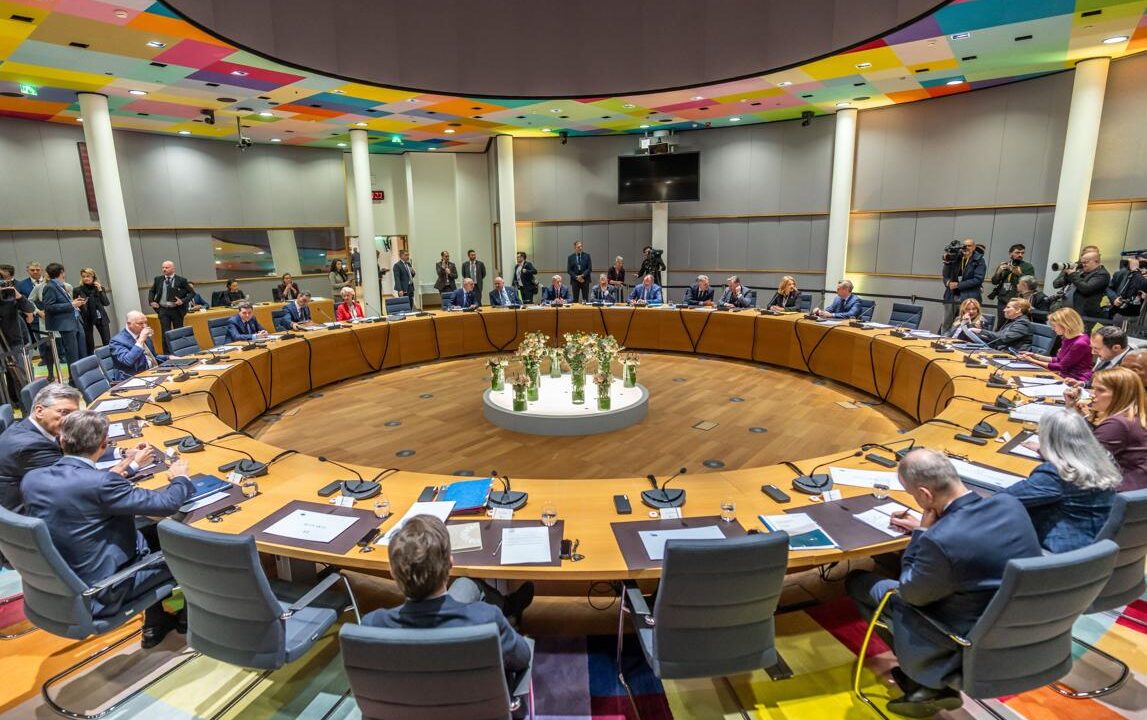
European Union leaders have failed to reach an agreement on the bloc’s next seven-year budget after a difficult summit in Brussels, exposing deep divisions over public spending, national contributions and financial support for Ukraine.
The discussions took place on 26 November, bringing together leaders from all 27 member states to examine the proposed 2028–2034 Multiannual Financial Framework (MFF) and Ukraine’s financing requirements for 2027.
The latest budget proposal, presented by European Council President António Costa on 21 November, totals approximately €1.582 trillion in constant prices. Its equivalent in current prices is around €1.78 trillion.
The package aims to balance traditional European spending priorities, including agriculture and regional development, with increased investment in defence, technological competitiveness and security.
However, governments remain divided over the overall size of the budget and how its resources should be distributed.
The summit ended without an agreement on the long-term financial framework. Costa confirmed that several countries wanted further reductions, while a larger group opposed additional cuts, particularly to agricultural and regional development funding.
Ukraine’s financial requirements also featured prominently. The European Commission has proposed an additional €45 billion loan for 2027 to help cover the country’s estimated €70 billion financing gap.
Costa said 24 member states supported the proposal, with Bulgaria participating only in the non-military component. Leaders are expected to revisit the issue during their next round of discussions in December.
The unresolved negotiations have created an important test for European unity as the bloc attempts to finance its economic priorities while continuing to support Ukraine against Russia’s ongoing invasion.
EU leaders fail to agree on seven-year budget
The European Council meeting was intended to bring member states closer to an agreement on the EU’s next long-term spending plan.
The proposed budget will cover the period from 1 January 2028 to 31 December 2034.
It determines how the European Union finances major policies, including agricultural subsidies, regional development, infrastructure, research, technological innovation, defence and external assistance.
The latest proposal from Costa sets the budget at €1.582 trillion in constant prices, including approximately €140 billion to repay borrowing associated with the European Union’s post-pandemic recovery programme.
In current prices, the proposed financial framework is estimated at approximately €1.78 trillion.
Around €740 billion is allocated to supporting European agriculture and helping economically weaker regions improve their infrastructure and living standards.
These allocations represent some of the largest spending commitments within the proposed framework.
However, the negotiations exposed disagreement over whether the overall budget should be reduced further or whether additional resources are necessary to address Europe’s expanding responsibilities.
European Council President António Costa acknowledged that leaders had failed to reach an agreement.
He said some governments wanted further reductions in the budget, while most opposed additional cuts. Several countries also argued that funding for regional development should be restored in areas where previous proposals had reduced allocations.
Costa said the discussions would continue at a future European Council meeting.
The failure to reach an agreement highlights the difficulty of balancing national financial interests with common European priorities.
Germany and the Netherlands seek a smaller budget
One of the main sources of disagreement concerns the contributions made by wealthier EU member states.
Germany, the Netherlands, Sweden, Austria and Finland are among the countries that contribute more to the European budget than they receive through its spending programmes.
These governments are generally described as net contributors.
They have argued that the next budget should be smaller, more efficient and directed towards areas where European investment can strengthen the bloc’s international competitiveness.
Germany has called for greater spending on defence, security, technological development and industrial competitiveness.
Dutch Prime Minister Rob Jetten has also argued that the proposed budget needs to be modernised and reduced.
Speaking during the Brussels discussions, Jetten said the Netherlands could not accept the current proposal without substantial changes.
The argument reflects growing concern among wealthier member states about increasing national contributions at a time when governments are already facing pressure from defence spending, economic uncertainty and domestic debt.
Germany is particularly concerned about the financial responsibilities associated with supporting Ukraine and maintaining Europe’s security commitments.
German Chancellor Friedrich Merz has said that the European Union must maintain sustainable public finances while continuing to meet its strategic responsibilities.
He has also linked the next budget agreement to a collective commitment from all 27 member states towards Ukraine.
France and Italy defend agriculture and regional development
A different group of governments is pushing to protect traditional European spending programmes.
France and Italy have been particularly vocal in defending agricultural subsidies and cohesion funding.
These programmes provide financial support to farmers, businesses, local authorities and regions that require investment to improve infrastructure and living standards.
France has placed particular emphasis on protecting the Common Agricultural Policy, which provides financial support to European farmers.
President Emmanuel Macron has argued that agricultural funding should not be weakened simply to create additional room for defence and competitiveness spending.
Italy has also expressed concerns about the distribution of resources and the financial contribution expected from its government.
Prime Minister Giorgia Meloni said Italy would not accept an arrangement under which it contributes more to the European budget while receiving fewer benefits.
The disagreements reflect the different economic structures and domestic priorities of EU member states.
Countries with large agricultural sectors want to preserve support for farmers, while economically weaker regions depend heavily on European funding for roads, transport systems, hospitals and other infrastructure.
The European Commission and Council must therefore find a balance between new strategic priorities and programmes that have historically supported economic convergence across the bloc.
Proposed budget introduces new sources of European revenue
Another important disagreement concerns how the European Union should finance its next long-term budget.
The current financial framework relies heavily on contributions from member states, alongside revenue collected through customs duties, value-added tax contributions and other EU resources.
Costa has proposed introducing five additional revenue streams to reduce pressure on national budgets.
The proposed sources include:
- Revenue from digital services provided by large companies.
- The Carbon Border Adjustment Mechanism.
- Levies on non-recycled electronic waste.
- Tobacco-related products.
- The European Union’s Emissions Trading System.
Costa said the proposed revenue sources, combined with existing resources, could generate approximately €60 billion annually.
The digital-services component could become particularly controversial because it would affect large multinational technology companies operating across Europe.
The proposal is intended to ensure that companies generating substantial revenue from European markets contribute towards the financing of common European priorities.
However, national governments remain divided over the introduction of new taxes and levies.
Some countries are concerned about the possible effect on businesses, investment and consumers, while others argue that additional revenue sources are necessary to limit increases in national contributions.
The final decision will require agreement among the member states as part of the broader budget negotiations.
Ukraine needs an additional €45 billion for 2027
Alongside the long-term budget, the financing of Ukraine became one of the most important subjects at the Brussels summit.
The European Commission estimates that Ukraine will face a financing gap of approximately €70 billion in 2027.
The shortfall reflects the financial burden of the continuing war with Russia, including military expenditure, the operation of essential public services and damage to infrastructure.
On 18 November, the Commission proposed an additional €45 billion in financial assistance for 2027.
The proposed loan would be divided into two main components.
Up to €25 billion would support military assistance, including defence capabilities and military requirements.
The remaining €20 billion would provide general budget support, helping Ukraine maintain essential public services, including healthcare, education and government operations.
The European Commission intends to finance the loan through borrowing in international capital markets, with the EU budget providing the guarantee.
The proposal includes an important repayment condition. Ukraine would be required to repay the principal once it receives reparations from Russia.
The Commission has said the assistance would help cover approximately two-thirds of Ukraine’s estimated financing requirements for 2027.
The remaining amount is expected to come from international partners outside the European Union, including countries such as Britain, Norway, Japan, Switzerland and Canada.
However, the financing arrangement still requires further political and legal approval.
Twenty-four countries support Ukraine loan proposal
European Council President António Costa confirmed that 24 EU member states supported the proposed additional loan following discussions in Brussels.
Bulgaria agreed to participate only in the non-military component, with its contribution focused on regions associated with the country’s national minority in Ukraine.
The remaining governments that have not agreed to participate fully include Slovakia, Hungary and the Czech Republic.
These countries have expressed objections to financing military assistance for Ukraine through the proposed arrangement.
Slovak Prime Minister Robert Fico has argued against financial commitments that could further involve his country in the conflict.
The Czech government has also called for Ukraine’s financing to be negotiated separately from the EU’s main long-term budget.
Hungary has previously opposed several European financial and military assistance measures for Kyiv.
Germany, meanwhile, has insisted that all member states should participate in the proposed arrangement.
Merz has argued that a common European financial commitment should involve all 27 countries rather than only a smaller group of governments.
The disagreement has become politically sensitive because the loan is closely connected to the broader negotiations over the EU’s future budget.
Although the two financial arrangements are legally distinct, some governments have linked their positions on Ukraine assistance to their approval of the long-term spending framework.
Costa confirmed that further discussions on Ukraine financing would take place in December.
Why Ukraine needs more financial assistance
Ukraine’s financial requirements have increased as the war with Russia continues to place pressure on its economy.
Military spending remains a major burden, with the government required to finance defence personnel, military equipment, ammunition and other security requirements.
At the same time, Russian attacks have damaged energy facilities, transport networks, industrial infrastructure and residential areas.
The Ukrainian government also needs to maintain public services during wartime.
These include healthcare, education, pensions, social benefits and the salaries of public-sector employees.
Without predictable external financial support, maintaining these services could become increasingly difficult.
The proposed EU loan is therefore intended to provide greater financial stability and allow Ukraine to plan its public expenditure and defence requirements.
The European Commission has also attached conditions to the proposed assistance.
General budget support would be linked to reforms involving the rule of law, anti-corruption measures, economic resilience and the protection of European financial interests.
These conditions are designed to ensure that financial assistance is accompanied by institutional reforms and appropriate oversight.
The outcome of the negotiations will be important for determining how much support becomes available to Kyiv during 2027.
The €100 billion Ukraine allocation in the next EU budget
Ukraine’s financing requirements are also included in the proposed long-term EU budget for 2028–2034.
The current draft contains an allocation of up to €100 billion for Ukraine over the seven-year period.
However, diplomats have argued that this amount may not be sufficient to meet the country’s long-term financial and reconstruction requirements.
The proposed funding is separate from the additional €45 billion loan currently under discussion for 2027.
This distinction is important because the two financial arrangements cover different periods and purposes.
The 2027 loan is intended to address an immediate wartime financing gap.
The long-term budget allocation is designed to provide a framework for continued European assistance from 2028 onwards.
It could support Ukraine’s economic recovery, public finances, infrastructure and wider integration with European institutions.
The final allocation will depend on the agreement reached by EU governments and the approval of the budget through the European legislative process.
France’s 2027 election creates additional pressure
The timing of the negotiations has become increasingly important because several EU countries are preparing for national elections in 2027.
France is a particular concern because its next presidential election is scheduled for April and May.
Macron has argued that an agreement should be reached before the end of 2026.
He warned that negotiations could become politically difficult once France enters the presidential election period.
The political debate in France also includes the future of European contributions and financial assistance to Ukraine.
National Rally leader Marine Le Pen has said her party would seek to reduce France’s contributions to the EU budget and stop certain forms of financial assistance to Ukraine.
These positions have attracted attention from governments concerned about the possibility of changes to European financial policy following the 2027 elections.
Elections are also scheduled in Italy, Poland, Greece, Estonia, Finland and Slovakia.
European leaders therefore face pressure to establish the broad direction of the next financial framework before national political campaigns intensify.
However, some governments have warned against allowing election timetables to dictate the substance of the agreement.
The challenge is to secure a sustainable financial arrangement rather than approve a budget simply to meet a political deadline.
EU unity tested by spending disagreements
The latest negotiations have exposed wider disagreements about the European Union’s economic and political priorities.
Germany and other net contributors want a framework that places greater emphasis on defence, competitiveness and technological independence.
France, Italy and several other countries want to protect spending on agriculture and regional development.
These differences reflect broader questions about Europe’s future economic model.
The bloc faces competition from the United States and China in technology, manufacturing and artificial intelligence.
At the same time, it must finance an expanding defence sector, respond to security threats and maintain economic support for less-developed regions.
The proposed budget attempts to address all these priorities, but the financial resources available are limited.
An agreement will therefore require governments to accept compromises over spending allocations and national contributions.
The unanimity requirement makes the process particularly difficult because every member state has significant influence over the final financial framework.
What happens next?
European Council President António Costa is expected to continue working with national leaders before the next scheduled European Council meeting on 17–18 December.
The next phase of negotiations will need to address three central issues: the overall size of the budget, the distribution of financial resources and the introduction of new revenue sources.
The EU’s long-term budget requires unanimous approval from all 27 member states.
It will also require the consent of the European Parliament before the final financial framework can be adopted.
Ukraine’s proposed €45 billion loan will follow a separate approval process, with member states expected to return to the issue in December.
The European Commission and national governments will also need to coordinate with international partners to ensure that the remaining portion of Ukraine’s estimated financing gap can be covered.
For Kyiv, the priority is securing predictable financial assistance before the beginning of 2027.
For EU governments, the challenge is balancing support for Ukraine with domestic spending commitments and concerns about public debt.
For the wider European Union, the negotiations represent an important test of its ability to agree on common financial priorities despite competing national interests.
The Brussels summit did not produce the breakthrough many governments had sought, but it clarified the divisions that must be resolved before a final agreement can be reached.
The next round of discussions in December will determine whether member states can move towards a compromise on the bloc’s future budget and the financial support Ukraine will need to continue its defence and maintain essential public services.