

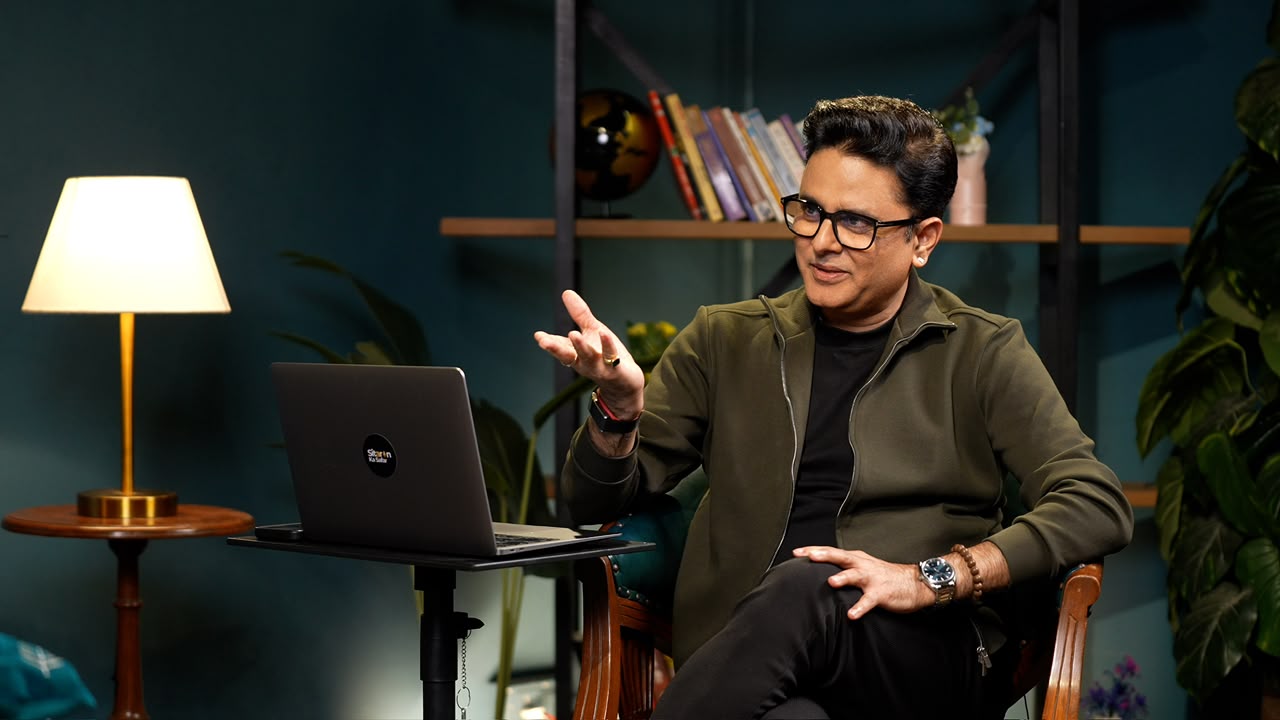
In a region defined by accelerated growth, cross-border ambition and high-consequence decisions, the Indian astrologer and life coach has built an audience around a quieter proposition: timing may shape a moment, but responsibility cannot be outsourced.
The Gulf is built around movement.
Companies enter new markets, families manage businesses across generations, professionals relocate between countries and investors make decisions influenced by economic cycles, policy changes and geopolitical uncertainty. The region rewards speed, but speed does not remove hesitation.
It can intensify it.
A founder may have access to market research and still remain uncertain about when to expand. A senior executive may understand the professional case for changing roles but struggle with the personal consequences. A family-business leader may know what needs to change while remaining conscious of the legacy attached to every decision.
It is within this gap between information and conviction that Sundeep Kochar has built his advisory identity.
Known as an astrologer, broadcaster, motivational speaker and life coach, Kochar has worked across Vedic astrology, palmistry, face reading, personal guidance and public communication for more than 26 years, according to his official biography. His platform says his work has reached clients and audiences in more than 120 countries. These are claims from his own professional materials, but they help explain how an Indian astrological practice developed into an international advisory brand.
His connection with the Gulf is not incidental.
Before developing a Gulf-facing presence, Kochar had already become widely recognised in India. He is often described by followers and professional profiles as one of the best astrologers in India, although such a phrase represents reputation and market positioning rather than an independently verified ranking.
Kochar’s listed media work includes Guiding Star on ARY Digital in the UAE and All Is Well on Radio Spice Dubai. Together with consultations and appearances aimed at international audiences, these programmes placed him before a region in which Indian cultural traditions, global professional life and modern self-development often intersect.
An advisory tradition travelling with the diaspora
The Gulf’s relationship with India extends far beyond trade and investment.
For generations, Indian entrepreneurs, professionals and families have contributed to the commercial and social life of the region. They have also carried cultural practices concerning food, family, spirituality, festivals, wellness and personal decision-making.
Astrology is one of those practices.
For some people, consulting an astrologer is part of family tradition. For others, it is a private response to uncertainty. A younger professional may approach it through the language of self-awareness, while a business owner may view it as one additional perspective before making a decision.
Kochar’s career reflects the ability of such a tradition to travel without remaining fixed in its original format.
The conventional astrologer may be encountered through a family introduction or a local consultation. Kochar’s public identity was built across television, radio, digital media, speaking engagements and private sessions. The practice therefore travelled through distribution as much as through belief.
His official biography lists television programmes including Kismat Ke Sitare, Astronomics, Aaj Ka Din, Kismat Connection—Sundeep Kochar Ke Saath and the UAE-facing Guiding Star. It also presents his services across career and business guidance, relationships, personal development, corporate workshops and leadership sessions.
This is not simply a catalogue of appearances.
It is the structure of a modern advisory enterprise.
Public content creates familiarity. Speaking engagements establish authority. Private consultations create depth. Digital platforms allow the relationship to continue across borders.
The Achievements Supporting His International Reach
Kochar’s Gulf-facing identity was supported by an already established international profile. According to his official biography, he delivered TEDx talks, appeared in live BBC London interviews and addressed audiences at the Nehru Centre in London.
His profile also records participation in an event held at the House of Lords. The appearance demonstrated his access to international public platforms, although it should not be interpreted as a formal endorsement of astrology by the institution.
His television programme Kismat Ke Sitare reportedly completed more than 2,700 episodes and received Limca Book of Records recognition. In the Gulf, his media work included Guiding Star on ARY Digital and All Is Well on Radio Spice Dubai.
Together, these achievements created a bridge between his recognition in India and his relevance among Indian, expatriate and internationally mobile audiences in the Middle East
Why timing matters in the Gulf
Timing is one of astrology’s central ideas.
It is also central to business.
A company can possess a strong product and enter a market too early. An investor can identify a valuable asset but structure the transaction poorly. A family enterprise can recognise the need for succession without preparing the next generation. A professional may accept the right role at the wrong stage of life.
In conventional business analysis, timing is assessed through data, policy, demand, liquidity and competitive conditions.
In astrology, it is interpreted symbolically through planetary positions and cycles.
The two systems should not be confused. Astrology is not scientifically established as a reliable method of predicting events, and it should not replace financial, legal, medical or psychological expertise.
Yet the two languages meet around a genuine human problem: knowing that a decision is possible does not automatically create confidence that the moment is right.
Kochar’s appeal appears to rest partly on his ability to translate astrological language into the language of reflection and action.
His public philosophy describes a birth chart as a means of understanding strengths, weaknesses and timing rather than as a command that removes individual choice. He argues that astrology should not be used to create fear or sell endless remedies. His central position is that the stars may indicate tendencies, but the person must still decide and act.
That distinction is particularly relevant in a high-performance environment.
Leaders generally do not lack access to advisers. They may already work with lawyers, accountants, bankers, consultants, therapists and executive coaches. Each professional addresses a defined part of the problem.
The remaining uncertainty is often personal.
What does this decision mean for the individual making it?
What fear is influencing the judgement?
Is caution being mistaken for wisdom?
Is ambition being mistaken for readiness?
An astrologer does not replace professional analysis. Where a client chooses to consult one, the role may instead function as a structured pause—a conversation through which the emotional and symbolic dimensions of a decision are examined.
From mass broadcasting to private trust
Kochar’s public profile was shaped significantly by television.
His official biography says Kismat Ke Sitare ran between 2005 and 2014, completed 2,740 episodes and received Limca Book of Records recognition as a long-running astrology programme on Indian national television. Because this information comes primarily from his official materials, the precise record documentation should be verified before publication.
The deeper significance of the programme lies in continuity.
Thousands of broadcasts create a different relationship from a single media appearance. Viewers become familiar with the presenter’s tone, language and method. Over time, familiarity can reduce the psychological distance between a public personality and a private adviser.
In trust-based professions, this is commercially significant.
A client cannot fully test an adviser’s judgement before a consultation. The purchase is therefore influenced by reputation, referrals, visibility and the perception that the adviser will behave responsibly when the client is vulnerable.
Television provided Kochar with reach. Longevity provided reassurance.
His later expansion into international radio, digital programming, podcasts and motivational speaking allowed the same identity to operate across different formats. A viewer might first encounter him through a horoscope programme, while an entrepreneur might approach him through a corporate session or personal referral.
The service changes in depth, but the public promise remains broadly consistent: greater clarity before a decision.
Counsel in an era of abundant information
The continued popularity of astrology may appear surprising in an age of artificial intelligence and instant access to information.
People can now obtain business plans, personality assessments, financial projections and relationship advice within seconds. Yet greater access to information has not necessarily made important decisions easier.
Information explains options.
It does not always resolve internal conflict.
A founder can receive a detailed analysis of a market and still hesitate because the real concern is not commercial. It may relate to identity, family expectation, fear of failure or the possibility that success will require a life they no longer want.
A senior professional may know that a new role offers better compensation while remaining uncertain whether it aligns with the person they are becoming.
These are interpretive problems.
They help explain the expanding market for executive coaches, mentors, therapists, spiritual advisers, personality systems and other forms of personal guidance. These services vary greatly in evidence, regulation and ethical standards, but many respond to the same demand: helping an individual convert information into a decision.
Kochar positions astrology within this broader advisory landscape.
His official materials describe a practice combining astrological interpretation with behavioural insight, human psychology and life-coaching principles. The stated objective is not merely to forecast events, but to help clients recognise patterns, opportunities and personal tendencies.
This positioning makes the practice more accessible to audiences who may not approach astrology through faith alone.
A client does not necessarily need to accept every predictive claim to find value in a structured conversation about timing, temperament and choice.
That does not validate astrology scientifically.
It does, however, explain its continuing social and commercial relevance.
The ethical importance of returning agency
Any profession operating around uncertainty carries ethical risk.
The risk is especially high when the client is anxious, grieving, professionally exposed or urgently seeking reassurance. In such circumstances, an adviser can create dependency by presenting uncertain interpretations as unavoidable truths.
Fear can become a business model.
A warning can lead to repeated consultations. A symbolic reading can be presented as certainty. Remedies can be prescribed without meaningful limits. A client can gradually be encouraged to distrust their own judgement.
Kochar’s public rejection of fear-based astrology is therefore one of the most important elements of his positioning.
His philosophy states that the purpose of a chart is to create understanding rather than frighten the individual. It also maintains that effort remains necessary and that the final decision belongs to the client.
For a Gulf audience accustomed to sophisticated professional services, this boundary matters.
Astrology should not be used as a substitute for regulated advice. A business investment requires financial and legal assessment. A medical concern requires qualified healthcare. Mental-health difficulties require appropriate professional support.
A symbolic framework may encourage reflection.
It cannot assume responsibility for the outcome.
The test of an ethical adviser is therefore not how dependent the client becomes, but how much agency the client retains.
Building relevance across cultures
Kochar’s Gulf-facing career also reveals how Indian knowledge traditions become international.
Cultural exports often change as they enter new markets. Some are simplified. Others are commercialised. Some lose the context that originally gave them meaning.
Practitioner-led traditions travel differently.
They are carried through a person who interprets the system for each audience. That individual becomes not only an adviser, but also a translator between cultural worlds.
Kochar’s communication emphasises concepts that move relatively easily across borders: timing, self-understanding, personal responsibility and the relationship between effort and circumstance.
These are not exclusively Indian questions.
They belong to anyone making decisions under pressure.
The Gulf’s international character creates a natural audience for such translation. A consultation may involve an Indian tradition, an Arab commercial environment, a Western professional education and a family spread across several countries.
The adviser must understand that the decision is not taking place inside one cultural system.
It is taking place between several.
The Telegraph Middle East view
Sundeep Kochar’s relevance to the Gulf is not based solely on astrology’s cultural familiarity among sections of the Indian diaspora.
It is connected to the region’s broader demand for guidance in an accelerated economy.
The Gulf offers opportunity at unusual speed. Careers can advance quickly. Businesses can scale across borders. Capital can enter new sectors. Families can build significant institutions within one generation.
But rapid opportunity produces high-consequence choices.
Data can define the available options. Professional advisers can assess individual risks. The final decision still requires judgement.
Kochar has built his career around the moment when external information is no longer enough and the individual must examine their own relationship with the decision.
His method begins with astrology, but its public language is centred on clarity, timing and responsibility.
That language resonates because it does not promise to remove uncertainty.
It gives uncertainty a structure.
The most responsible version of such counsel does not tell a leader to surrender judgement to the stars. It asks the leader to understand the moment more deeply before acting.
Timing may influence the choice.
Responsibility must remain with the person who makes it.