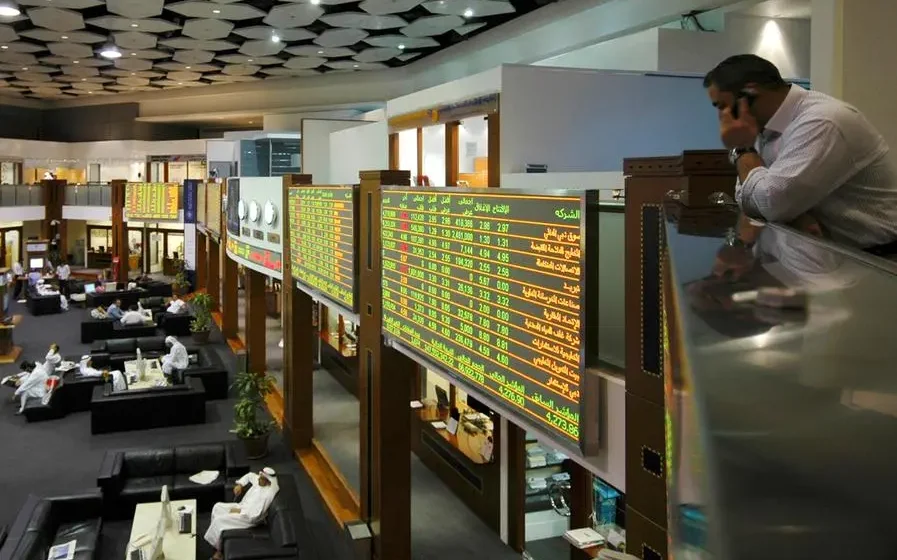



DUBAI — The UAE’s non-oil private sector continued to expand in June, but at its weakest pace in more than five years as geopolitical tensions, cautious client spending and competition weighed on business conditions.
The S&P Global UAE Purchasing Managers’ Index fell to 50.8 in June from 52.6 in May. The reading remained above the 50 threshold that separates expansion from contraction, but it signalled the softest improvement since February 2021.
What changed
The most important point is that the private sector did not contract. Companies still reported overall growth in business conditions. Yet the index moved close enough to neutral to show that momentum has weakened materially.
The slowdown reflects a mix of external and domestic pressures. Regional uncertainty can delay client decisions, while intense competition can limit companies’ ability to raise prices or protect margins. Together, those pressures reduce the pace of expansion.
Why it matters for the Gulf
The UAE is a hub economy. Its companies serve domestic clients, regional customers and global businesses operating through Dubai and Abu Dhabi. When regional confidence weakens, the effect can be felt quickly in services, trade, logistics, real estate and professional activity.
For businesses, the PMI signals a need for caution in hiring, inventory and pricing decisions. Companies may remain optimistic about the long-term UAE story, but the June data suggests they are operating in a more difficult short-term environment.
The economic reading
A PMI reading of 50.8 leaves limited room before stagnation. That makes the next few months important. If new orders recover, June could prove to be a temporary slowdown. If they remain weak, companies may shift into more defensive planning.
Investors should watch banks, property developers, logistics companies and consumer firms for confirmation. Corporate earnings and management commentary will show whether slower PMI momentum is visible in revenue, margins or project pipelines.
What to watch next
The key indicators are new business, employment, output prices and delivery times. A rebound in these components would reassure markets. Continued softness would suggest that regional uncertainty is affecting the UAE’s non-oil economy more deeply.
The UAE remains one of the Gulf’s most diversified economies, and the June PMI does not change that structural position. It does, however, show that diversification does not remove exposure to regional confidence. Growth is still present, but the margin has narrowed.
The Telegraph Middle East reading
The development should be assessed through the quality of growth rather than the headline number alone. Gulf economies are moving through a period in which public investment, private-sector confidence, cost pressures and geopolitical risk interact more directly than in previous cycles.
For companies, the operating environment rewards discipline. Firms with pricing power, strong cash conversion, efficient supply chains and clear exposure to domestic demand are likely to perform better than those relying solely on optimistic regional expansion. For policymakers, the priority is to keep confidence high without ignoring cost and logistics pressures.
The wider implication is that diversification is no longer only a strategic slogan. It is being tested in real time. PMI readings, bank lending, payment data and investment flows now show which parts of the non-oil economy are becoming resilient and which still depend heavily on government spending, easy logistics or favourable sentiment.
The story will remain important because it connects policy decisions with boardroom planning. Companies operating in the Gulf increasingly need to understand not only what happened, but how it changes risk, cost, demand and the timing of investment decisions across the region.
The story will remain important because it connects policy decisions with boardroom planning. Companies operating in the Gulf increasingly need to understand not only what happened, but how it changes risk, cost, demand and the timing of investment decisions across the region.
The story will remain important because it connects policy decisions with boardroom planning. Companies operating in the Gulf increasingly need to understand not only what happened, but how it changes risk, cost, demand and the timing of investment decisions across the region.
The story will remain important because it connects policy decisions with boardroom planning. Companies operating in the Gulf increasingly need to understand not only what happened, but how it changes risk, cost, demand and the timing of investment decisions across the region.
The story will remain important because it connects policy decisions with boardroom planning. Companies operating in the Gulf increasingly need to understand not only what happened, but how it changes risk, cost, demand and the timing of investment decisions across the region.