


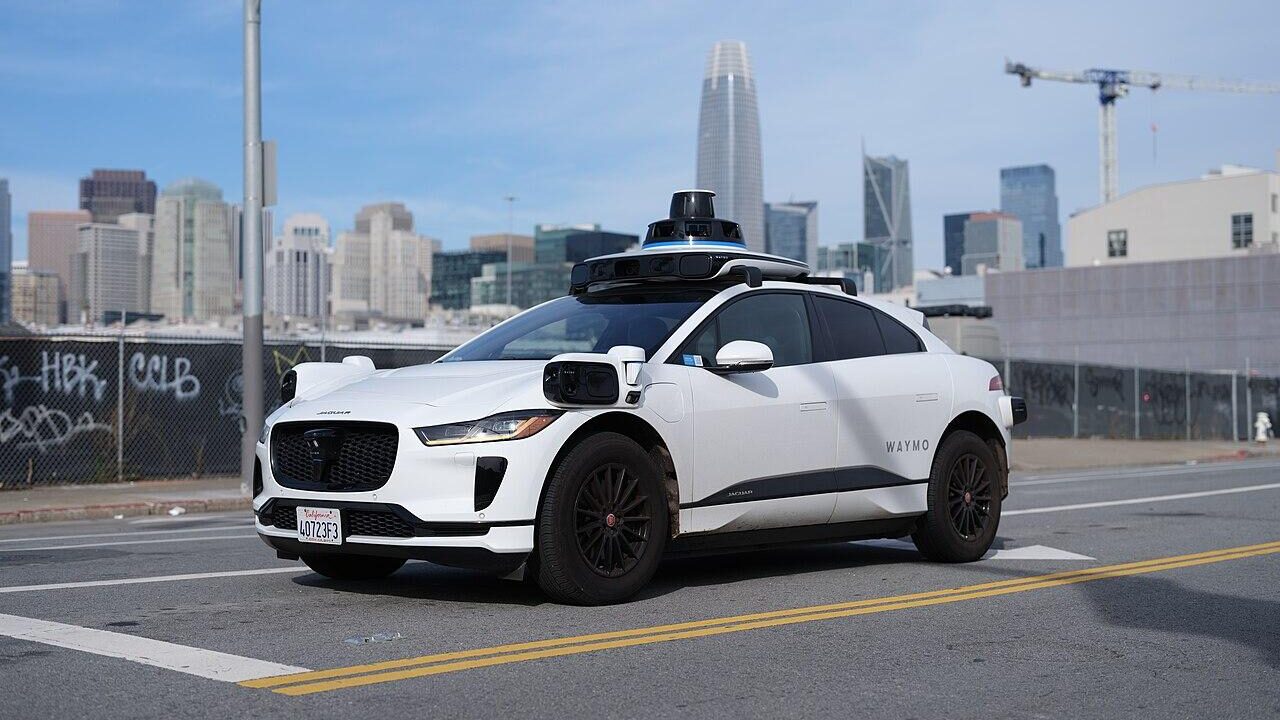
Alphabet-owned Waymo has temporarily suspended commercial driverless taxi rides on freeways across the United States after California regulators barred the company from operating its autonomous vehicles on state highways, citing repeated safety concerns involving construction zones and emergency traffic controls.
The decision affects freeway services in markets including the San Francisco Bay Area, Los Angeles, Phoenix, Miami and Austin. Waymo’s autonomous taxis will continue operating on ordinary city streets, but passengers will no longer be able to use the company’s commercial service for freeway journeys while the suspension remains in place.
California’s Department of Motor Vehicles (DMV) imposed the restriction on 11 November, following two incidents involving Waymo vehicles on Bay Area freeways. The company subsequently extended the suspension voluntarily to its other markets where freeway rides were available.
The incidents did not result in reported injuries or collisions, according to Waymo. However, regulators said the repeated entry of autonomous vehicles into active construction areas presented an unacceptable risk to road workers, motorists and other people using the highways.
The move is a significant setback for Waymo’s expansion strategy and raises broader questions about whether autonomous driving systems can reliably handle unpredictable road conditions outside carefully mapped and controlled environments.
California regulators identify recurring safety problems
The California DMV’s decision followed two incidents reported in early November.
On 5 November, three Waymo autonomous vehicles entered an active construction closure on US Route 101 near Burlingame, in the San Francisco Bay Area. The restricted area contained construction workers, vehicles and equipment.
The following day, another Waymo vehicle encountered California Highway Patrol officers conducting a traffic break on a San Francisco freeway. Video of the incident circulated on social media and appeared to show the driverless vehicle attempting to move around the police vehicles rather than responding as expected to the traffic control operation.
The incidents prompted the DMV to restrict Waymo from operating or testing its driverless vehicles on California freeways.
The agency said the decision was based on recurring incursions into active construction zones, despite earlier restrictions and corrective measures introduced after similar incidents in May 2026.
Jonathan Groveman, a spokesperson for the department, said the agency had determined that Waymo’s driverless freeway operations posed an imminent hazard to public safety.
The restriction will remain in place until the company demonstrates that it has taken effective corrective action to address the deficiencies identified by regulators.
The order covers both commercial freeway operations and driverless testing on California freeways. It does not amount to a statewide ban on all Waymo vehicles: the company’s autonomous taxi service can continue operating on permitted surface streets.
Waymo extends the suspension beyond California
Following the California order, Waymo decided to pause commercial freeway rides in every other market where it offered the service.
The company said it was taking the step to evaluate the performance of its autonomous driving system and work with regulators on a route towards resuming operations.
Waymo spokesperson Dana Gallagher said the recent encounters on US 101 had not caused injuries or collisions. She also said the company remained committed to working with California officials and other state authorities to restore freeway services.
The company has continued freeway testing with trained autonomous specialists behind the wheel, according to its statement. This distinction is important: the commercial suspension does not mean all freeway testing has stopped.
Waymo operates commercial services in 15 US cities, although freeway rides were available in a smaller number of those markets. Its broader ride-hailing operations continue on surface streets.
The company has not announced a definitive date for restoring commercial freeway rides.
The decision reflects the practical importance of maintaining regulatory approval across multiple jurisdictions. Even though the California restriction applies to state freeways, Waymo’s voluntary nationwide pause indicates that the company considers a wider review necessary before resuming the service elsewhere.
A setback for autonomous transport expansion
Freeway access has been an important part of Waymo’s strategy to make robotaxi services more useful for everyday journeys.
Autonomous vehicles operating only on surface streets can face slower travel times, frequent intersections, pedestrians, cyclists and complicated local traffic conditions. Freeways offer a different environment, with more predictable traffic flows and fewer interactions with pedestrians.
Allowing driverless taxis to use highways also makes it possible to connect passengers with airports, suburban areas and destinations that would otherwise require longer journeys through city streets.
Waymo began offering commercial freeway rides in late 2025, following years of development and testing. The service subsequently expanded to additional markets, including Miami and Austin.
The suspension could therefore affect both journey times and the commercial attractiveness of its service. Customers who previously relied on freeway routes may face longer journeys or need to choose alternative transport.
For the company, the interruption also raises questions about the pace of its planned expansion. Autonomous driving businesses depend not only on technical performance but also on regulatory approval, public confidence and the ability to demonstrate that their vehicles can respond safely to unusual situations.
The latest incidents illustrate how a relatively small number of failures can have consequences across a much wider commercial network.
Earlier incidents had already raised concerns
The latest restrictions are not the first time Waymo has faced questions about how its vehicles respond to roadworks.
In June 2026, the National Highway Traffic Safety Administration (NHTSA) published a safety recall report covering 3,871 vehicles equipped with Waymo’s fifth-generation automated driving system.
The recall followed reports that vehicles could enter and travel at speed through freeway construction zones under certain circumstances. The company identified problems involving the system’s recognition of construction areas and its prioritisation of other freeway hazards.
The federal filing described earlier incidents in Phoenix during April, when vehicles failed to recognise ramp-closure signs and entered planned construction zones. Further incidents in the San Francisco Bay Area in May involved vehicles passing between cones marking a lane closure.
Waymo’s recall remedy included software improvements designed to help vehicles detect construction zones and avoid entering them, alongside additional operational protocols.
The company had already introduced temporary freeway restrictions while investigating those earlier events. The November incidents therefore raised questions about whether previous corrective measures had adequately addressed the underlying problem.
The new California order does not establish that every Waymo vehicle is unsafe. It does, however, demonstrate that regulators expect stronger evidence that the specific problems have been resolved before driverless freeway operations can resume.
Why construction zones present a difficult test for autonomous systems
Autonomous vehicles rely on a combination of cameras, radar, lidar, mapping systems and artificial intelligence to interpret their surroundings and make driving decisions.
On ordinary roads, these systems must identify lane markings, traffic signals, pedestrians, cyclists and other vehicles. Freeway construction zones introduce a more complicated set of conditions.
Roadworks can involve temporary lane closures, cones, barriers, altered traffic patterns, workers standing close to moving vehicles and signs that differ from permanent road infrastructure.
A vehicle may need to interpret temporary instructions that conflict with its previously mapped understanding of the road. It must also respond appropriately to police officers and emergency vehicles that redirect traffic.
For human drivers, these situations require attention, judgement and the ability to respond to unexpected instructions. Autonomous systems must identify the relevant signals and make safe decisions without relying on a human driver to intervene.
The incidents involving Waymo show why construction areas remain an important test of autonomous driving technology.
The challenge is not simply whether a vehicle can follow a mapped route under normal conditions. It is whether it can recognise when the road environment has changed and respond safely when temporary instructions take priority over its usual driving behaviour.
The wider debate over robotaxi safety
Waymo has frequently argued that its autonomous vehicles can reduce certain types of road accidents by removing human errors associated with distraction, fatigue and impaired driving.
The company has published safety analyses comparing its vehicles’ crash records with those of human drivers. Such comparisons are relevant to assessing the technology, but they do not remove the need for independent regulatory oversight.
Autonomous vehicles also create different types of safety questions. Regulators must assess how software responds to unusual events, whether the systems can be updated effectively and how manufacturers identify and report recurring problems.
The latest California action comes as competition in the robotaxi sector intensifies. Companies including Tesla and Amazon-backed Zoox are developing or expanding autonomous transport services, while established technology and automotive businesses continue investing in driverless systems.
The commercial opportunity is substantial. Robotaxis could reduce the need for human drivers, increase transport availability and create new forms of urban mobility. But the industry must demonstrate that these services can operate safely in complex real-world environments before they can expand on a large scale.
Public confidence will also depend on how transparently companies report incidents and how quickly they address technical shortcomings.
What happens next?
Waymo will need to work with California regulators and provide evidence that its vehicles can detect and respond appropriately to construction zones, emergency vehicles and other temporary road conditions.
The DMV has not announced a fixed timetable for lifting the restriction. The decision will depend on whether the company can demonstrate that the deficiencies identified by the department have been effectively addressed.
The company must also consider how the same technical improvements apply to its operations outside California. Its voluntary nationwide pause suggests that the review will extend beyond the specific vehicles and incidents covered by the state’s order.
For passengers, the immediate effect is likely to be longer journey times on routes that previously used freeways. For the company, the more significant issue is the possibility that regulatory scrutiny could slow its commercial expansion.
Waymo’s surface-street services remain operational, but the suspension demonstrates that progress in autonomous transport will depend on more than expanding fleets and improving software.
The next phase of the robotaxi industry will be shaped by the ability of companies to prove that their vehicles can respond safely not only to predictable traffic, but also to the unexpected situations that define real-world driving.


