


Lebanon is facing growing uncertainty over the future of security in its southern border region as the United Nations prepares to end the operational mandate of its peacekeeping mission at the close of the year, with no agreed replacement yet in place.
The United Nations Interim Force in Lebanon (UNIFIL), which has monitored the border between Lebanon and Israel for nearly five decades, is due to cease its operations on 31 December under a Security Council decision adopted in August 2025. An orderly drawdown and withdrawal of its personnel will then take place over the following year.
The approaching deadline has intensified diplomatic efforts to establish a new arrangement capable of monitoring the border, supporting the Lebanese Armed Forces and reducing the risk of renewed conflict. But disagreements over the role of any successor force, the presence of Israeli troops inside Lebanese territory and the disarmament of Hezbollah have complicated negotiations.
The issue was discussed during a visit to Beirut on Monday by US Ambassador to the United Nations Mike Waltz, who met senior Lebanese leaders as Washington and France explored possible alternatives. Despite the diplomatic activity, no final agreement has emerged.
A long-standing peacekeeping mission approaches its end
UNIFIL was established in 1978 following Israel’s invasion of Lebanon. Its original responsibilities included confirming the withdrawal of Israeli forces, helping restore international peace and security, and assisting the Lebanese government in re-establishing its authority in the south.
Its role was significantly expanded after the 2006 war between Israel and Hezbollah through Security Council Resolution 1701. The force was tasked with monitoring the cessation of hostilities, supporting the deployment of the Lebanese army south of the Litani River and reporting violations along the Blue Line, the UN-designated line of withdrawal separating Lebanon and Israel.
The mission currently has 7,485 peacekeepers from 45 contributing countries, according to UNIFIL figures published on 4 November. Its presence has provided an international monitoring and liaison mechanism in an area repeatedly affected by cross-border violence.
The Security Council unanimously adopted Resolution 2790 in August 2025, extending UNIFIL’s mandate for a final time until 31 December 2026. The resolution directs the mission to begin an orderly and safe drawdown and withdrawal from that date, with the process to be completed within one year.
This means the end of the operational mandate will not result in every peacekeeper leaving immediately on 1 January. Instead, the mission will enter a year-long withdrawal process, during which its authorised responsibilities will be narrowed.
The resolution also places emphasis on the Lebanese government becoming the sole provider of security in southern Lebanon, with the army expected to assume greater responsibility as international forces depart.
Washington and Paris search for an alternative
The future of the international presence was a central subject during Waltz’s meetings in Beirut on 16 November. He met President Joseph Aoun, Prime Minister Nawaf Salam and Parliament Speaker Nabih Berri, while also travelling to Naqoura, where UNIFIL is headquartered, for a briefing on the mission’s work and conditions on the ground.
Waltz said negotiations were continuing over the arrangements that could follow UNIFIL’s departure. He indicated that Washington was working with France on a possible new Security Council resolution, with the aim of reaching agreement before the current mandate expires.
He also suggested that Resolution 1701 could remain the basis for future arrangements, subject to amendments and updates. The United States has argued that the existing peacekeeping model should be reviewed, including its cost, responsibilities and effectiveness.
Several possible approaches have emerged from diplomatic discussions. These include a smaller international verification mission, a civilian monitoring mechanism and a multinational force supporting the Lebanese army. France and Italy have also discussed an international coalition to assist Lebanon after UNIFIL’s withdrawal.
US Secretary of State Marco Rubio has said that a successor arrangement does not necessarily have to be a military mission. A civilian presence could instead monitor compliance with security commitments and provide a verification mechanism trusted by both sides.
However, the proposals remain under discussion. The November assessment by Security Council Report noted that one possibility being explored was a UN observer mission along the Blue Line alongside an international force operating outside the UN framework to support the Lebanese army. No final structure or agreed mandate had been established.
The G7 foreign ministers, meeting in Paris on 9 and 10 November, also recognised the need to prevent a security vacuum after UNIFIL’s departure. French Foreign Minister Jean-Noël Barrot said the group supported moving towards a credible and lasting security framework, while acknowledging that there had been no breakthrough on what should replace the mission.
Beirut wants the United Nations to remain involved
Lebanese officials have repeatedly argued that the country still needs an international presence in the south after UNIFIL’s mandate expires.
Prime Minister Salam reiterated this position during his meeting with Waltz, saying that any successor arrangement should operate under a United Nations Security Council mandate. He argued that the new mechanism should maintain monitoring, reporting and communication functions while supporting the Lebanese Armed Forces in extending state authority.
Salam has also called for a credible system to verify that both Lebanon and Israel fulfil their commitments. He has stressed that Israeli withdrawal from Lebanese territory and the expansion of state control should proceed through a clear and reciprocal timetable.
The position reflects concern in Beirut that a security mechanism without a UN mandate could weaken the international legal framework governing the border.
Lebanon has also expressed reservations about proposals that could require direct military coordination between the Lebanese and Israeli armies. Officials have argued that any new arrangement should respect the country’s sovereignty and avoid creating a framework that could be interpreted as normalising military relations with Israel.
President Aoun has similarly supported maintaining an international presence under UN auspices. A Lebanese official source told Arab News that a monitoring arrangement based on the model used in Egypt’s Sinai Peninsula would be difficult to apply because Lebanon has no peace agreement with Israel.
While Lebanon has not ruled out a successor mission, its preferred option has been to retain an international mechanism with a clear Security Council mandate and responsibilities grounded in Resolution 1701.

Continuing tensions complicate the transition
The security situation in southern Lebanon remains a major obstacle to the proposed transition.
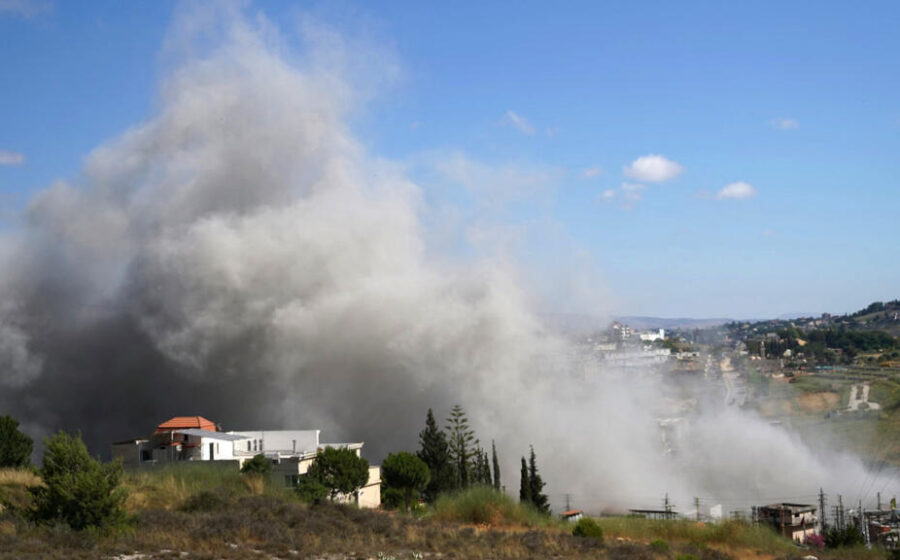
UNIFIL spokesperson Kandice Ardiel told UN News on 11 November that Israeli military violations continued to be observed across the south. These included the construction of military positions and roads, operations, demolitions, airstrikes and artillery fire on the Lebanese side of the Blue Line.
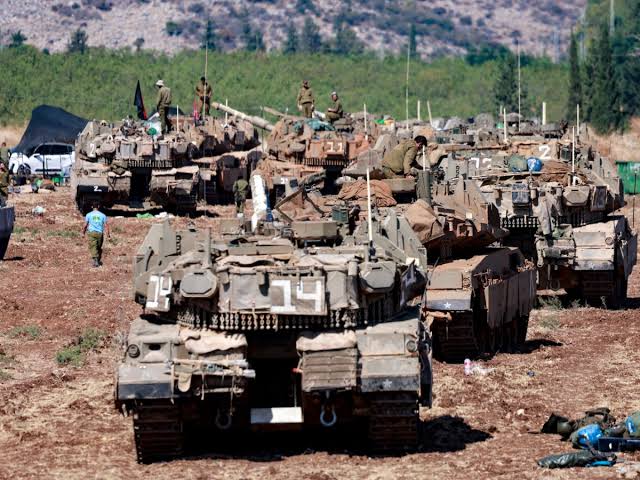
A UN Secretary-General report covering developments between March and September also described continued Israeli military activity in Lebanon and said the presence of Israeli forces was obstructing efforts by the Lebanese government to extend its authority.
The report noted that Israel’s continued military presence and the destruction of civilian property were also hindering reconstruction and the return of displaced residents.
Tensions have affected UNIFIL itself. On the evening of 10 November, a routine patrol near Wadi Jilu came under fire, with approximately a dozen rounds directed at the peacekeepers. The patrol returned fire after identifying a muzzle flash, and the shooting stopped. No peacekeepers were injured.
UNIFIL called on the Lebanese government to investigate the incident and identify those responsible. The mission did not publicly identify the shooter.
The incident underscored the risks facing international personnel even as diplomatic negotiations focus on the mission’s withdrawal.
Hezbollah disarmament remains a central obstacle
The future security arrangement is closely linked to the unresolved question of Hezbollah’s weapons and military infrastructure.
Under the US-mediated trilateral framework signed by Lebanon, Israel and the United States on 26 June 2026, the Lebanese Armed Forces are expected to assume effective security responsibility in designated areas. The framework links the verified disarmament of non-state armed groups and dismantling of their infrastructure to the gradual redeployment of Israeli forces from Lebanese territory.
However, progress has remained limited. Israel has made its withdrawal conditional on demonstrable progress towards disarming Hezbollah, while the group has linked any discussion of its weapons to an end to Israeli military operations and a complete withdrawal from Lebanese territory, according to the UN Secretary-General’s reporting.
The conflicting positions have created a difficult sequence of commitments. The Lebanese government faces pressure to extend state authority and establish a monopoly over weapons, but its efforts are complicated by continued Israeli military activity and Hezbollah’s opposition to disarmament under the current conditions.
Waltz reiterated Washington’s position that the Lebanese state should have exclusive control over military force and called on Hezbollah to surrender its weapons voluntarily. The group has rejected pressure to disarm, arguing that Israeli occupation and attacks must first end.
As long as these positions remain unresolved, a successor international mission may struggle to establish a mandate acceptable to all relevant parties.
The Lebanese army faces a larger responsibility
The withdrawal will place greater demands on the Lebanese Armed Forces, which are expected to take on responsibilities currently supported by UNIFIL.
Resolution 2790 welcomed the Lebanese government’s plan to deploy an additional 6,000 personnel in southern Lebanon, a process that began in November 2024. The Security Council has also urged international partners to provide equipment, funding and logistical assistance to strengthen the army’s ability to operate south of the Litani River.
The European Union has taken a separate step in this direction. On 12 October, the Council of the EU established a three-year European Union Support Mission in Lebanon, designed to strengthen the capacities of the Lebanese Armed Forces and Internal Security Forces. Its areas of work include border and maritime security, training, surveillance and institutional support.
However, the EU mission is not intended to replace UNIFIL or take over its border-monitoring responsibilities in southern Lebanon. Its operational deployment is still being planned, leaving a distinction between long-term support for Lebanese security institutions and the immediate need for a mechanism to monitor the border after the UN force leaves.
Civilians remain exposed to uncertainty
The consequences of the transition extend beyond military and diplomatic considerations. Southern Lebanon’s communities continue to face damaged homes, disrupted services and uncertainty over whether they can safely rebuild their lives.
UN News reported on 11 November that nearly one million internally displaced people had returned to their areas of origin, while around 304,500 remained displaced outside those areas. Many returning communities face extensive damage to electricity networks, water systems and roads.
UNIFIL has also played a wider role in facilitating humanitarian access, helping clear routes and supporting local communities. Its departure could therefore affect not only security monitoring but also the network of assistance and coordination that has developed around the mission.
The immediate diplomatic challenge is to agree on what functions must continue and who will carry them out. For Lebanon, the priority is to preserve international oversight while strengthening its own institutions. For Washington and its European partners, the task is to construct an arrangement that can monitor commitments and support the Lebanese state without repeating the shortcomings attributed to the existing mission.
With the deadline approaching, the absence of an agreed successor arrangement is becoming increasingly difficult to ignore. UNIFIL’s departure will mark the end of a 48-year presence, but the security problems that shaped its mission remain unresolved. Without a credible transition plan, southern Lebanon risks entering a period in which the mechanisms for monitoring the border weaken before a durable political and security settlement is achieved.