

Raja Mukherjee’s vision statement, in partnership with The Confluence Group LLP and Evara Ekam LLP, positions the Indo-Gulf corridor as a possible platform for Asia’s Knowledge Hub of Excellence, a world-class integrated 10,000-bed affordable healthcare city targeted for 2029, integrated Vedic education, rupee settlement, private banking reform and Gulf-backed knowledge infrastructure.
Brilliant Bengalis Break Barriers to Build a Future-Ready Indo-Gulf Ecosystem
Raja Mukherjee’s vision statement is being developed in association with The Confluence Group LLP and Evara Ekam LLP to imagine a new Indo-Gulf development architecture. This is not only a finance story. It is a knowledge, healthcare, education, livelihood and institutional-execution story.
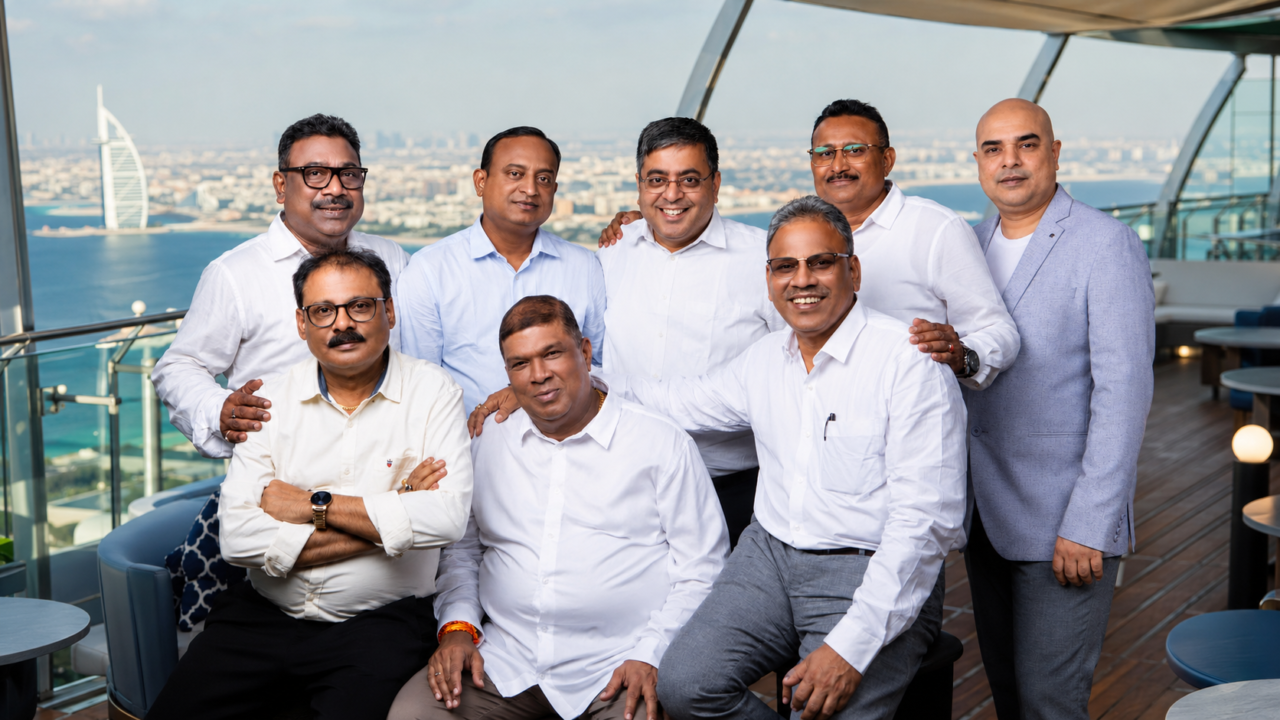
The Confluence Group LLP, represented by Prashanta Mitra, Krishnendu Das, Arunangshu Das and Kaushik Sarkar, and Evara Ekam LLP , represented by Bidhan Chandra Roy, Jayanta Karmakar and Nilratan Naskar, are working as knowledge and execution partners around these initiatives. Within this structure, Bidhan Chandra Roy and Prashanta Mitra are being positioned as initiating forces behind knowledge-engineering hubs, Vedic holistic education and livelihood pathways, with a focus on youth skilling, international-level convergence and the larger ambition of building a self-reliant Bharat. Krishnendu Das and Arunangshu Das will oversee the larger portfolio across India and the Gulf States, while Raja Mukherjee will oversee international operations with other team members. For the Gulf audience, this operating structure gives the Indo-Gulf narrative a practical project layer around healthcare, education, knowledge infrastructure and implementation.
Across the various attributes of the initiative, the team’s work is connected to two major institutional ambitions: building Asia’s Knowledge Hub of Excellence and developing a world-class integrated 10,000-bed affordable healthcare city, targeted for 2029. In the Gulf context, this is framed as a vision-led and implementation-focused initiative that could connect Indian knowledge systems, affordable healthcare, youth skilling, Gulf capital participation and long-term India-Gulf institutional cooperation.
The Indo-Gulf Cooperation Could Enter a New Era in the Next Three Financial Years
The relationship between India and the Gulf is entering a new strategic phase. For decades, the relationship was understood through energy, trade, remittances, labour mobility and diaspora enterprise. Those ties remain important, but they no longer define the full story.
India and the Gulf are now moving toward a deeper financial, technological and institutional partnership that could shape capital flows, private banking, healthcare infrastructure, education models, currency settlement and sovereign investment. In Mukherjee’s framework, the Gulf is not merely a source of investment. It is a possible co-architect of India’s next development phase.
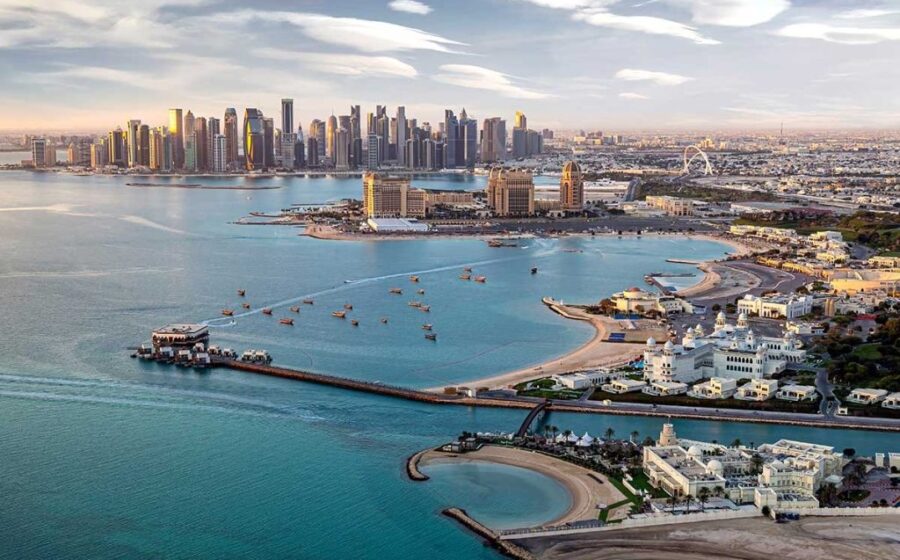
Dubai, Abu Dhabi and Riyadh occupy a strategic geography between Indian savers, European capital, African demand and Asian production. They are no longer just host cities for the Indian capital. They can become partners in the architecture of Indian growth through sovereign wealth, infrastructure finance, rupee-linked settlement, private banking corridors, healthcare investment, education platforms and ethically aligned capital products.
Five Pillars and Gulf Relevance
| Pillar | Core Theme | 2047 Target | Gulf Relevance |
| Vedic + AI Education | Gurukul-AI campuses, LLM tutors, robotics and neural-network learning | 10 million students; export to 25 nations | Gulf education partnerships, AI curriculum export, diaspora learning networks |
| Medical & Engineering EduTech | Teaching hospitals, medical tourism and deep-tech labs | USD 50 billion FDI; 200 tertiary hospitals; 1,000 labs | Sovereign capital, hospital partnerships, medical tourism corridors |
| FDI & Industrial Capacity | Long-horizon capital, manufacturing and deep-tech corridors | USD 200 billion annual FDI; USD 30 trillion GDP | SWF participation, industrial investment, infrastructure finance |
| Stock Market as Price-Setter | Deep markets, wider listings and INR-denominated trading | USD 40 trillion market cap; 350 million demat accounts | Gulf portfolio flows, Indian benchmarks, GIFT City investment access |
| Rupee & Banking Reform | INR global trading, private banking and outbound capital liberalisation | INR in top-five reserve currencies; global INR hubs | INR-AED, INR-SAR, INR-QAR settlement corridors |
Source: Raja Mukherjee Vision Statement, 2026.
Asia’s Knowledge Hub of Excellence and Integrated Vedic Education
One of the strongest institutional directions in the Gulf article is the proposed creation of Asia’s Knowledge Hub of Excellence, alongside a world-class integrated 10,000-bed affordable healthcare city targeted for 2029 and an integrated Vedic education system blended with contemporary technology adaptation. Together, these initiatives give the Indo-Gulf cooperation narrative a concrete institutional layer beyond capital allocation.
Healthcare is one of the most investable pillars in the vision. India needs world-class hospital infrastructure, but the Gulf brings patient capital, medical tourism linkages and institutional investment appetite. A 10,000-bed affordable healthcare city, if designed with quality controls, could combine tertiary care, medical training, research, diagnostics, insurance-linked care models, international patient flows and livelihood generation.
The education pillar is equally important. Gurukul-AI campuses combine Indian knowledge systems with AI tutors, robotics labs and multilingual learning. The wider concept is exportable: personalised AI education, character-based learning, frontier science and international convergence. This would make education a soft-power and economic corridor, not only a domestic reform.
Healthcare City and Knowledge Hub Model
| Component | What It Builds | Indo-Gulf Strategic Value |
| 10,000-Bed Affordable Healthcare City | World-class treatment, teaching and regional care capacity | Medical tourism, Gulf patient corridors and healthcare FDI |
| Knowledge Engineering Hubs | Applied learning, systems design and project implementation capability | Youth skilling and cross-border knowledge collaboration |
| Integrated Vedic Education | Holistic education blended with modern technology | Civilisational soft power and AI-enabled education export |
| Livelihood and Skilling Platforms | Practical employability and enterprise pathways | Supports self-reliant Bharat and Gulf-linked workforce convergence |
| Gulf Capital Participation | Patient capital for healthcare, education and infrastructure | Sovereign-grade long-term development partnership |
Source: Raja Mukherjee Vision Statement, 2026.
From Trade Corridor to Capital and Knowledge Corridor
India-Gulf relations have historically been strong but often narrow in public imagination. Oil, remittances, construction, jewellery, shipping, food security, aviation and diaspora business dominated the conversation. That model is expanding.
The Gulf’s own transformation is underway. Saudi Arabia is diversifying its economy. The UAE has built itself into a global capital, logistics and private wealth hub. Abu Dhabi is deepening its institutional investment role. Dubai continues to attract entrepreneurs, family offices and globally mobile professionals. India, meanwhile, needs long-horizon FDI, deep-tech investment, hospital infrastructure, engineering labs, global private banking links, currency corridors and patient institutional capital.
India-Gulf Strategic Corridor Model
| Corridor Area | India’s Need | Gulf’s Role | Strategic Outcome |
| Sovereign Capital | Long-term FDI for hospitals, labs and infrastructure | SWFs, pension funds, family offices | Patient capital for Viksit Bharat build-out |
| Rupee Settlement | INR internationalisation and reduced dollar dependence | Dubai, Abu Dhabi, Riyadh as clearing hubs | INR-AED, INR-SAR and INR-QAR settlement corridors |
| Private Banking | Global access for Indian HNIs, family offices and corporates | DIFC, ADGM and Gulf private banking ecosystem | India-Gulf wealth architecture |
| Healthcare | 10,000-bed affordable healthcare city and wider hospital capacity | Gulf capital and patient corridors | India as a regional medical hub |
| Dharma-Finance | Ethical capital doctrine beyond ESG | Alignment with Gulf ethical finance traditions | New values-based capital products |
Source: Raja Mukherjee Vision Statement, 2026.
Dubai, Abu Dhabi and Riyadh as Financial Gateways
Mukherjee’s document identifies the Gulf as a geographic and financial pivot. Dubai, Abu Dhabi and Riyadh are positioned not as peripheral hubs, but as cities that can help shape India’s next financial architecture. Dubai already serves as a major base for Indian entrepreneurs, traders, family offices and globally mobile professionals. Abu Dhabi has sovereign capital depth and institutional investment ambition. Riyadh is becoming increasingly important as Saudi Arabia expands its financial markets.
One of the most important ideas in the document is the development of rupee-linked settlement and clearing corridors. Over time, deeper INR-AED, INR-SAR and INR-QAR settlement corridors could reduce friction, support bilateral trade, strengthen financial autonomy and create new liquidity markets. This will not happen overnight, but the strategic direction is significant.
2026-2047 Roadmap for Gulf Readers
| Phase | Period | Strategic Focus | Gulf-Relevant Milestones |
| Foundation | 2026-2030 | Policy pilots, clearing desks and institutional setup | INR clearing desks in Dubai; GIFT City scale-up; healthcare-city planning; early education FDI platforms |
| Acceleration | 2031-2035 | Scaling capital, healthcare and rupee systems | Hospital capacity, deep-tech labs, phased capital-account opening, INR settlement infrastructure |
| Integration | 2036-2040 | Currency and market linkages | INR-oil settlement possibilities, stronger rupee reserve profile, larger Indian capital-market depth |
| Leadership | 2041-2047 | Global export and consolidation | Bharat Vidya export, top-five reserve-currency ambition, 200 hospitals, USD 40 trillion market-cap vision |
Source: Raja Mukherjee Vision Statement, 2026.
Private Banking, Outbound Capital and GIFT City
The vision statement also argues for private banking liberalisation and outbound capital reform. Indian private banking, Mukherjee suggests, remains constrained by legacy rules shaped by an older capital-scarce economy. Today, Indian corporates, family offices, HNIs and domestic financial institutions increasingly want to compete globally.
For the Gulf, this is deeply relevant. Indian wealth already has strong links with Dubai and Abu Dhabi. Family offices, entrepreneurs, founders and promoter groups use the UAE for structuring, mobility, investment access and international expansion. If India reforms private banking and outbound capital movement, the Gulf could become an even more important partner, not as a substitute for India, but as an extension of Indian capital’s global operating system.
GIFT City is the bridge in this model. It can connect Indian regulation, global financial access, offshore products, fund structures and rupee-linked ambitions in one platform. The future may not be Indian wealth leaving India. It may be Indian wealth operating through a regulated India-Gulf architecture.
Dharma-Finance and Gulf Ethical Capital
One of the most distinctive proposals in the document is Dharma-finance. Global finance has spent years using the language of ESG, sustainability and impact investing. Mukherjee argues that India has its own moral grammar of capital: dharma. In this framework, capital is treated as a trust, deployed for productive, transparent and intergenerationally fair outcomes.
For the Gulf, this idea is especially interesting. The region already has deep experience with ethically aligned capital through Islamic finance, Sharia-compliant investing and sovereign development mandates. Dharma-finance is not the same as Islamic finance, but there may be a natural conversation between the two. Both seek a moral structure for capital beyond speculation alone.
Governance and Investor Confidence
Large visions succeed only when execution is measurable. For Gulf investors, governance may be more important than headline ambition. Sovereign wealth funds, pension funds and family offices invest in governance as much as growth. They need to know who owns delivery, how progress is measured, how disputes are resolved and how risks are disclosed.
Governance and Investor Confidence Model
| Governance Layer | Purpose | Gulf Investor Relevance |
| National Vision Steering Committee | Strategic direction and high-level coordination | Signals seriousness and cross-ministry alignment |
| Programme Management Office | Execution spine across five pillars | Gives investors a single coordination framework |
| Pillar Working Groups | Operational delivery by sector | Helps structure sector-specific investment platforms |
| KPI Dashboard | Live measurement and progress tracking | Supports transparency, due diligence and risk monitoring |
| Independent Audit | Verification and accountability | Improves credibility for sovereign and institutional capital |
Source: Raja Mukherjee Vision Statement, 2026.
Risk, Realism and the New Compact
The scale of the vision requires caution. Currency liberalisation can create volatility if rushed. FDI targets require policy predictability. Education expansion can suffer quality dilution. Healthcare growth can become uneven without accreditation. AI infrastructure raises data and governance questions. Capital-market expansion requires strong disclosure and investor protection.
The deeper story is that India and the Gulf may be entering a new compact. The old compact was energy and labour. The next compact could be capital, currency, technology, education, healthcare and institutional trust. India brings scale, talent, market depth, digital infrastructure and civilisational confidence. The Gulf brings capital, connectivity, sovereign investment capacity, global financial hubs and strategic ambition.
The next chapter of India-Gulf relations may therefore be measured not only in barrels, remittances or trade volumes, but in hospitals financed, labs built, rupee corridors opened, family offices structured, AI education systems exported and long-term capital deployed. Viksit Bharat 2047 may be India’s national vision, but if executed with the right partners, the Gulf may help build part of its architecture.
About the Research Perspective
This article draws from the Vision Statement of Raja Mukherjee, Executive Alumni of IIM Visakhapatnam, Independent Researcher, Geopolitical Analyst, Private Banker and Discretionary Portfolio Advisor. His work examines Viksit Bharat 2047, Gulf-India capital corridors, private banking, rupee internationalisation, Dharma-finance, FDI, AI education and India’s emerging financial architecture.