

Five people remain missing after heavy rainfall hits several provinces, damaging bridges, disrupting roads and forcing emergency evacuations across northern and eastern Syria.
Five fatalities reported as search operations continue
At least five people, including four children, have died after heavy rainfall triggered flash floods across several parts of Syria, according to the country’s Ministry of Emergency and Disaster Management. Five additional people remain missing as rescue teams continue operations in affected areas.
The flooding has struck communities across northern and eastern Syria, particularly in Raqqa and Deir ez-Zor. The four children drowned in separate bodies of water, while an adult man died after his vehicle became caught in floodwaters near al-Salmani Bridge in the western Raqqa countryside.
The disaster has also damaged public infrastructure, disrupted transport routes and forced hundreds of families to leave displacement camps. Emergency authorities have been working across several provinces to rescue stranded residents, remove floodwater and restore access to affected communities.
The casualty figures and missing-person reports were announced by Syrian authorities as the emergency response entered its second day on Thursday.
375 families evacuated from flooded displacement camps
One of the most significant humanitarian consequences has been the evacuation of families living in temporary camps in the Raqqa countryside.
Approximately 375 families were moved from three affected displacement sites: Sahlat al-Banat, al-Younani and al-Maqass. Floodwater entered the camps, creating unsafe conditions for residents and prompting emergency teams to organise evacuations.
For displaced households, the flooding represents another disruption after years of instability. Temporary shelters can offer limited protection against severe rainfall, while inadequate drainage may allow water to accumulate around tents and living spaces.
The immediate challenge is to ensure that evacuated families have access to safe accommodation, drinking water, food and essential medical services. Children and people with limited mobility may require additional assistance during relocation and the recovery period.
The emergency also raises concerns about the safety of temporary settlements during periods of severe weather. Camps exposed to flooding need effective drainage, accessible evacuation routes and arrangements for moving residents before conditions become life-threatening.
Bridge damage disrupts transport between Raqqa and Aleppo
Flooding has also damaged important transport infrastructure, making it harder for residents and emergency teams to move through affected areas.
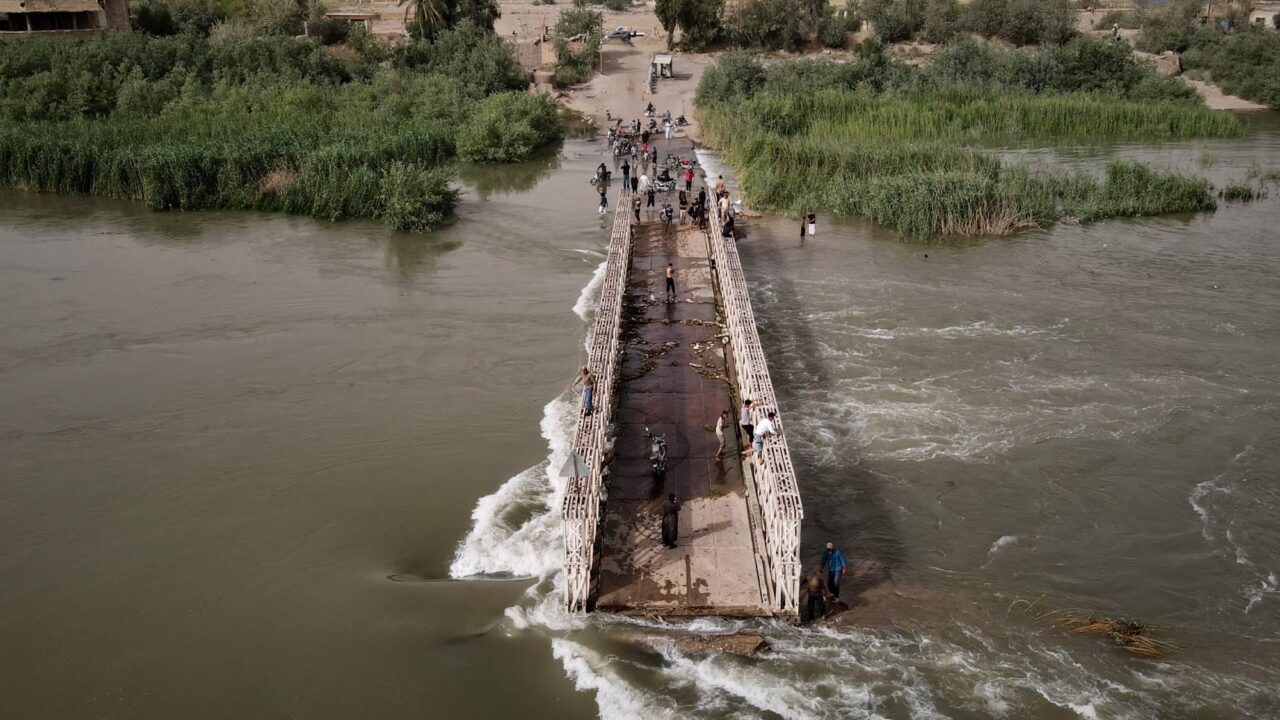
The Syrian Arab News Agency reported that al-Salmani Bridge, west of Tabqa, collapsed following the heavy rainfall. The incident disrupted the road connecting Raqqa with Aleppo.
Authorities also reported damage to bridges, culverts and unpaved roads in several locations. In Raqqa, seven bridges, culverts and unpaved roads were rendered unusable, while three bridges spanning seasonal waterways in Deir ez-Zor were also taken out of service.
The disruption has implications beyond local transport. Damaged crossings can delay rescue operations, restrict access to healthcare facilities and make it difficult to deliver essential supplies to isolated communities.
Emergency engineering teams have been deployed to affected locations to secure damaged structures and reopen routes where possible. Authorities have also been working to clear blocked roads and drainage channels.
Emergency services respond to hundreds of distress reports
The scale of the response highlights the geographical spread of the flooding.
The Ministry of Emergency and Disaster Management reported receiving more than 350 emergency reports. Civil Defence teams had carried out 165 field operations by 11:30 pm on Wednesday, according to official updates.
Rescue personnel assisted civilians trapped by floodwater or stranded in vehicles. Teams also pumped water from more than 150 homes and public facilities, including two hospitals, schools and bakeries.
The response has involved several government agencies, with teams prioritising incidents involving immediate threats to human life before moving on to property damage and infrastructure restoration.
Heavy thunderstorms, hail and strong wind gusts affected areas across Raqqa, Hasakah, Deir ez-Zor, eastern Homs, Hama and Aleppo. The resulting overflow of waterways contributed to road closures and damage to public facilities.
Authorities have continued to monitor affected areas and respond to further distress calls as search operations for missing people remain under way.
Earlier flooding had already placed pressure on Syria’s water infrastructure
The latest emergency comes as Syria continues to face significant humanitarian and infrastructure challenges following years of conflict.
Flooding has previously affected communities that depend on already strained public services. In a June 2026 assessment, UNICEF reported that approximately 17,000 people had been affected by flooding earlier in the year, while around 700 families had been displaced.
The agency also reported that 49 water treatment plants in Raqqa and Deir ez-Zor had been taken out of service during that earlier emergency.
These figures relate to the June flooding and should not be confused with the current October disaster. They nevertheless illustrate the potential consequences of severe rainfall in areas where water infrastructure and public services face considerable pressure.
Damage to water treatment facilities can interrupt access to safe drinking water, while disruption to sanitation systems can create additional difficulties for families living in crowded settlements.
For displaced communities, the effects can extend beyond the immediate flooding. Damage to homes, public facilities and local transport can make recovery more difficult, particularly for households with limited financial resources.
Infrastructure preparedness remains a major challenge
The latest floods have highlighted the importance of maintaining drainage systems, bridges and other public infrastructure in areas exposed to heavy rainfall.
Emergency evacuation plans are particularly important for displacement camps and settlements located near seasonal waterways. Reliable weather alerts, clearly identified evacuation routes and access to temporary shelters can help reduce the risks posed by sudden flooding.
The condition of roads and bridges also matters during an emergency. When crossings collapse or routes become unusable, rescue teams may face delays reaching affected households, while residents can lose access to hospitals and other essential services.
Although the specific October rainfall event has not been formally attributed to climate change, the wider humanitarian impact demonstrates the need for better disaster preparedness and infrastructure resilience.
Search operations and recovery efforts continue
For now, the immediate priority remains locating the five people reported missing and ensuring that residents in affected areas receive assistance.
Authorities must also assess the condition of damaged infrastructure, restore access to disrupted roads and provide support to families evacuated from the Raqqa camps.
The full extent of the damage may become clearer as emergency teams complete their assessments and further information becomes available.
The deaths of four children and an adult in the flooding underline the risks posed by rapidly rising water, particularly in communities with limited protection against severe weather.
For families already affected by displacement and years of instability, the latest disaster is another reminder that humanitarian recovery depends not only on immediate rescue operations but also on reliable infrastructure, safe shelter and effective emergency planning.