

Pakistan, Saudi Arabia and Türkiye have opened high-level defence discussions in Islamabad as the three countries move towards implementing a landmark agreement designed to strengthen their collective security and military cooperation.
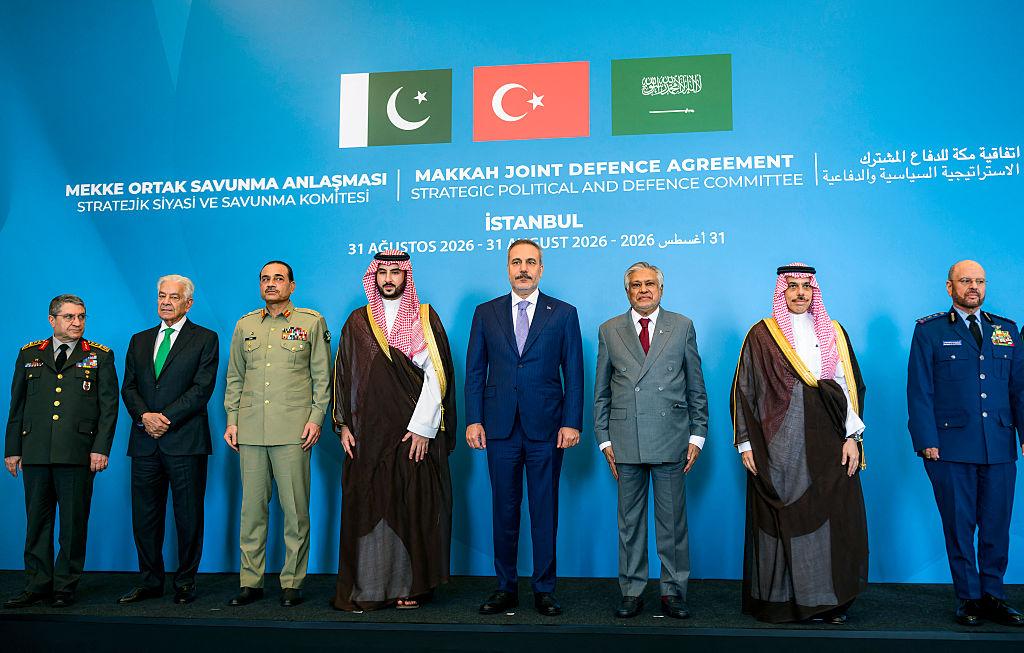
The two-day meeting, scheduled for 27–28 November, brings together senior political, defence and military officials under the Strategic Political and Defence Committee established by the Makkah Joint Defence Agreement.
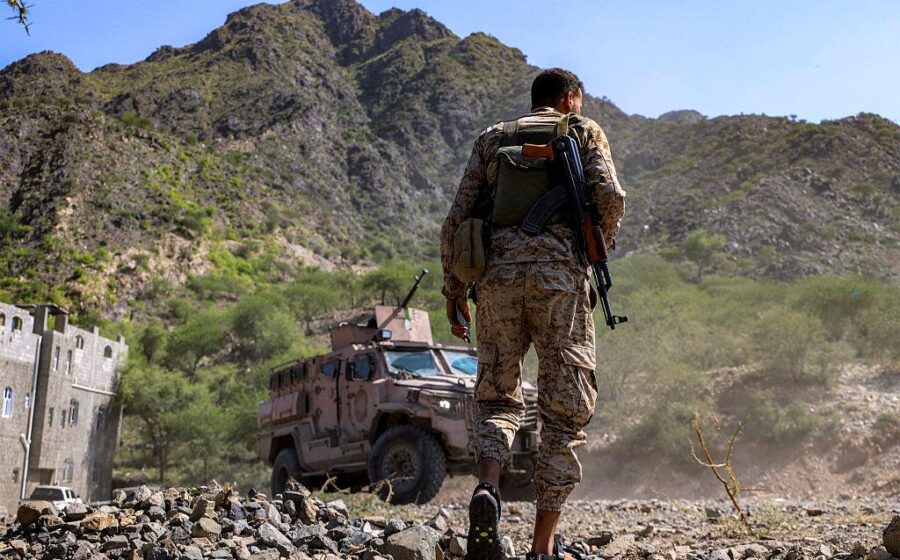
The discussions come at a critical moment for regional security, particularly as Saudi Arabia faces renewed threats from Yemen’s Houthi movement. Pakistan’s Defence Minister Khawaja Asif has confirmed that the conflict involving Saudi Arabia and the Houthis will feature prominently on the meeting’s agenda.
The diplomatic gathering also coincides with an important development in Türkiye. President Recep Tayyip Erdoğan formally approved his country’s ratification of the agreement on 26 November, with the decision published in Türkiye’s Official Gazette on Friday, 27 November. The move completes Ankara’s domestic ratification process.
Signed in Makkah on 7 August 2026, the agreement establishes a framework under which an external armed attack against one of the three countries is treated as an attack against all three.
However, the immediate objective of the Islamabad meeting is to develop the institutional arrangements and procedures needed to implement the commitment. The agreement has not created a unified military command or automatically authorised the deployment of troops from one country to another.
Islamabad meeting focuses on turning commitments into action
The third meeting of the Strategic Political and Defence Committee is being held in Islamabad from Friday to Saturday.
The committee is the main decision-making forum established under the Makkah agreement. It brings together the foreign ministers, defence ministers and senior military chiefs of the three participating countries.
Pakistan is hosting the gathering, with Saudi and Turkish foreign ministers expected to attend alongside defence officials and military leadership.
The discussions are intended to move the agreement beyond its initial political commitments and establish a functioning framework for cooperation.
According to reporting by Pakistan’s Dawn newspaper, the agenda includes finalising standard operating procedures, defining institutional responsibilities and establishing mechanisms for coordinating political, military and defence decisions.
These arrangements are important because the agreement contains a significant collective-defence commitment but requires practical procedures to determine how that commitment will operate in different circumstances.
Pakistan’s Defence Minister Khawaja Asif has said that the security situation south of Saudi Arabia will be an important subject of discussion.
He told AFP that the continuing conflict involving Saudi Arabia and Houthi forces would feature prominently on the agenda.
His comments reflect growing concern in Riyadh over attacks targeting Saudi cities, military facilities and energy infrastructure.
Türkiye completes ratification of the agreement
A major development on the opening day of the Islamabad meeting is the completion of Türkiye’s domestic approval process.
The country’s parliament approved the Makkah Joint Defence Agreement on 5 November. President Erdoğan formally approved its ratification through a presidential decision dated 26 November, which appeared in the Official Gazette on 27 November.
This completes Türkiye’s domestic ratification process and removes an important procedural obstacle to the agreement’s implementation.
The development is significant because the three countries had already signed the agreement in August, but its domestic approval procedures needed to be completed before the framework could advance.
Reuters reported that Türkiye’s ratification could provide a legal basis for closer military support to Saudi Arabia as attacks by Yemen’s Houthis increase.
A member of Erdoğan’s ruling party previously told Reuters that any deployment of Turkish military personnel to Saudi Arabia would also require a separate parliamentary authorisation.
This distinction is important. Completing ratification of the international agreement does not automatically approve every possible military deployment.
Any specific decision involving overseas personnel, military assistance or operational commitments would still have to follow the relevant national legal and political procedures.
What does the Makkah Joint Defence Agreement say?
The Makkah Joint Defence Agreement was signed on 7 August 2026 in Makkah.
The signatories were Saudi Crown Prince and Prime Minister Mohammed bin Salman, Turkish President Recep Tayyip Erdoğan and Pakistani Prime Minister Shehbaz Sharif.
The agreement is designed to strengthen collective deterrence, protect the sovereignty and territorial integrity of the three countries and expand cooperation between their armed forces.
Its most significant provision concerns collective defence.
Under Article 2, an external armed attack against any one of the participating countries is to be considered an attack against all three. The other members are required to assist the country facing aggression using the means available to them.
The agreement also provides for cooperation in defence industries, military training, intelligence and security coordination, counterterrorism and technology development.
However, the agreement does not establish a single standing army or a permanent joint military command.
It also leaves the extent and nature of assistance to be determined through an assessment of the attack, the assistance required and the capabilities available to each member.
This means that collective defence does not necessarily translate into an identical military response from all three governments in every situation.
The framework is intended to strengthen coordination and provide a basis for joint action while preserving the sovereignty and national decision-making authority of each country.
Why Saudi Arabia’s security situation is central
The growing conflict involving Saudi Arabia and Yemen’s Houthi movement has become one of the most important factors shaping the defence partnership.
Saudi Arabia has faced repeated threats to its territory and strategic infrastructure from missiles and drones launched during periods of heightened fighting.
The latest incidents have increased concerns within the Kingdom.
On 26 November, an aerial projectile struck Saudi Aramco’s Jazan refinery, killing a Nepalese worker and injuring several others. The Saudi-led coalition blamed the Houthi movement for the attack.
The coalition subsequently announced that it had destroyed a ballistic missile launch platform in Yemen’s Hodeidah governorate, which it said had been used in the attack.
The incident followed other reports of threats against Saudi energy facilities and commercial infrastructure.
These developments have increased the urgency of discussions among Riyadh, Islamabad and Ankara.
For Saudi Arabia, the agreement offers an opportunity to deepen security cooperation with two countries possessing significant military capabilities.
Pakistan has an established defence relationship with Saudi Arabia, while Türkiye has a substantial domestic defence industry and a large, NATO-integrated military.
The three countries are seeking to translate these existing relationships into a more structured system of cooperation.
Pakistan’s strategic role in the agreement
Pakistan occupies a central position in the trilateral partnership because of its military capabilities and long-standing defence ties with Saudi Arabia.
The country maintains one of the largest armed forces in the Muslim-majority world and has an established defence relationship with Riyadh.
Pakistan and Saudi Arabia have cooperated for decades on military training, defence advice, security arrangements and personnel exchanges.
The Makkah agreement gives this relationship a broader regional framework by bringing Türkiye into the same collective-defence arrangement.
Islamabad also has strategic reasons to strengthen the partnership.
Pakistan faces security challenges along its borders with Afghanistan and Iran, as well as internal militant threats. Its defence planners therefore have an interest in developing partnerships that strengthen military capabilities without creating unnecessary regional confrontations.
The agreement could create opportunities for joint exercises, intelligence coordination, military training and defence-industrial cooperation.
However, Pakistan must also balance its relationships with neighbouring countries and international partners.
Its position between South Asia, the Gulf and the wider Middle East means that any military commitment involving regional conflicts could have wider diplomatic consequences.
Khawaja Asif has described the agreement’s security principle clearly, saying that a threat to Saudi Arabia would also concern Pakistan and Türkiye.
The practical interpretation of that commitment will be one of the important subjects for the committee.
Türkiye brings defence industry and military capabilities
Türkiye’s participation adds an important industrial and military dimension to the partnership.
The country has developed a substantial domestic defence industry covering unmanned aircraft, naval platforms, armoured vehicles, missiles, electronic warfare and other military technologies.
Turkish companies have expanded their international defence exports and established partnerships with countries across the Middle East, Africa and Asia.
Its defence relationship with Saudi Arabia has also developed through cooperation in defence manufacturing and technology.
The agreement provides an opportunity to expand those relationships through joint research, development and production.
For Türkiye, the partnership also strengthens its diplomatic position in the Gulf.
Ankara has historically maintained relationships with competing regional powers and sought to combine defence cooperation with diplomatic engagement.
Its involvement in the Makkah agreement therefore reflects an effort to deepen security ties with Saudi Arabia and Pakistan while retaining its wider international commitments.
Türkiye remains a NATO member, and its participation in the agreement does not mean that it has withdrawn from existing alliance responsibilities.
The distinction is important because the Makkah agreement is a separate trilateral arrangement, not an extension of NATO’s formal command structure.
Saudi Arabia seeks stronger regional defence cooperation
Saudi Arabia’s participation reflects a wider effort to strengthen its security partnerships and protect its territory and economic infrastructure.
The Kingdom is one of the world’s leading oil exporters and hosts important energy facilities, ports and military installations.
Its strategic importance also extends beyond energy. Saudi Arabia occupies a central position in the Gulf and has influence across the wider Middle East.
Repeated aerial attacks have demonstrated the need for stronger early-warning capabilities, more effective air defence and better coordination with regional partners.
The Makkah agreement provides Riyadh with a framework for working more closely with Pakistan and Türkiye on these issues.
It could also create opportunities for joint procurement, technology development, military exercises and expanded defence-industry relationships.
For Saudi Arabia, these arrangements are particularly relevant as it continues to modernise its armed forces and reduce its dependence on a limited number of external suppliers.
The partnership may therefore develop into more than a mutual-security arrangement. Its industrial and technological dimension could become an important part of the relationship.
The agreement is not a NATO-style military alliance
The collective-defence wording has attracted comparisons with Article 5 of the North Atlantic Treaty.
Both frameworks treat an armed attack against one member as an attack against the wider group.
However, the Makkah agreement and NATO should not be treated as identical arrangements.
NATO has a permanent political headquarters, integrated military command structures, established operational planning and decades of experience conducting collective military operations.
The Makkah agreement is at a much earlier stage of institutional development.
Its member countries are still establishing procedures for consultations, coordination, joint training and the implementation of collective-defence commitments.
The agreement allows each country to provide assistance according to its capabilities and an assessment of the situation.
It does not establish a permanently integrated force or specify an automatic deployment process.
The Islamabad meeting is therefore an important test of how the three countries intend to translate their political commitment into practical security cooperation.
The outcome will depend on the institutional decisions made by the committee and how quickly the three governments establish the necessary procedures.
Regional implications and diplomatic concerns
The partnership could influence the wider security balance in the Middle East and South Asia.
Together, Pakistan, Saudi Arabia and Türkiye bring substantial military, diplomatic and economic capabilities.
Their cooperation could strengthen deterrence and provide additional mechanisms for responding to regional threats.
It could also encourage closer coordination on counterterrorism, maritime security and the protection of critical infrastructure.
However, the agreement may also attract scrutiny from countries concerned about the development of new regional military arrangements.
The governments involved have repeatedly described the pact as defensive and focused on collective security rather than confrontation with any particular country.
Its long-term effectiveness will depend partly on how the partnership manages relations with neighbouring states and existing international alliances.
Iran, in particular, will be watching developments closely because Saudi Arabia’s security concerns are closely connected to the conflict involving the Houthis.
Pakistan also has an important relationship with Iran because of their shared border and diplomatic ties.
Türkiye, meanwhile, maintains its own regional interests and NATO obligations.
These different foreign-policy priorities mean that the three countries will need to manage disagreements carefully if the partnership is to develop into a stable defence arrangement.
What happens next?
The Islamabad meeting is expected to focus on finalising the institutional structure of the agreement and determining how the three countries will coordinate future security decisions.
The participating governments will need to establish clear procedures for assessing threats, requesting assistance and coordinating military responses.
They will also need to determine how joint exercises, intelligence-sharing arrangements and defence-industrial programmes will be organised.
The establishment of a permanent secretariat in Riyadh is another important part of the framework.
At the inaugural committee meeting in Istanbul on 31 August, the three countries agreed that the secretariat would be based in Saudi Arabia and initially led by a Pakistani secretary-general for three years.
The implementation structure is expected to be developed further during the Islamabad discussions.
The discussions on Yemen will be especially important because they provide an immediate test of the agreement’s collective-security principle.
However, no decision to deploy Pakistani or Turkish troops to Saudi Arabia should be assumed simply because the countries are meeting or because Türkiye has completed ratification.
Any such decision would require further legal, political and operational arrangements.
A new phase in trilateral defence relations
The Islamabad meeting marks a significant stage in the development of the partnership between Pakistan, Saudi Arabia and Türkiye.
The agreement signed in August established a shared commitment to collective defence. Türkiye’s ratification has now completed an important domestic legal step, while the Islamabad discussions are intended to develop the mechanisms required for implementation.
The immediate security context is centred on Saudi Arabia’s concerns over attacks from Yemen, but the agreement also covers wider cooperation in defence, military training, technology and counterterrorism.
Its effectiveness will depend on whether the three countries can turn broad commitments into clear procedures and practical cooperation.
For now, the partnership remains a developing framework rather than a fully integrated military alliance.
The outcome of the Islamabad meeting could determine how quickly that framework evolves and how much influence it ultimately has over security across the Gulf, the Middle East and South Asia.