

Iraqi federal forces have closed two border crossings with Syria and Iran that were administered by the Kurdistan Regional Government (KRG), escalating a growing dispute between Baghdad and the semi-autonomous Kurdish region over control of borders, oil resources and security.
The closures were announced on Thursday, 26 November, by Lieutenant General Mohammed Abdul Wahab Sukkar al-Saidi, commander of Iraq’s Border Forces. The affected facilities are the Al-Waleed crossing on the Syrian border and the Bashta crossing on the Iranian border in the Kurdistan region.
The operation follows a directive issued by Prime Minister Ali al-Zaidi on 24 November ordering federal authorities to take control of border crossings administered by Kurdish authorities. The order forms part of a broader campaign to strengthen Baghdad’s control over strategic infrastructure and investigate alleged oil smuggling.
The Federal Supreme Court subsequently ruled that the central government has constitutional authority to deploy federal forces along all of Iraq’s international borders, including those within territories administered by the KRG.
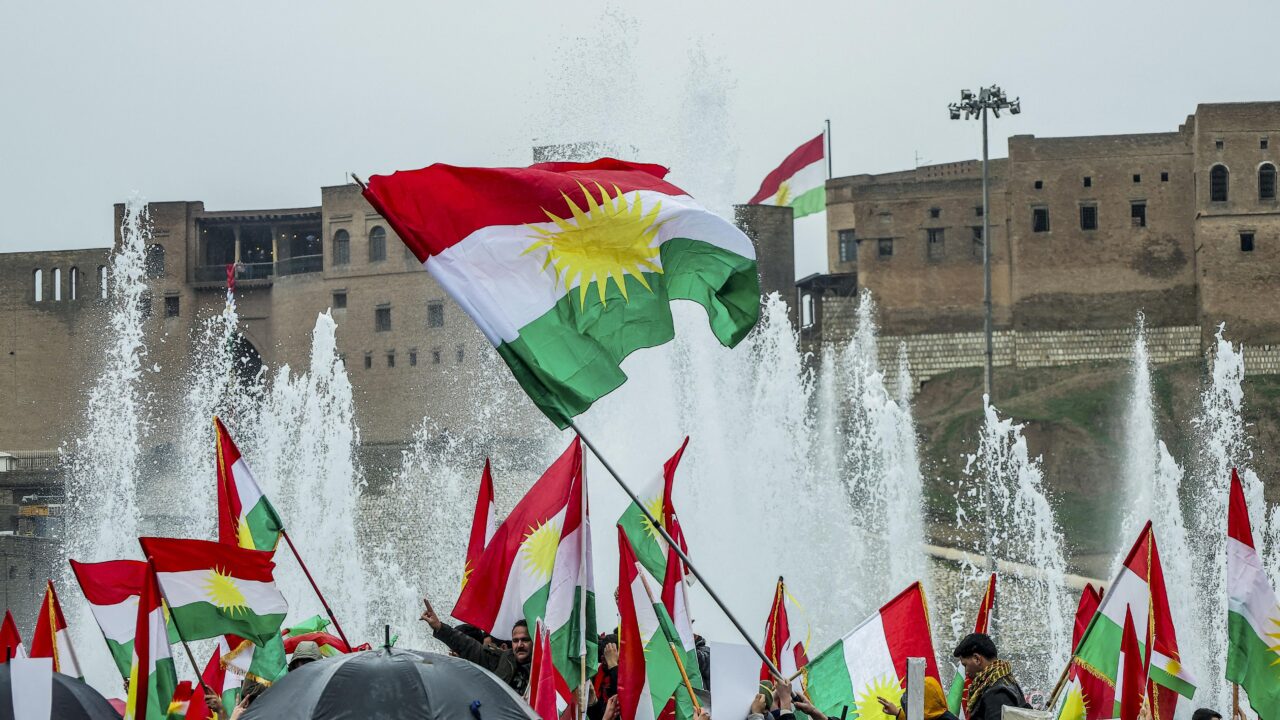
The regional government has rejected Baghdad’s measures, describing them as an infringement of its constitutional powers. Thousands of Kurdish residents demonstrated in Erbil and Duhok on Thursday as tensions between the two administrations increased.
The closures represent a significant development in a long-running dispute over the distribution of authority between Iraq’s federal government and its constitutionally recognised Kurdish region.
Two border crossings closed by federal forces
Iraqi Border Forces confirmed that they had closed two crossings previously administered by the Kurdistan Regional Government.
The first is Al-Waleed, also written as Al-Walid, which connects Iraq’s Kurdish-administered territory with northeastern Syria. It is located north of Rabia and provides a route towards Syria’s Hasakah region.
The second is Bashta, also referred to as Sartak Pashta or Pshta. It is located in Halabja province near the Iranian border.
Both facilities had been managed by Kurdish regional authorities rather than directly by Baghdad.
Iraq’s Border Forces commander announced that federal troops had implemented the closure orders as part of a wider operation targeting unofficial border crossings.
The federal government considers these routes unauthorised. The distinction is politically important because Baghdad has repeatedly argued that international border management falls under exclusive federal authority.
The KRG, however, has administered these crossings as part of its regional border arrangements and has challenged the central government’s attempt to take over their management.
The authorities have not announced how long the two closures will remain in place or provided a complete assessment of their effects on local commercial activity.
The federal government has also indicated that its operation extends beyond these two locations, with instructions to close unofficial crossings and unpaved routes used for movement between the Kurdistan region and neighbouring federal provinces.
Baghdad expands control over Kurdish border administration
The closure of the two crossings follows a broader directive issued by Prime Minister Ali al-Zaidi on Tuesday, 24 November.
The order instructed Iraq’s federal Border Ports Authority to assume control of border crossings within the Kurdistan region.
It also directed federal security forces to close unofficial routes connecting Kurdish-administered territory with Diyala, Kirkuk, Salahuddin and Nineveh provinces.
The measures are part of a wider effort to centralise control over oil exports, infrastructure and security arrangements.
Under the directive, the Kurdistan Regional Government was instructed not to authorise exports of crude oil or petroleum products without approval from the federal Ministry of Oil.
Baghdad also ordered the federal Oil Ministry to manage several oilfields in areas under Kurdish security control across Diyala, Kirkuk, Salahuddin and Nineveh.
The government said the measures were necessary to prevent corruption, improve supervision of public resources and protect national sovereignty.
The package also included personnel changes within federal institutions. The head of Iraq’s Border Ports Commission was removed, the director of the state-owned North Oil Company was suspended pending investigation, and several security officials in Kirkuk were dismissed.
The decisions followed an investigation into suspected oil smuggling involving the state-owned North Oil Company.
The government alleged that oil had been diverted through illegal networks and routes, resulting in financial losses. Authorities have linked parts of the investigation to suspected smuggling operations involving armed groups and commercial intermediaries.
The allegations remain subject to investigation and have not all been independently established.
Supreme Court ruling strengthens Baghdad’s position
The Federal Supreme Court issued its ruling on Wednesday, 25 November, supporting the federal government’s authority to deploy security forces along Iraq’s international borders.
The court said responsibility for protecting the country’s international boundaries rested with federal authorities, including those sections located within the territory administered by the Kurdistan Region.
It also supported federal supervision of the agencies responsible for operating border crossings.
The decision strengthens Baghdad’s legal position in its dispute with Erbil because the central government can now point to a judicial ruling supporting its authority over international border security.
Iraq’s federal constitution assigns important responsibilities to the central government in areas including national defence, foreign relations and the protection of international borders.
However, the relationship between Baghdad and the Kurdistan Region has remained difficult since the adoption of the 2005 Constitution.
The Kurdish region has its own elected institutions, security forces and administrative structures. Its government has historically managed several border facilities and maintained separate arrangements for parts of the region’s economy.
The court ruling addresses federal authority over international borders, but it does not resolve every political disagreement concerning the extent of the KRG’s administrative powers.
The wider territorial dispute also remains unresolved under Article 140 of Iraq’s Constitution, which provides a framework for determining the status of disputed areas.
The article called for normalisation measures, a census and a referendum. Those steps were never fully completed.
Kurdish authorities reject the federal takeover
The Kurdistan Regional Government has strongly opposed Baghdad’s latest measures.
KRG Prime Minister Masrour Barzani described the federal orders as unacceptable and said they contradicted previous discussions between the two administrations.
He argued that Kurdish authorities had been working with Baghdad to resolve outstanding disagreements through constitutional and legal channels.
The KRG cabinet subsequently rejected the measures, describing them as a violation of the region’s constitutional rights.
Its position is that Baghdad should address disputes through dialogue rather than impose new administrative arrangements through federal security forces.
The regional government has also emphasised its support for tackling corruption and oil smuggling.
This distinction is important because the KRG has not rejected the principle of combating illegal trade. Its objection concerns the federal government’s approach to taking control of border facilities, oil exports and infrastructure previously administered by regional authorities.
The dispute therefore involves two separate questions: how Iraq should prevent smuggling and which level of government has the constitutional authority to manage its borders and economic resources.
The latest court ruling has strengthened Baghdad’s position, but implementing the measures without further confrontation remains a challenge.
Thousands protest in Erbil and Duhok
The federal government’s orders triggered demonstrations across the Kurdistan region on Thursday.
Thousands of Kurdish residents gathered in Erbil, the regional capital, carrying Kurdish flags and protesting against Baghdad’s plans to expand federal control over border crossings and oilfields.
Demonstrators assembled near the historic Erbil Citadel, where the rally became a public expression of opposition to the central government’s decisions.
Protests also took place in Duhok, according to Reuters reporting.
Some demonstrators described the federal measures as unconstitutional and warned against what they viewed as interference in the region’s administrative affairs.
A student attending a demonstration in Duhok told Reuters that residents would not accept interference in Kurdish territory and wanted security for everyone.
The protests brought together supporters of different Kurdish political factions, despite existing disagreements within the regional political system.
The demonstrations also reflected wider concerns about whether the federal government’s actions could weaken the autonomy established under Iraq’s post-2003 political framework.
Although the rallies were directed primarily against Baghdad’s new measures, the dispute has also raised questions about the ability of Kurdish political parties to establish a common position on relations with the federal government.
Oil smuggling investigation behind the wider crackdown
The dispute has been driven partly by allegations involving illegal oil trading in northern Iraq.
Prime Minister al-Zaidi’s administration launched an investigation into suspected smuggling involving the state-owned North Oil Company, which manages oil production and infrastructure in the Kirkuk region.
The investigation examined allegations that petroleum products and crude oil were being diverted through illegal routes and transported across borders without appropriate federal authorisation.
Baghdad has argued that stronger federal supervision is necessary to protect national revenue and prevent powerful networks from exploiting gaps in regional administration.
The government has also targeted suspected smuggling operations linked to armed groups.
One separate investigation involved allegations against Kataib Hezbollah, an Iran-aligned armed group accused by Iraqi authorities of participating in an oil-smuggling operation near Baghdad.
The group initially resisted the government’s proposed security operation but later agreed to allow Iraqi forces to enter its stronghold at Jurf al-Sakhar.
The government has presented these actions as part of a broader campaign against corruption and illegal economic networks.
However, the allegations have not all been independently verified, and the investigation has not established public legal findings against every organisation or individual mentioned.
For the Kurdistan region, the concern is that the federal anti-smuggling campaign could become a wider effort to reduce regional control over strategic economic assets.
Why the dispute matters for Iraq’s oil industry
Oil is central to Iraq’s economy and accounts for approximately 90 per cent of federal government revenue.
Control over production, exports and revenue distribution has therefore been one of the most important sources of tension between Baghdad and Erbil.
The Kurdistan region has historically maintained separate commercial arrangements with international energy companies and has sought greater control over oil production and exports.
Baghdad has repeatedly challenged those arrangements, arguing that the federal government must retain authority over the country’s natural resources and export revenues.
In 2022, Iraq’s Federal Supreme Court ruled that the Kurdistan Region’s oil and gas law was unconstitutional.
A separate international arbitration dispute led to the suspension of Kurdish oil exports through Turkey in 2023. Exports resumed in 2025 under an arrangement requiring sales to operate under federal oversight.
The latest directive expands that centralisation effort by targeting oilfields and border crossings.
These decisions could influence investment conditions for international energy companies operating in northern Iraq, particularly if the dispute creates uncertainty over contractual rights, revenue transfers and security arrangements.
The Kurdistan government has also faced difficulties receiving its full share of federal budget allocations, contributing to delays in salary payments for public employees.
The latest measures could therefore have wider consequences for the region’s economic stability.
Strategic importance of the Syria and Iran borders
Iraq shares extensive borders with Syria and Iran, making its northern crossing points important for regional trade, security and movement.
The Al-Waleed crossing provides a connection between the Kurdistan region and northeastern Syria. Its location makes it relevant to local commerce and movement between communities on both sides of the frontier.
The Bashta crossing links the Kurdish-administered area of Halabja with Iran.
The region’s wider border network supports the movement of goods, travellers and commercial vehicles.
The closure of two crossings could disrupt some local trading arrangements and increase the importance of other authorised border facilities.
The measures also reflect Baghdad’s interest in strengthening control over routes that it considers vulnerable to smuggling and unauthorised trade.
Iran is one of Iraq’s major trading partners, while the Syrian border remains strategically significant because of ongoing political and security developments in northeastern Syria.
Any expansion of federal control could therefore affect not only relations with the Kurdistan Regional Government but also the administration of regional trade and border security.
The federal government has not provided a detailed estimate of the financial impact of the closures.
A difficult political test for Prime Minister Ali al-Zaidi
The dispute presents an important test for Prime Minister al-Zaidi, who took office earlier in 2026.
His government has launched several operations aimed at strengthening federal authority and addressing suspected corruption.
The campaign has involved action against alleged oil-smuggling networks, changes in senior security appointments and increased federal involvement in areas previously administered by regional authorities.
However, the measures have brought the government into confrontation with politically influential groups.
In addition to resistance from Kurdish leaders, al-Zaidi’s administration has faced pressure from armed organisations with established political and security influence.
The prime minister’s supporters argue that stronger federal oversight is necessary to enforce national laws and protect public resources.
Critics warn that the measures could deepen political divisions and weaken Iraq’s federal system if implemented without sufficient agreement from regional authorities.
The country’s political environment is also complicated by disagreements between the main Kurdish parties. The Patriotic Union of Kurdistan withdrew from the regional government in November, while negotiations over a new regional cabinet remain unresolved following the 2024 elections.
These divisions could influence how effectively the KRG responds to Baghdad’s latest decisions.
What happens next?
The immediate question is whether federal authorities will continue taking control of additional border facilities and how the KRG will respond.
The closures of Al-Waleed and Bashta represent the first visible steps in implementing Baghdad’s wider directive.
The federal government has not announced a comprehensive timetable for transferring every crossing to central administration.
The KRG, meanwhile, has rejected the broader measures and called for its constitutional rights to be respected.
Further negotiations may be necessary to establish how federal personnel will work alongside regional security institutions and how commercial operations at border facilities will be managed.
Another important issue is whether the two closed crossings will remain shut permanently or reopen under a different administrative arrangement.
The outcome could affect local trade, regional security coordination and relations between Iraq’s federal and regional governments.
For Iraq, the challenge is to strengthen border security and investigate suspected financial crimes without creating a political confrontation that undermines the country’s federal structure.
For the Kurdistan Region, the priority is to protect its constitutionally recognised autonomy while addressing legitimate concerns about corruption and illegal trade.
The closure of the two crossings has therefore become a much wider political dispute. What began as an operation against unauthorised border routes is now testing the balance of power between Baghdad and Erbil, with consequences for Iraq’s oil industry, regional trade and internal stability.