

Türkiye has agreed a record $1.6 billion climate financing package with the Asian Infrastructure Investment Bank (AIIB), as the country seeks to turn its emissions commitments into policy reforms and attract the private investment needed for its transition to a lower-carbon economy.
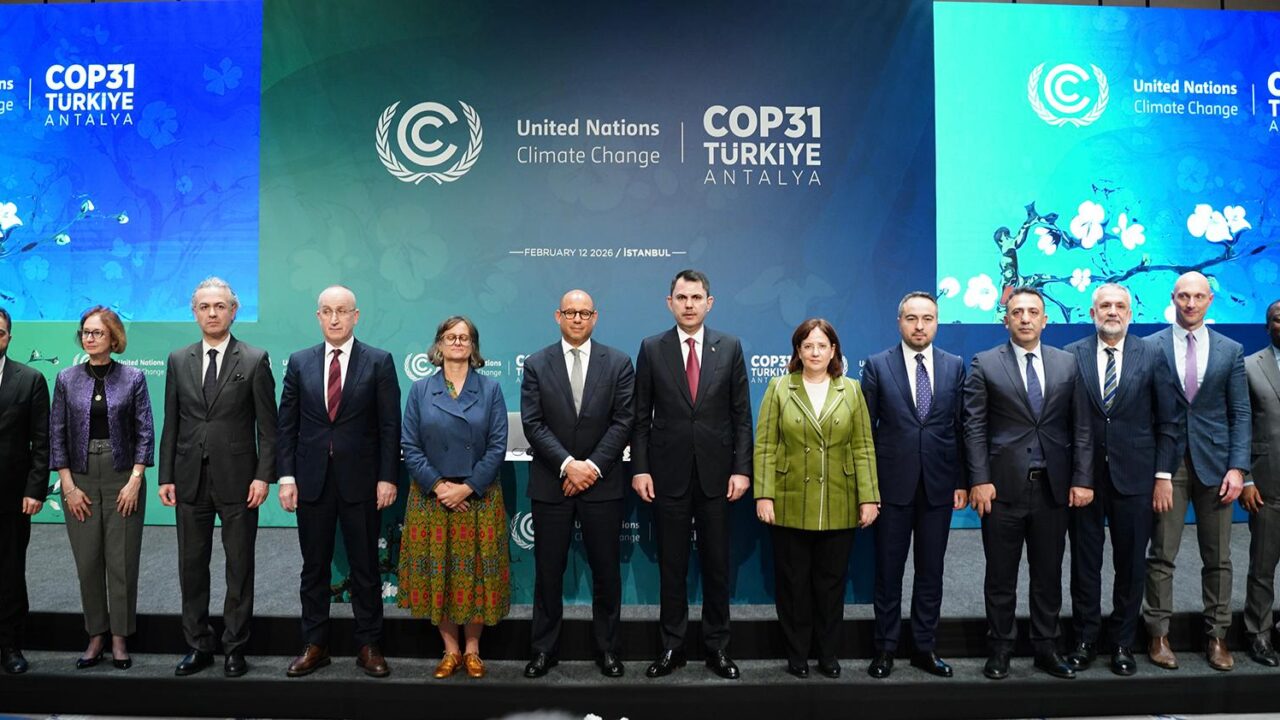
The agreement was announced on Thursday, 12 November, on the sidelines of the COP31 climate conference in Antalya. AIIB described it as the largest climate-focused policy-based financing package in the bank’s history. It is intended to support implementation of Türkiye’s Climate Law and its updated national climate commitments, including an interim emissions target for 2035 and a longer-term ambition to reach net-zero emissions by 2053.
The financing is structured around reforms to financial regulation, industrial and energy policy, and climate adaptation. Rather than funding one major construction project, it is designed to strengthen the rules, institutions and planning systems through which public and private capital can be directed towards climate objectives.
A financing package built around policy reform
The programme, known as the Türkiye Climate Action Acceleration Program, combines two financing components of equal size: an $800 million Climate-Focused Policy-Based Financing loan and $800 million in supplemental financing under AIIB’s Energy, Food Security and Economic Resilience Facility.
AIIB’s project documentation lists the programme as sovereign financing, with the Republic of Türkiye as the borrower. The bank’s board approved the financing on 22 October, while the agreement was signed during COP31 in Antalya on 12 November.
The distinction matters because the $1.6 billion is not a grant or a pot of money earmarked for a single renewable energy development. It is policy-based financing linked to a programme of 12 prior actions and a results framework covering three areas: sustainable finance, sectoral decarbonisation and climate resilience.
The programme is led by the Turkish government. The Ministry of Treasury and Finance is the executing agency, working with the Ministry of Environment, Urbanisation and Climate Change and its Directorate of Climate Change. Other institutions involved include regulators responsible for banking, capital markets and energy markets, as well as agencies covering civil aviation and forestry.
AIIB says the programme will also support climate governance across all 81 provinces, bringing adaptation planning and risk management closer to local authorities.
Carbon markets and green finance at the centre
One of the main priorities is to establish the regulatory foundations for Türkiye’s emissions trading system and a wider green finance framework.
An emissions trading system places a price on greenhouse gas emissions by requiring covered companies to hold allowances for the pollution they produce. Depending on how the system is designed, companies that reduce emissions can sell unused allowances, while those that exceed their limits may need to buy additional permits.
Türkiye’s developing carbon market is expected to be particularly important for industries that export to the European Union, including steel and cement. The EU’s Carbon Border Adjustment Mechanism places a carbon cost on certain imported goods, and a domestic carbon-pricing system could help Turkish exporters demonstrate that an equivalent carbon cost has already been paid at home.
Reuters reported that the programme includes a target for at least 180 industrial facilities to report baseline emissions under the trading scheme by April 2027. It also includes a goal of securing production licences for 1,800 megawatts of wind and solar capacity by early 2027.
The wider green finance agenda is intended to make it easier for public institutions, banks and private investors to identify and support activities consistent with Türkiye’s climate goals. That includes developing regulatory arrangements capable of directing capital towards lower-emission investment and climate-resilient infrastructure.
The scale of the investment challenge is considerable. AIIB estimates that Türkiye will require an additional $68 billion in climate investment by 2030, with around half expected to come from private sources. The bank’s financing is therefore also intended to help create conditions in which private capital can participate, rather than relying solely on public borrowing.
Decarbonising industry, energy and transport
The second pillar focuses on translating national emissions commitments into sector-specific measures. It covers areas including energy, industry and transport, with an updated national mitigation strategy and action plan intended to give the government a clearer framework for implementing its targets.
Türkiye’s economy remains exposed to imported fossil fuels, while its industrial exporters face growing pressure to reduce the carbon intensity of production. The transition therefore involves both environmental and economic considerations: reducing emissions, improving energy security and preserving access to important export markets.
The programme is designed to connect national targets with regulatory and institutional changes across sectors. AIIB’s project documentation describes the reforms as a means of completing the policy architecture needed to put the country’s Climate Law and its Second Nationally Determined Contribution into practice.
The agreement does not, however, mean that all the investment required for the energy transition has been secured. The $1.6 billion is one part of a much larger financing requirement, and the programme’s effectiveness will depend on whether the reforms produce measurable changes in investment decisions, industrial emissions and energy use.
Water security and climate adaptation
The third pillar addresses the physical effects of climate change, particularly pressure on water resources, ecosystems and public health.
Türkiye faces growing exposure to drought, extreme heat, wildfires and flooding. These risks have implications for agriculture, urban infrastructure and the reliability of essential services. The financing programme therefore includes measures intended to strengthen adaptation planning and embed climate risk management in public policy.
One target is to help 225,000 farmers in water-stressed river basins move towards crops that require less water by 2028. Another is to designate 50,000 hectares as carbon sinks by the same year. Such areas are intended to absorb and store carbon, although their long-term value will depend on how they are managed and protected.
The programme also seeks to strengthen local adaptation planning and improve climate-risk management in areas such as water, ecosystems and health. The emphasis on provincial-level governance reflects the fact that climate impacts vary significantly across regions and require responses suited to local conditions.
The proposed reforms could support more coordinated planning, but implementation will require cooperation between national ministries, local authorities and technical agencies. The programme’s results will depend not only on formal policy changes but also on the capacity of institutions to carry them out.
A wider financing push at COP31
The AIIB agreement was part of a broader financing announcement involving four multilateral development banks. Türkiye’s Treasury and Finance Minister Mehmet Şimşek said the country had signed 10 agreements worth a combined $5.1 billion with the AIIB, the Asian Development Bank, the World Bank and the Islamic Development Bank.
AIIB President Zou Jiayi announced a total of $1.9 billion in financing associated with the bank’s agreements at the ceremony. This included the $1.6 billion climate action programme and a separate $300 million facility to be channelled through Türk Eximbank to help businesses finance green transitions and strengthen resilience to economic shocks.
The distinction between the two AIIB components is important: the $300 million Eximbank facility is additional to, and separate from, the $1.6 billion climate policy package.
The wider agreements also covered areas beyond climate policy, including hospitals, small businesses, cities, agriculture and industry. The Turkish government presented the package as part of its effort to attract longer-term external financing for economic modernisation and reconstruction.
The test will be implementation
The financing arrives as COP31 places renewed attention on the gap between countries’ climate pledges and the policies needed to deliver them. For Türkiye, the immediate test will be whether the programme’s targets translate into functioning institutions, credible emissions reporting and investment that can be measured over time.
AIIB’s project assessment identifies potential implementation challenges, including coordination across public institutions and the capacity to deliver reforms. It also notes possible social effects from the transition, including pressure on workers in carbon-intensive industries and difficulties for smaller businesses that may lack the resources to meet new green-finance requirements.
Those concerns underline why the programme’s design and monitoring will matter. A carbon market, for example, can influence industrial behaviour only if emissions are measured reliably, rules are enforced consistently and companies have a clear understanding of their obligations. Similarly, agricultural adaptation targets will require practical support for farmers, not simply changes to national policy.
The financing is therefore best understood as an attempt to build the institutional framework for a much larger transition. Its success will be judged less by the announcement made at COP31 than by whether the promised reforms are completed, private investment follows and the country makes measurable progress towards its 2035 and 2053 climate objectives.