

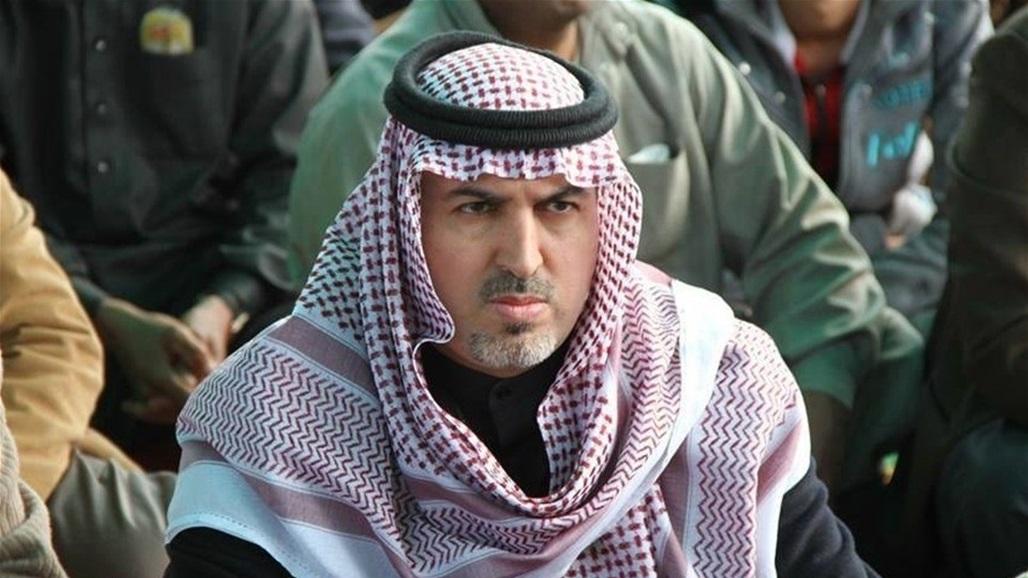
Iraq is preparing to send a specialist security delegation to Lebanon to assist the investigation into the death of former parliamentarian Ahmed al-Alwani, whose body was discovered in a Beirut apartment earlier this week. The move signals Baghdad’s determination to be involved in a case that has raised questions about cross-border criminal activity, the safety of Iraqi political figures abroad and the potential for the killing to inflame domestic political divisions.
Al-Alwani, 57, a prominent Sunni politician from Iraq’s western Anbar province, was found dead in an apartment in Beirut’s Tariq al-Jdideh neighbourhood on Monday night. Preliminary findings cited by a Lebanese judicial official indicate that he was strangled. His office has described the death as an assassination and demanded an investigation capable of identifying those who planned and carried out the killing.
An Iraqi security official told AFP that a specialised delegation would travel to Lebanon to follow developments with Lebanese security agencies. The announcement came as Iraqi President Nizar Amedi pressed Lebanese Prime Minister Nawaf Salam for a swift and thorough investigation during a meeting on the sidelines of diplomatic discussions in Türkiye.
The case has become increasingly complex as Iraqi officials have disclosed new details about Alwani’s final movements in Beirut. However, accounts of how he left the airport and reached the apartment differ, while Lebanese authorities have yet to establish publicly a motive for the killing.
A cross-border investigation takes shape
Lebanon’s top prosecutor, Judge Ahmed Rami al-Hajj, is overseeing the investigation, which is being conducted by the Information Branch of the Internal Security Forces, according to Lebanon’s National News Agency.
The investigation began after Alwani’s family lost contact with him and the Iraqi embassy raised concerns about his disappearance. His body was subsequently discovered inside a rented apartment in Tariq al-Jdideh, a neighbourhood in western Beirut.
A Lebanese judicial official told AFP that preliminary findings pointed to the involvement of three people. According to the official, a Lebanese national had been detained and was being questioned, while two foreign nationals were believed to have fled to Syria. Their identities have not been publicly established.
The status of the detained Lebanese national requires careful distinction from later accounts. Iraq’s Security Media Cell spokesperson, Lieutenant General Saad Maan, said the Lebanese owner of the apartment had been detained as a precaution because he had not retained the identity documents of the people who rented it. Lebanese authorities have not publicly confirmed that the property owner was one of the suspected participants described in the AFP account.
The available reports therefore point to several lines of inquiry, but do not yet establish who organised the crime, whether those who accompanied Alwani were directly involved in his death, or whether anyone who has been detained faces a formal charge.
Iraqi Ambassador to Lebanon Mohammed Reda al-Husseini has been in contact with Lebanese security and judicial officials. Iraq’s National Intelligence Service is also working with the embassy, Maan said, as Baghdad seeks information about the circumstances of the death and the people who may have encountered Alwani before he disappeared.
Conflicting accounts of his final movements
Some of the most significant details to emerge concern Alwani’s movements after arriving in Beirut from Erbil on 5 November.
Maan told the state-run Iraqi News Agency that Alwani travelled on a Middle East Airlines flight and initially went by taxi to a hotel near Raouche, Beirut’s seafront district. According to Maan, Alwani checked out less than an hour after arriving. Hotel staff told investigators that he left with people who spoke with Syrian accents and got into a white Range Rover.
Maan said the hotel staff had the impression that Alwani was familiar with the group. He added that the former lawmaker made two calls to his family, the last from the apartment in Tariq al-Jdideh.
These details have attracted attention, but they do not establish the identities or nationalities of the people involved. An accent alone cannot confirm nationality, and the Iraqi spokesperson did not name the individuals or provide evidence linking them directly to the killing.
There is also a conflicting account from Alwani’s media office. It said that information available to it indicated that he did not stay at a hotel after arriving in Beirut. The office cited surveillance footage which, it said, showed people leaving the apartment at 4.55pm, around 14 minutes after his flight landed. They may have returned later in the evening before leaving the building shortly before midnight.
The office said its final telephone conversation with Alwani took place at 9.05pm, when he told colleagues that he had arrived in Beirut and was travelling from the airport to his residence.
Maan’s account and the media office’s version have not been reconciled publicly. Establishing the precise sequence of movements will be important to investigators, particularly in determining when Alwani entered the apartment, who accompanied him and when the people seen on surveillance footage left.
The apartment’s owner reportedly told investigators that the tenants had said they would not remain for long. Maan said they paid $200 a night, twice the usual rate, and promised to provide their identity documents later. The owner returned to collect the remaining rent but found the apartment empty. After noticing an unusual smell, he contacted police, who entered the premises and discovered the body.
Identification and forensic questions
The condition of the body complicated the initial identification process. According to Maan, it had begun to decompose, making it difficult for relatives to identify the remains with certainty when they first saw them at a government hospital in Zahle, in Lebanon’s Bekaa Valley.
Judge al-Hajj ordered DNA testing and requested that a close relative provide a sample. Alwani’s son, Talha al-Alwani, travelled to Lebanon on Wednesday and provided a DNA sample, Maan said. Investigators also questioned him about his father’s travel plans and whether the family knew the people with whom he had been in contact.
Relatives subsequently recognised the body, but Maan said Iraqi authorities were awaiting the DNA result before arranging its return to Baghdad. This distinction is important: family recognition and formal forensic confirmation are separate steps in the process.
The preliminary finding of strangulation, reported by AFP through a Lebanese judicial source, indicates the suspected manner of death. It does not, by itself, establish how the killing was organised or who was responsible. Further forensic findings and evidence recovered from the apartment will be central to determining the circumstances.
A politician shaped by Iraq’s sectarian divisions
Alwani’s death has drawn particular attention because of his political history. A Sunni politician from Ramadi, the capital of Anbar province, he served two terms in Iraq’s parliament between 2005 and 2014 and chaired its economic committee.
He became nationally prominent during the protests that erupted in Anbar in 2012 and 2013 against the government of then-prime minister Nouri al-Maliki. Protesters accused the Shiite-led administration of marginalising Iraq’s Sunni community and using security measures against its political opponents. Alwani became one of the prominent parliamentary voices supporting the demonstrations.
His political career was interrupted in December 2013, when Iraqi security forces raided his home in Ramadi to arrest him. The operation triggered an armed confrontation in which his brother and several other people were killed.
In November 2014, Iraq’s Central Criminal Court sentenced Alwani to death after convicting him of killing two security personnel during the confrontation. He remained in prison for more than a decade and was released in April 2025 under Iraq’s General Amnesty Law, following legal and tribal efforts surrounding his case.
The Inter-Parliamentary Union had followed his detention for years and raised concerns about the proceedings and parliamentary immunity. His release marked the end of a politically contentious chapter, but his return to public life did not restore him to his former parliamentary position.
Alwani was also a vocal critic of Iranian influence in Iraq and of Iranian-backed armed groups. That political position has prompted speculation about possible motives for his killing. However, no evidence made public by Lebanese or Iraqi authorities has established a connection between his political views and the circumstances of his death. His past should not be treated as proof of responsibility by any individual or organisation.
Baghdad warns against sectarian exploitation
The Iraqi government has also sought to contain the political fallout. The Security Media Cell described the killing as a serious crime and urged the public to allow the investigation to proceed before drawing conclusions.
Maan warned against attempts to use Alwani’s death to provoke sectarian hostility. The government’s concern reflects the sensitivity of the case in a country where political disputes have frequently intersected with sectarian identity and memories of past violence.
Lebanese Prime Minister Nawaf Salam condemned the killing and praised the judicial and security agencies working to establish what happened. He said Beirut could not remain an arena for crime and lawlessness.
Iraq’s President Amedi has similarly called for an expedited investigation and for those responsible to be identified. The planned security delegation is intended to give Baghdad a more direct role in following the inquiry, while the Lebanese authorities retain responsibility for the investigation on their territory.
Motive remains the central unanswered question
The next stage will depend on whether investigators can establish a reliable timeline from surveillance footage, travel records, witness accounts and forensic evidence. Identifying the people who accompanied Alwani from the airport, confirming the circumstances in which the apartment was rented and determining the sequence of events inside the property will be crucial.
The competing accounts of his movements underline why a careful investigation matters. The descriptions of people with Syrian accents, the reported use of a white Range Rover and the detention of the apartment owner are investigative details, not proof of nationality, guilt or motive.
For Baghdad, the case also carries diplomatic significance. A prominent former lawmaker was killed while travelling abroad, and the circumstances remain unresolved. For Beirut, the investigation is an important test of the ability of its judicial and security institutions to establish accountability in a case attracting attention across the region.
Until the evidence is examined and the findings made public, the central questions remain unanswered: who arranged Alwani’s final journey, why he was taken to the apartment, and whether his political past had any bearing on his death. The Iraqi delegation may help bring additional scrutiny and cooperation to the inquiry, but only a transparent investigation can establish what happened and who was responsible.