

Thousands of Palestinians affected by the operation have been told they can return home, as schools prepare to reopen and local authorities begin assessing damage across the occupied West Bank city.
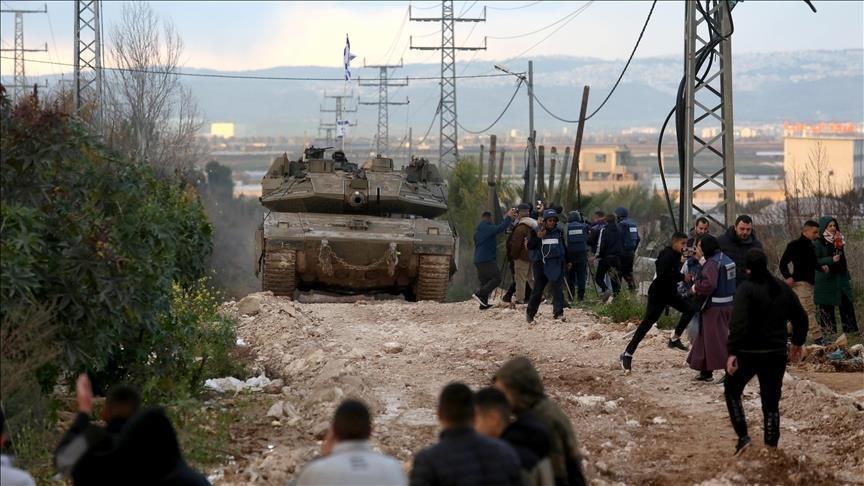
Israeli forces have withdrawn from Hebron in the southern occupied West Bank following an operation lasting around ten days, according to the city’s governor, Khaled Dudin. The announcement has allowed displaced Palestinian families to begin returning to their homes, while local authorities face the task of restoring services and assessing the damage caused by the military operation.
Dudin announced on Monday that Palestinian security forces had taken control of the affected areas following the Israeli withdrawal. He said local authorities and security personnel were monitoring conditions and working to ensure residents could return safely.
The withdrawal follows an Israeli military operation launched on 23 October, after a shooting attack near Hebron killed two Israeli soldiers and wounded three others. Israeli forces subsequently killed the two Palestinian attackers.
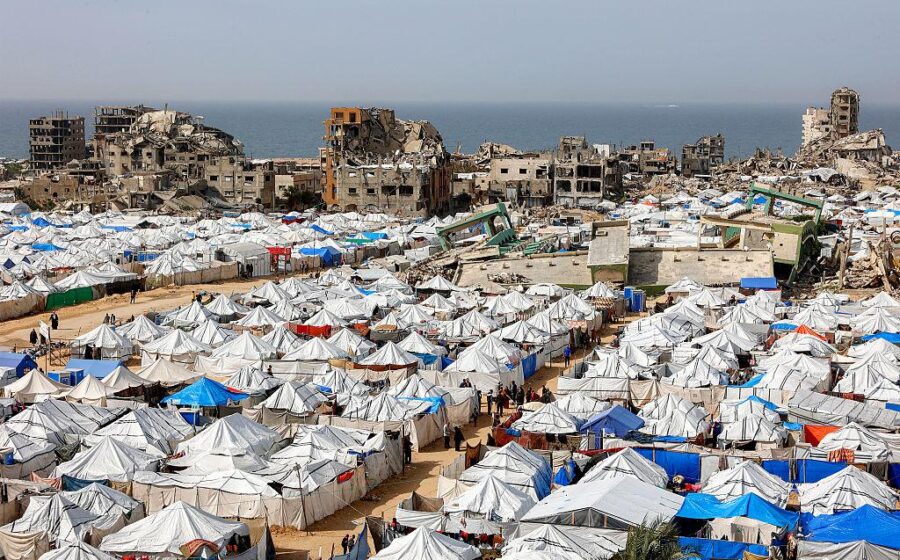
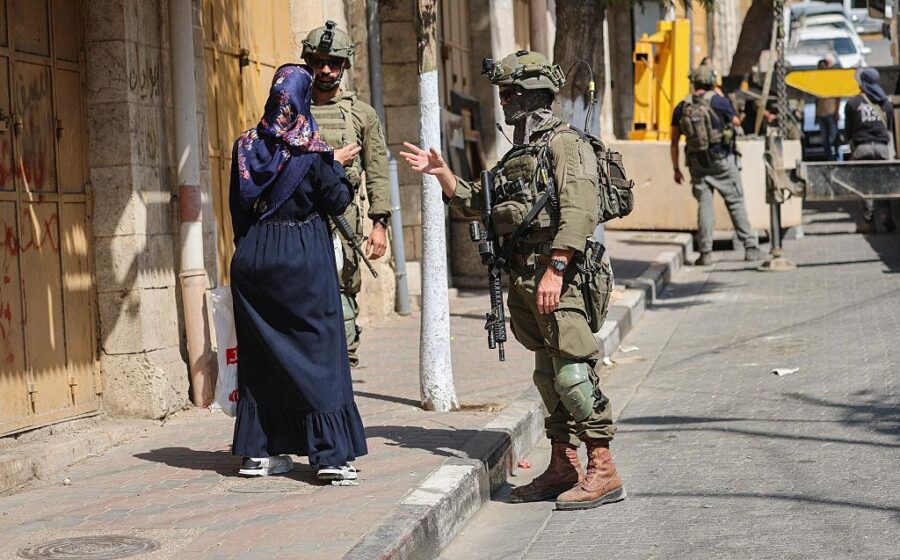
The operation brought extensive movement restrictions, closures and displacement across parts of the city. According to the Hebron Governorate, more than 3,300 Palestinians were displaced or otherwise affected, particularly in the Al-Jalda and Ein Deir Baha neighbourhoods.
Although the withdrawal marks a significant change on the ground, the scale of the damage and the restrictions imposed during the operation have left residents and municipal authorities facing a difficult recovery.
Residents begin returning as restrictions ease
Hebron Mayor Youssef al-Jaabari said the municipality was informed of the withdrawal early on Monday morning. He told Al Jazeera that families began returning shortly afterwards, with students also preparing to resume their education.
The mayor described the preceding period as one of near-total disruption, with movement into and out of the city restricted and economic, educational, healthcare and municipal activities severely affected.
Five universities had been closed during the operation, according to the mayor. The disruption also affected schools, businesses and public services, leaving thousands of residents unable to maintain their normal routines.
The return of displaced families is an important first step towards restoring daily life. However, Palestinian Civil Defence has urged residents to exercise caution before entering damaged buildings or approaching suspicious objects.
The agency warned people not to touch unidentified objects and advised them to wait for inspections by specialist teams, including explosive ordnance disposal personnel. Residents were also asked to keep children and vulnerable people away from potentially dangerous areas.
The warning reflects concerns that military operations can leave behind damaged structures and unexploded objects that pose risks even after troops have withdrawn.
More than 3,300 Palestinians affected, officials say
The humanitarian impact of the operation extended beyond the immediate areas where Israeli forces were deployed.
The Hebron Governorate reported that more than 3,300 Palestinians had been displaced or otherwise affected. Some families were forced to leave their homes, while others faced restrictions on movement, access to services and economic activity.
Al-Jazeera reporting from the city described residents returning to homes that had been used as military positions. Some residents told the broadcaster that they had been given only a few minutes to collect essential belongings before being ordered to leave.
Those accounts, including reports of damaged furniture and missing personal possessions, were attributed to residents and could not be independently verified in every instance.
The operation also involved the demolition of residential buildings and other structures. According to figures released by the Hebron Municipality and reported by the Palestinian news agency WAFA, 15 homes and facilities were completely demolished.
Municipal authorities said the operation had also caused damage to infrastructure and disrupted services across the city. The full extent of the damage will become clearer as inspection teams are able to access the affected neighbourhoods.
Businesses and education bear the economic cost
The consequences of the closures have been particularly significant for Hebron’s economy.
The municipality reported that 327 shops were forced to close during the operation. It estimated direct daily economic losses at more than 12 million Israeli shekels, equivalent to approximately $3.8 million.
The municipality also estimated infrastructure damage at more than six million shekels, or around $1.9 million. Additional losses were reported in the health and environmental sectors.
Hebron is one of the most important commercial and industrial centres in the West Bank. Restrictions on movement therefore affect not only individual shopkeepers but also workers, suppliers, manufacturers and businesses dependent on the movement of goods.
The educational impact has also been substantial. According to WAFA, around 80,000 students in the city were unable to attend school during the operation.
The closures of educational institutions, including universities, have disrupted academic schedules and created additional pressure for families already dealing with displacement and uncertainty.
The immediate priority for local authorities will be to restore access to schools, reopen commercial areas and assess damage to essential infrastructure. However, the pace of recovery will depend partly on whether movement restrictions remain lifted.
Operation followed deadly attack on Israeli soldiers
The Israeli operation began after a shooting attack near Hebron on 23 October in which two Israeli soldiers were killed and three others wounded. Israeli forces later killed the two Palestinian attackers.
The Israeli military said the operation involved searches and security activity following the attack. The Times of Israel reported that Israeli forces detained dozens of suspects for questioning and seized three firearms while searching hundreds of buildings.
The military also carried out demolitions connected to the homes of the attackers. The operation subsequently extended into additional parts of the city, according to Palestinian reporting.
The Israeli military had not publicly provided a detailed statement on the reported full withdrawal at the time of the governor’s announcement. Israeli media reported that troops had ended the raid and withdrawn from several neighbourhoods.
The distinction is important: while Palestinian officials announced that forces had withdrawn from the city and that local security personnel had taken control, the precise scope of the military’s withdrawal should be understood in light of the different accounts.
The events also highlight the wider security tensions in the occupied West Bank, where Israeli military operations, Palestinian attacks and movement restrictions continue to affect civilian communities.
Withdrawal leaves questions over long-term stability
The withdrawal gives displaced residents an opportunity to return, but it does not resolve the wider problems that have affected Hebron during the operation.
Families must now determine whether their homes are safe to occupy, businesses need to assess losses, and local authorities must restore services while inspecting damaged buildings and infrastructure.
There are also questions about the durability of the improved situation. Residents and businesses will need predictable access to roads, workplaces, schools and healthcare facilities if daily life is to return to normal.
For Palestinian officials, the immediate challenge is to coordinate the return of displaced families and organise recovery efforts. For Israel, the operation has been presented in the context of security measures following the deadly attack on its soldiers.
The two positions reflect the wider divide over security, military operations and the impact of restrictions on Palestinian civilian life.
Monday’s withdrawal is therefore an important development for Hebron, but the end of the operation does not automatically mean the end of its consequences. The coming days will show whether residents can return without renewed restrictions and how quickly the city can begin recovering from the disruption.