

President Joseph Aoun seeks international support to prevent another conflict, as Israeli forces remain in southern Lebanon and Hezbollah rejects demands to surrender its weapons.
Beirut steps up diplomatic efforts to prevent another war
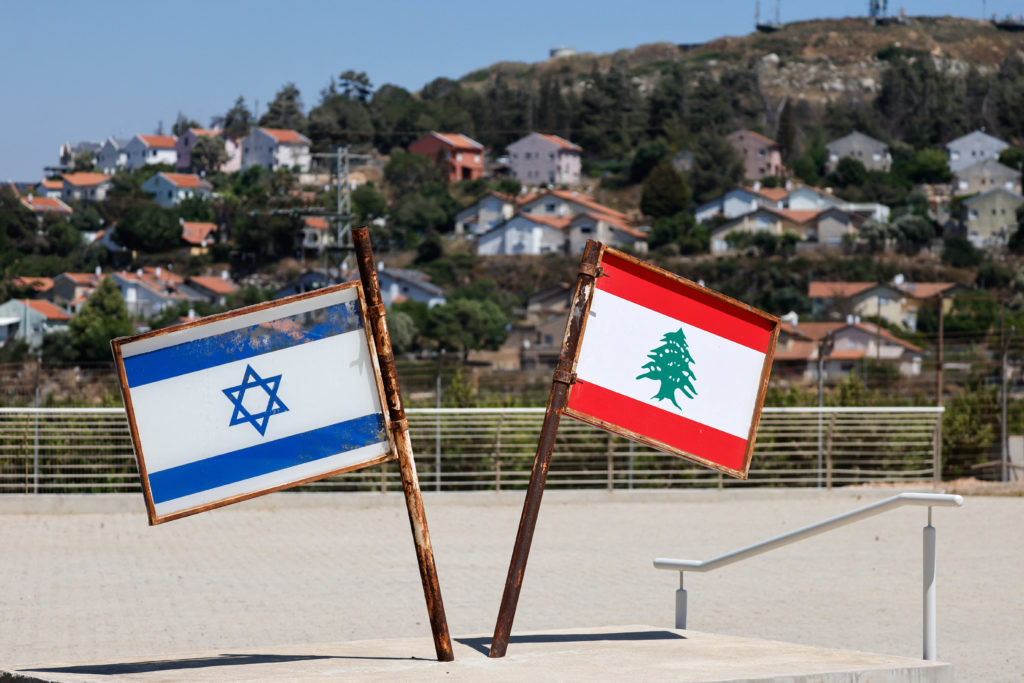
Lebanon is intensifying diplomatic efforts to avoid another confrontation with Israel as tensions rise over the future of southern Lebanon, the disarmament of Hezbollah and the continued presence of Israeli forces inside Lebanese territory.
President Joseph Aoun has reaffirmed his government’s commitment to negotiations, insisting that diplomacy remains the preferred route towards restoring stability. However, the Lebanese leadership faces a difficult position: Israel wants stronger security guarantees and the removal of Hezbollah’s military infrastructure, while the armed group continues to reject demands that it surrender its weapons.
The diplomatic challenge has become more urgent following reports that Hezbollah has spent recent months rebuilding parts of its military capabilities in preparation for a possible resumption of hostilities.
In an interview with Arab News published on 30 October, Lebanese officials’ efforts to secure US-mediated diplomacy were described as an attempt to prevent another destructive conflict. The report also highlighted the limited influence Beirut has over decisions that could draw the country into renewed fighting.
For Lebanon, the stakes extend beyond its border security. Another war could trigger fresh displacement, further weaken public institutions and deepen divisions within a country already struggling with political and economic instability.
President Aoun says key demands remain unresolved
President Aoun reiterated Lebanon’s position during a meeting on Thursday with Germany’s Minister for Economic Cooperation and Development, Reem Alabali-Radovan.
He identified four central issues that Beirut wants addressed through negotiations with Israel: a ceasefire, the withdrawal of Israeli forces, border demarcation and the release of prisoners.
Aoun said the progress Lebanon had sought on these issues had not materialised. He also called for an end to Israeli strikes, arguing that continued military operations undermine efforts to restore stability.
His comments followed a round of US-mediated discussions between Lebanese and Israeli representatives in Tampa, Florida, on 20–21 October. The discussions were intended to advance an existing framework for security arrangements in southern Lebanon.
The Lebanese position is that negotiations must produce tangible results rather than simply formalise security demands. For Beirut, an agreement that requires Hezbollah’s disarmament without addressing the Israeli military presence would be difficult to defend domestically.
Israel, however, has argued that its military operations are necessary to prevent Hezbollah from rebuilding its infrastructure near the border. The competing positions have left negotiations struggling to move beyond the central disagreement over security and territorial control.
Hezbollah refuses to surrender its weapons
The future of Hezbollah’s arsenal remains the most difficult domestic issue facing the Lebanese government.
Hezbollah leader Naim Qassem rejected the prospect of disarmament under the US-backed framework in a statement on Wednesday. He maintained that the group would continue to retain its weapons and described the proposed arrangement as unacceptable.
The position directly conflicts with the Lebanese government’s commitment to extend state authority over the country’s territory and place armed activity under official institutions.
For the government, disarmament is part of a wider effort to strengthen national sovereignty and prevent armed groups from independently determining Lebanon’s security policy.
Hezbollah, meanwhile, argues that its weapons are necessary to resist Israeli military activity and protect Lebanese territory. The group has also questioned the legitimacy of arrangements that it believes impose security obligations on Lebanon without securing an Israeli withdrawal.
The disagreement creates a political dilemma for Beirut. Attempting to enforce disarmament without a broader settlement could produce confrontation between Lebanese state institutions and Hezbollah. Delaying the issue, however, risks increasing international pressure and leaving the government unable to demonstrate that it controls security across the country.
Reports of Hezbollah rebuilding military capabilities increase concerns
Fears of renewed conflict have intensified following a Reuters investigation published on 26 October.
According to Lebanese security sources briefed on Hezbollah’s activities, the group has spent approximately three months preparing for a possible return to hostilities with Israel. The sources said Hezbollah had received tens of millions of dollars from Iran to strengthen its military capabilities.
The reported efforts have included acquiring explosives, producing drones and rebuilding command-and-control structures damaged during previous fighting.
Reuters also reported that Hezbollah had received separate Iranian funding intended to assist displaced families in its traditional support areas. The military funding and the assistance for displaced households were described as separate financial flows.
However, the group has not fully restored its military capabilities, according to the sources cited by Reuters.
Hezbollah’s media office rejected the suggestion that its command-and-control structures had collapsed. It also maintained that resistance to Israeli occupation remained legitimate.
These reports should be understood as claims from sources familiar with the group’s activities, rather than a complete independent assessment of its current military strength.
Nevertheless, the possibility of renewed military preparations has complicated the government’s diplomatic position. Israel has repeatedly argued that the Lebanese state must prevent Hezbollah from re-establishing military infrastructure near its northern border.
Israeli military presence complicates Beirut’s negotiating position
The continued presence of Israeli forces in southern Lebanon is another major obstacle to a settlement.
Israel maintains that its military deployment is necessary to prevent Hezbollah from returning to positions close to the border and threatening communities in northern Israel.
Lebanese authorities argue that the continued presence of foreign forces undermines national sovereignty and makes it more difficult for the government to persuade Hezbollah and its supporters that diplomacy can deliver meaningful security guarantees.
This creates a difficult sequence of demands. Israel wants evidence that Hezbollah’s military infrastructure is being dismantled before withdrawing, while Lebanon wants an Israeli withdrawal and an end to strikes as part of a credible settlement.
The United States has played a central role in facilitating discussions between the two governments. However, Washington must also balance Israel’s security demands with the Lebanese government’s concerns about sovereignty and the risk of renewed conflict.
Lebanon’s ability to influence the outcome is limited by its dependence on international support and its internal political divisions.
The government is therefore looking towards Washington and European partners to help create conditions in which negotiations can produce tangible progress.
Germany calls for stronger support for Lebanon’s army
International involvement has become increasingly important as Lebanon seeks to strengthen its state institutions and prevent a security vacuum in the south.
During her meeting with President Aoun, Germany’s minister Reem Alabali-Radovan emphasised the importance of supporting Lebanon’s institutions and the Lebanese Armed Forces.
The Lebanese army is expected to play a central role in any future security arrangement. A stronger deployment would help the government demonstrate that national institutions, rather than independent armed groups, are responsible for maintaining security.
However, the army faces practical limitations. It needs adequate funding, equipment, personnel and international support to take on a wider security role in southern Lebanon.
The future of the United Nations Interim Force in Lebanon, known as UNIFIL, has added another layer of uncertainty.
The peacekeeping mission’s mandate is approaching its planned end, raising questions about what international security arrangements will follow. President Aoun has expressed concern that the withdrawal of international peacekeepers without an effective replacement could create a dangerous gap.
Germany has also warned against allowing a security vacuum to develop and has described the Lebanese army as an important pillar of national stability.
For Beirut, international assistance is therefore not simply a diplomatic preference. It is an important part of ensuring that any future settlement can be implemented on the ground.
Displacement and economic instability remain major concerns
Another conflict would place enormous pressure on a country that has already experienced widespread displacement.
According to figures cited by the International Organization for Migration in the Arab News report, nearly 330,000 people remained internally displaced as of late September. More than 877,000 others had returned to their home areas after being displaced by the military escalation in March.
A renewed confrontation could reverse some of that progress, forcing families to leave their homes again and placing additional pressure on communities receiving displaced residents.
The economic consequences would also be serious. Lebanon has been attempting to restore confidence in its institutions and move towards financial recovery after years of crisis.
Another prolonged conflict could damage infrastructure, interrupt trade and tourism, weaken investment prospects and increase the financial burden on the government.
International financial support would also become harder to secure if instability returned on a large scale.
The social consequences could be equally damaging. Lebanon remains divided over Hezbollah’s military role, and renewed fighting could intensify political tensions between communities and institutions.
For many residents, the priority is straightforward: avoid another war and restore conditions in which families can return to normal life.
Lebanon’s diplomatic strategy faces a narrow window
Lebanon’s leaders are attempting to use international relationships to secure progress that they may struggle to achieve through domestic political negotiations alone.
Washington remains particularly important because of its influence over Israel and its role in facilitating discussions between Beirut and Tel Aviv. European governments, meanwhile, can support the Lebanese Armed Forces and help strengthen state institutions.
But diplomacy faces a difficult test. Israel wants credible guarantees that Hezbollah will not rebuild its military presence near the border. Lebanon wants an end to Israeli military activity and a withdrawal from its territory. Hezbollah continues to reject disarmament, arguing that its weapons remain necessary for resistance.
These positions leave little room for an immediate agreement.
The diplomatic process will depend on whether the parties can establish a sequence of measures that addresses security concerns while giving Lebanon a credible path towards restoring sovereignty.
A renewed war remains a risk Lebanon cannot afford
Lebanon’s latest diplomatic efforts reflect a growing recognition that another confrontation with Israel could have consequences far beyond the southern border.
The country is still dealing with displacement, economic weakness and political divisions. A new war would threaten recovery while placing additional pressure on public institutions and communities already struggling to regain stability.
President Aoun’s commitment to negotiations provides a diplomatic opening, but the unresolved issues surrounding Israeli withdrawal, Hezbollah’s weapons and the future of international security arrangements remain substantial.
The reports of Hezbollah rebuilding military capabilities have added urgency to the situation, although the group has not indicated that it has made a final decision to enter another full-scale confrontation.
For now, Lebanon’s best chance of avoiding another war lies in sustained diplomacy, stronger international support and progress towards a security arrangement that both sides can accept.
The question facing Beirut is whether negotiations can deliver enough practical progress before the next escalation removes that opportunity.