


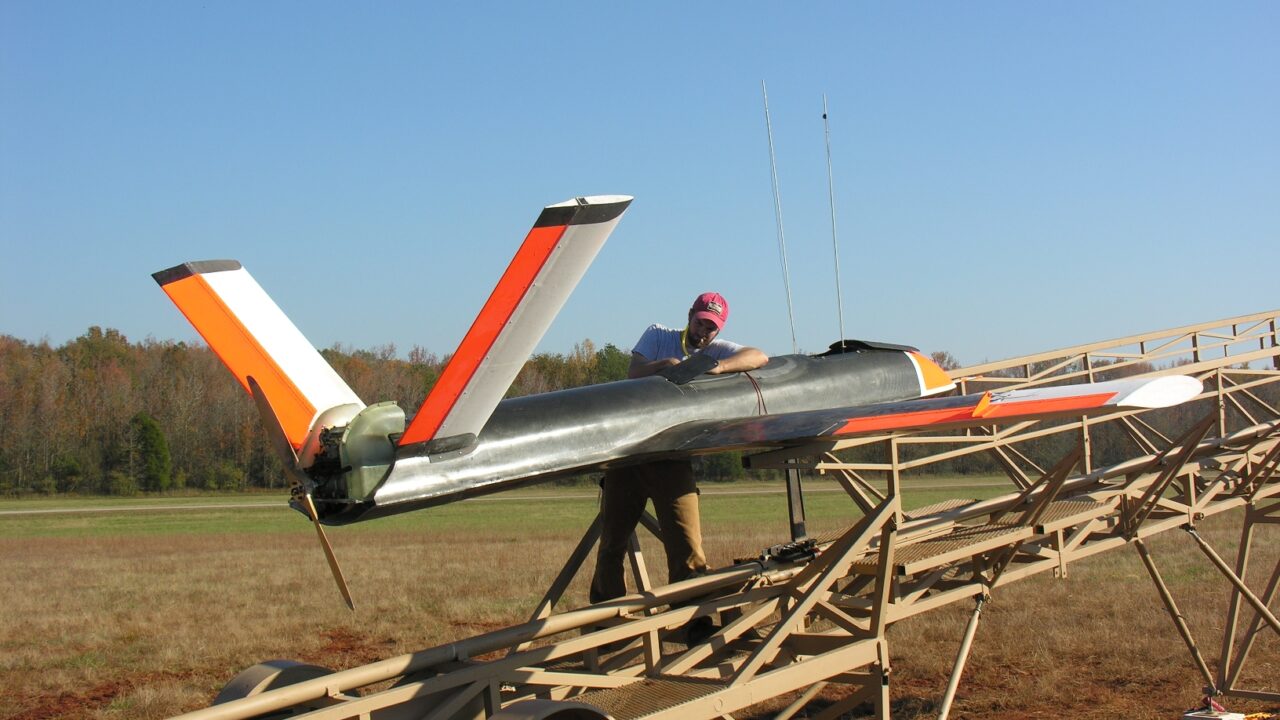
Tehran says its electronic warfare forces seized control of a US-made MQM-170 aircraft and landed it intact, but Washington has dismissed the claim and independent evidence has yet to establish what happened.
The United States military has rejected an Iranian claim that its forces captured an American unmanned aircraft near the Strait of Hormuz, as competing accounts from Washington and Tehran add another layer of uncertainty to an already tense confrontation over the strategic waterway.
Iran’s Islamic Revolutionary Guard Corps (IRGC) Navy said on 29 October that it had used electronic warfare capabilities to take control of a US-made MQM-170 Outlaw aircraft and bring it down intact on Iranian territory. Iranian state media published footage that it said showed the aircraft being tracked and subsequently recovered.
US Central Command (CENTCOM), which oversees American military operations in the Middle East, rejected the account. Its spokesperson, Captain Tim Hawkins, described the report as false and accused the IRGC of repeatedly making misleading claims. He did not provide further operational details.
The competing statements leave the central question unresolved: whether an American aircraft was actually captured, and, if so, under what circumstances. No independent inspection of the alleged recovered aircraft or publicly available evidence establishing its identity and location had emerged in the reporting reviewed.
The incident is significant not only because of the competing military claims, but also because it highlights the growing importance of electronic warfare and unmanned systems in the confrontation around the Strait of Hormuz.
What Iran says happened
According to Iranian state news agency IRNA, the IRGC Navy detected and identified an MQM-170 aircraft before using an electronic warfare operation to take control of its systems and land it intact.
Iranian reporting placed the incident west of the Strait of Hormuz. The country’s media also suggested that the aircraft had been operating to gather information about Iranian air-defence systems positioned along the Persian Gulf coast.
The IRGC presented the operation as evidence of its ability to disrupt and capture foreign unmanned aircraft without necessarily destroying them.
Iranian media reports also described the incident as the second occasion on which the country’s forces had captured an aircraft of this type intact. However, the details of the alleged earlier operation and the latest claim have not been independently established.
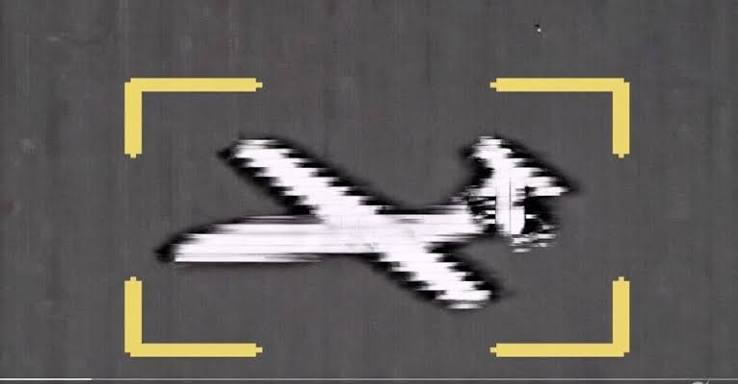
The footage released through Iranian media has attracted attention because it appears to show an aircraft being tracked by an infrared system, followed by images of an airframe on the ground. But video showing an aircraft does not, by itself, establish its manufacturer, operator, location or the method by which it came to be on the ground.
Those questions are particularly important in a conflict environment where both sides have incentives to demonstrate technological capability and undermine the credibility of their opponent.
Washington rejects the account
CENTCOM responded to the Iranian announcement by rejecting the claim outright.
Captain Tim Hawkins said the report was false and accused the IRGC of making repeated misleading statements. The US military did not provide a detailed explanation of the alleged aircraft’s whereabouts or release technical information that would independently settle the dispute.
The absence of additional detail means that Washington’s denial cannot be treated as independent proof of what happened either. It is the official position of one of the parties involved, just as the capture announcement is the account of the other.
The distinction matters for accurate reporting. Iran has released footage and made a specific claim about an electronic warfare operation, while the United States has rejected that account. Neither side has provided evidence that allows an independent observer to establish the full sequence of events.
The claim should therefore remain disputed rather than being reported as a confirmed capture or definitively fabricated footage.
What is the MQM-170 Outlaw?
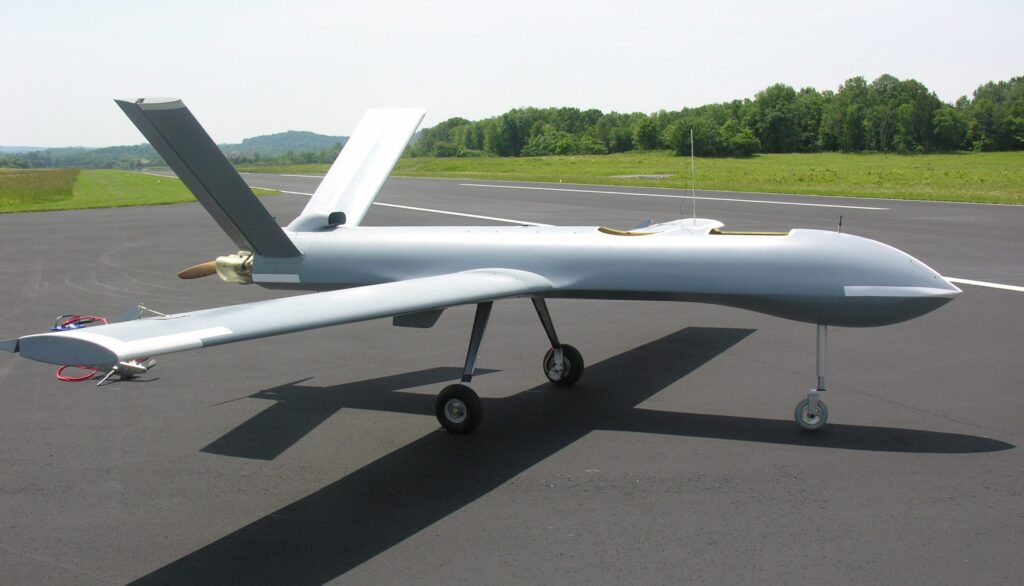
The aircraft identified in Iranian reporting is an MQM-170 Outlaw, a US-made unmanned aerial vehicle associated with the target-drone and decoy category.
Such aircraft are used in military training and testing, including exercises designed to help forces practise detecting, tracking and responding to airborne threats. Their role is different from that of larger surveillance platforms or armed combat drones.
The distinction is relevant because descriptions of the aircraft as a conventional American intelligence drone could overstate what is publicly known about its function.
Defence publication The War Zone, which examined the Iranian footage and the aircraft identification, reported that the airframe appeared consistent with the Outlaw G2 family. It also noted that target drones can be useful for stimulating air-defence systems and collecting information about how those systems respond.
That potential training role does not establish that the aircraft was conducting a reconnaissance mission on the day in question. Iran’s assertion that it was gathering information about coastal air defences remains unverified.
Nor does the identification of an aircraft type prove that the United States lost control of one. Establishing that would require evidence connecting the airframe to a specific US military operation, rather than relying solely on the claims accompanying the footage.
Why electronic warfare matters
Electronic warfare involves the use of electromagnetic energy to detect, disrupt, deceive or interfere with an opponent’s systems. In modern military operations, it can affect communications, radar, navigation and the links used to control unmanned aircraft.
Many remotely operated drones depend on communication links and navigation systems to receive instructions and transmit information. Interference with those systems can complicate their operation, although the degree of vulnerability varies considerably according to the aircraft’s design, autonomy and protective measures.
A successful electronic takeover would be different from simply disrupting a signal or forcing an aircraft to land. It would suggest that an operator had gained sufficient control over the aircraft’s systems to direct its movement and recover it.
However, the technical details of Iran’s alleged operation have not been made public in a form that can be independently examined. There is no verified account of which signals were affected, how control was allegedly transferred or whether the aircraft’s navigation and communication systems were compromised.
The incident nevertheless draws attention to a growing feature of modern warfare: military advantage increasingly depends not only on aircraft, missiles and conventional air defences, but also on the ability to protect and disrupt the digital and electromagnetic systems connecting them.
For countries operating unmanned aircraft near contested airspace, electronic warfare can create risks even when no missile is fired.
A strategically sensitive location
The reported incident occurred against the backdrop of heightened tensions around the Strait of Hormuz, one of the world’s most important maritime energy corridors.
The narrow waterway connects the Persian Gulf with the Gulf of Oman and international shipping routes. It is a critical passage for oil and petroleum exports from several Gulf producers, making its security an international economic concern.
The United States maintains military forces in the wider region to protect its personnel, partners and maritime interests. Iran, meanwhile, regards the surrounding waters as central to its national security and has repeatedly warned against what it considers hostile foreign military activity near its coastline.
The competing drone accounts come amid reports of other incidents involving unmanned systems in the region. In September, Iranian forces claimed to have captured American unmanned underwater vehicles in the Strait of Hormuz. US officials disputed aspects of those claims, although American military reporting separately acknowledged that an older underwater vehicle had malfunctioned and been recovered by Iranian forces.
Those incidents involved different types of equipment and should not be treated as proof of the latest aerial-drone claim. They do, however, illustrate how unmanned systems have become a recurring point of confrontation between the two countries.
What remains unknown
Several questions remain unanswered. Independent observers have not established whether the aircraft shown in the Iranian footage is an American MQM-170, whether it was operating in the location claimed by Tehran, or whether electronic warfare was responsible for its recovery.
There is also no independently verified information about the aircraft’s mission, its point of origin or whether any sensitive equipment or operational data could have been exposed.
If Iran did recover an intact American aircraft, the potential intelligence value would depend on its configuration, onboard equipment and the condition of its systems. It would be premature to assume that the incident has given Tehran access to sensitive or classified American technology.
For Washington, the episode also raises a communication challenge. A brief denial may reject the Iranian narrative, but it does not necessarily resolve questions raised by footage that has circulated through state media.
The wider military and diplomatic situation remains tense, with both countries continuing to contest control, access and influence around the Gulf.
For now, the alleged capture remains unverified. The most defensible conclusion is that Iran has made a specific claim, the US military has rejected it, and the available public evidence does not independently establish which account is correct.
As unmanned aircraft and electronic warfare become increasingly important to regional military operations, incidents of this kind are likely to remain a feature of the information battle accompanying the conflict.
