

Egyptian prosecutors say the driver of one train disabled its automatic control system before the collision, while two station officials allegedly failed to monitor railway signals. The investigation has led to detentions and renewed scrutiny of safety procedures across the country’s rail network.
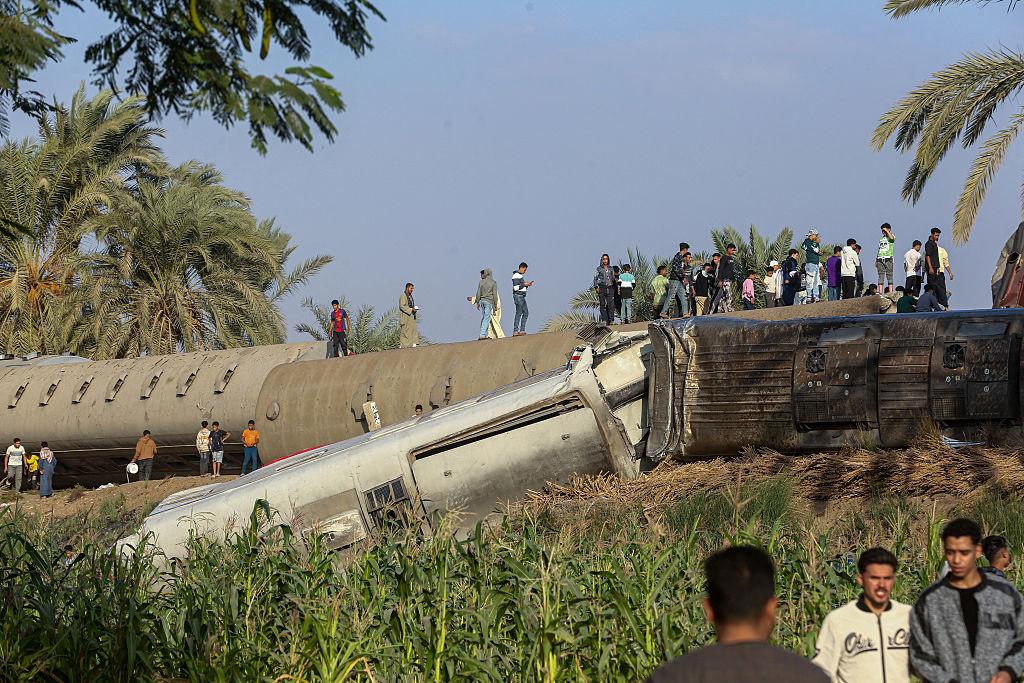
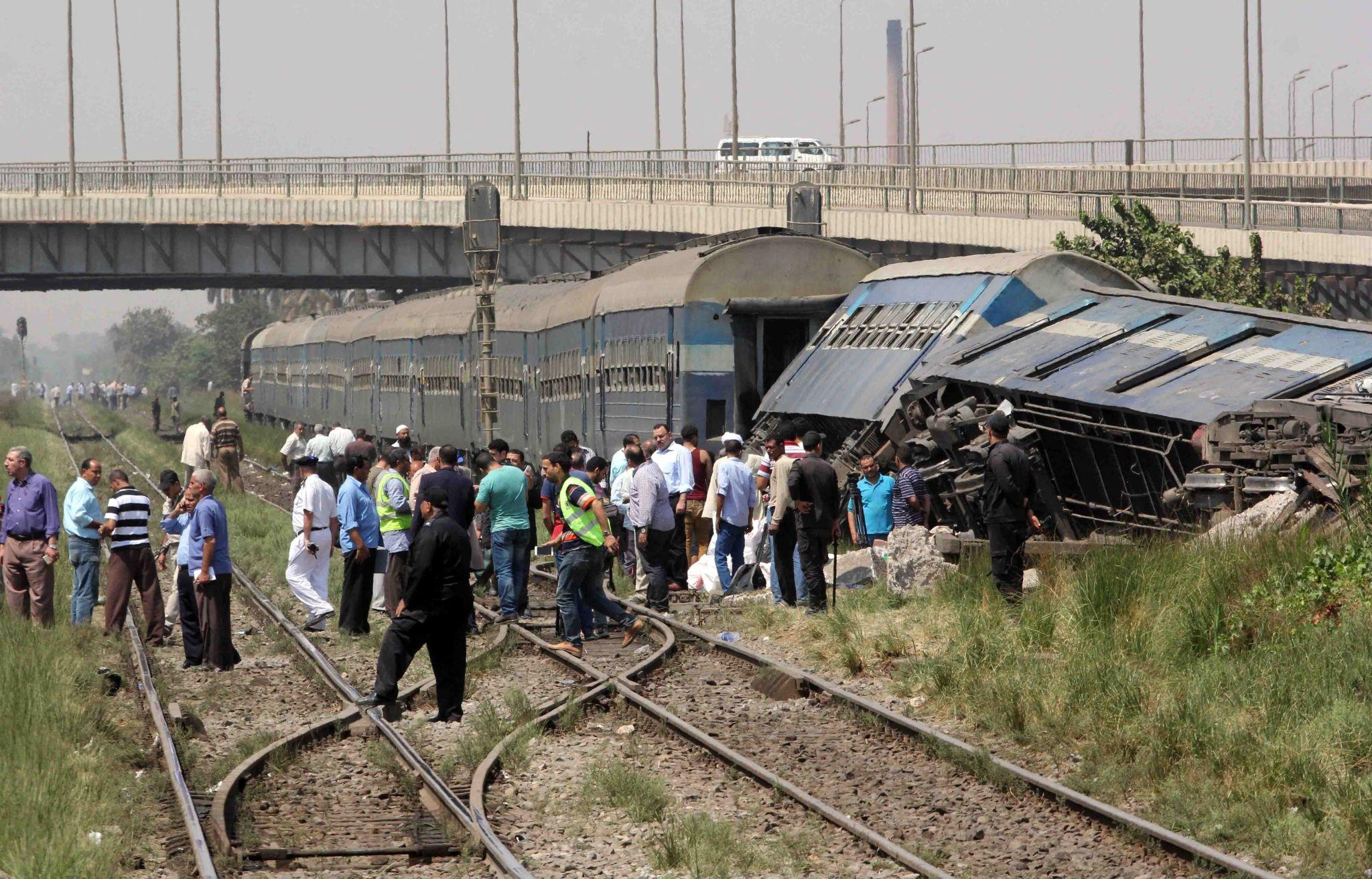
At least seven people were killed and more than 100 injured after two passenger trains collided in Egypt’s Giza governorate, south of Cairo, on Sunday, 8 November. The crash derailed several carriages and triggered an investigation into possible failures in railway safety systems and operating procedures.
The collision occurred in the Al-Ayyat district, between Kafr Ammar and Al-Raqqa stations. Egyptian railway authorities said train No. 134, a passenger service travelling from Giza to Fayoum, struck the rear of train No. 2010, which was travelling from Cairo to Aswan.
The Cairo–Aswan service had stopped on the same track when it was hit, according to preliminary findings cited by the Public Prosecution. The impact derailed several carriages, leaving passengers trapped and prompting a major emergency response.
The death toll reached seven, including the driver of the Giza–Fayoum train, according to prosecutors. The number of injured passengers was reported differently across updates: Reuters cited a Health Ministry figure of 112, while Associated Press and Ahram Online reports put the figure at 125. The seven fatalities were consistently reported.
Prosecutors identify possible safety-system failures
The investigation took a significant turn on Monday after the Public Prosecution disclosed technical findings involving the train’s automatic control equipment and railway signalling procedures.
According to the prosecution, technical examinations found that the driver of train No. 134 had switched off the train’s automatic control system before the collision. The system is part of the railway’s safety arrangements, and its deactivation is now a central focus of the inquiry.
Investigators also said the station controller and stationmaster at Al-Raqqa had failed to monitor the control panel linked to signal tower T10. Both officials reportedly acknowledged during questioning that they had not carried out their monitoring responsibilities.
The prosecution further alleged that the station controller had tampered with the station’s signalling register in an attempt to conceal evidence of his failure to perform his duties.
Two station officials were ordered detained pending the investigation. Prosecutors also ordered the temporary custody of the assistant driver of train No. 134 until he could be questioned.
The findings remain part of an ongoing investigation and do not amount to final judicial determinations of responsibility.
Passenger accounts and technical examination
The Public Prosecution said several injured passengers interviewed in hospital reported that train No. 134 had been travelling at speed from the time it departed Al-Ayyat station until the collision.
Investigators have inspected the crash site, reviewed surveillance footage and questioned eyewitnesses. Prosecution teams also visited hospitals in Al-Ayyat, Atfih and Beni Suef to interview injured passengers and examine the bodies of those killed.
The inquiry has extended beyond the train crew and station personnel. Prosecutors questioned the head of the Egyptian National Railways Authority, senior officials responsible for infrastructure, maintenance, operations, safety and quality, and the authority’s central signalling and communications department.
The Public Prosecutor has also ordered the formation of an engineering committee comprising professors from Cairo University’s Faculty of Engineering. The committee will examine the railway authority’s operating arrangements, equipment, signalling systems, monitoring procedures and maintenance practices.
It has been asked to assess whether previous railway accidents involved recurring technical or operational failures, and whether earlier modernisation work has been effective in preventing crashes and derailments.
The investigation is therefore examining not only the events immediately before Sunday’s collision, but also whether weaknesses in supervision, equipment or railway management contributed to the accident.
Seven killed as emergency teams respond
Emergency services deployed dozens of ambulances to the crash site as rescue workers worked to reach injured passengers and remove damaged carriages.
Egypt’s Health Ministry said 72 ambulances took part in evacuation operations. Injured passengers were transported to hospitals in Giza and neighbouring Beni Suef governorate for treatment.
The injuries included fractures, bruising and cuts to the head and face, according to the ministry’s updates. Some passengers required continued medical observation, while others were discharged after receiving treatment.
Local residents also rushed to the scene to help survivors and call for medical assistance. Associated Press reported that some passengers had been trapped inside damaged carriages, while survivors described confusion, dust and severely mangled sections of the trains.
President Abdel-Fattah el-Sisi said he was following developments closely and directed state agencies to ensure medical care for those injured. He also ordered a prompt investigation and said anyone found responsible for negligence should be held accountable.
Prime Minister Mostafa Madbouly followed up with relevant ministers on the medical response, assistance to affected families and efforts to restore railway operations.
Parliament seeks answers from transport ministry
The collision has renewed public and political scrutiny of railway safety in Egypt.
The House of Representatives’ Transport and Communications Committee scheduled an emergency meeting for Tuesday, 10 November, and invited Transport Minister Kamel el-Wazir and relevant officials to discuss the crash.
The meeting is expected to examine the circumstances of the collision and the wider safety arrangements governing passenger services. The prosecution’s findings concerning the automatic control system and the handling of railway signals have increased attention on the responsibilities of both train crews and station staff.
The Administrative Prosecution is also examining the incident, alongside the criminal investigation led by the Public Prosecution.
Egyptian National Railways said services on the Cairo–High Dam line had resumed on Monday after damaged carriages were removed and the affected track was repaired. During the disruption, the Transport Ministry deployed buses to help passengers travelling between affected stations, while the railway authority offered ticket refunds to passengers who cancelled their journeys.
A familiar location for railway disasters
The Al-Ayyat area has a history of serious railway accidents. It was the location of Egypt’s deadliest train disaster in 2002, when a fire swept through an overcrowded passenger train travelling from Cairo towards southern Egypt, killing more than 300 people.
The latest collision also follows another railway incident in the same district in September, when two freight trains collided at Al-Balyada station, injuring a driver and his assistant.
Figures reported by Ahram Online from Egypt’s Central Agency for Public Mobilization and Statistics show that the country recorded 170 railway accidents in 2025, down from 220 in 2024. Although the annual number declined, the latest collision has renewed questions about the effectiveness of safety oversight and infrastructure improvements.
Egypt has been pursuing a large railway modernisation programme, with investment directed towards infrastructure, equipment and passenger services. However, the investigation into the Al-Ayyat collision will test whether improvements in technology are being matched by reliable operating procedures and effective supervision.
Investigation turns to wider accountability
The initial findings point to several potential failures involving the train’s automatic control system and the monitoring of railway signals. They have also led investigators to examine whether procedures were followed by personnel responsible for operating and supervising the line.
The engineering committee’s work will be important in determining whether those failures were isolated to the trains and station involved or reflect wider weaknesses across the railway network.
For the families of those killed and the passengers still recovering, the immediate priorities remain medical support, assistance and accountability. For Egypt’s authorities, the challenge is to establish precisely how the collision occurred and whether the railway’s safety arrangements are capable of preventing similar tragedies.
The inquiry remains ongoing, and the final technical findings and any subsequent legal decisions are still pending.