


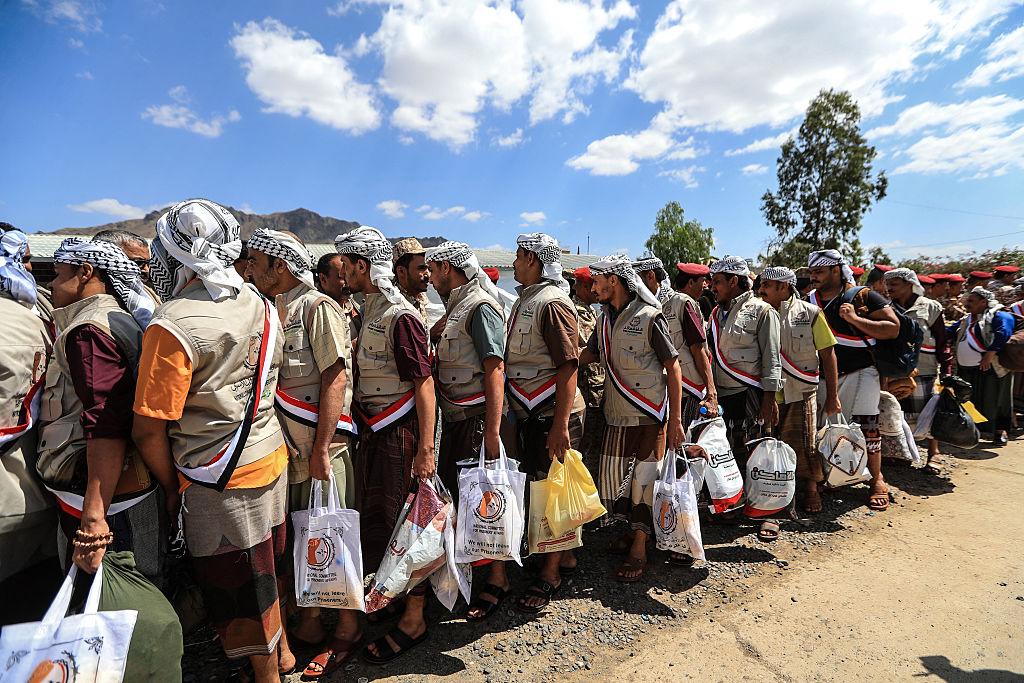
Yemen’s Houthi authorities have released 600 people held in connection with the country’s conflict, in a unilateral move confirmed by the International Committee of the Red Cross (ICRC) that has brought relief to hundreds of detainees and their families.
The release took place in the capital, Sanaa, on Sunday, 15 November. The ICRC said its delegates conducted private interviews with each detainee before their release, while medical personnel assessed their health and arranged additional assistance where necessary to support their return home.
The operation was initiated by the Houthi-affiliated National Committee for Prisoners’ Affairs and was not conducted under the Stockholm Agreement, the ICRC said. The organisation also stressed that it had no role in deciding which individuals would be released or determining the number.
The announcement comes as Yemen continues to experience renewed fighting and as efforts to secure a broader exchange of detainees between the country’s warring parties face significant challenges. Although the release represents a substantial humanitarian development, it does not amount to a negotiated prisoner swap or signal a wider political settlement.
A major unilateral release in Sanaa
The Houthi authorities announced that 600 conflict-related detainees had been freed in Sanaa, where the movement has exercised control since 2014.
Abdul Qader al-Murtada, head of the Houthi National Committee for Prisoners’ Affairs, confirmed the operation and described it as the largest unilateral prisoner release and pardon initiative carried out by the movement during the conflict.
He presented the decision as a humanitarian measure intended to ease the suffering of detainees and their families. The release was carried out without a corresponding announcement of an equivalent number of prisoners being freed by the internationally recognised Yemeni government.
The ICRC independently confirmed that 600 people had been released. However, its public statement did not provide a list of names, nationalities or individual affiliations. While some media reports identified the detainees as members of government-aligned forces, the organisation used the broader description of people detained in connection with the conflict.
That distinction matters in a country where thousands of people have been detained by different parties during years of fighting. Without a publicly released list, the identities and circumstances of every individual in Sunday’s operation cannot be independently established.
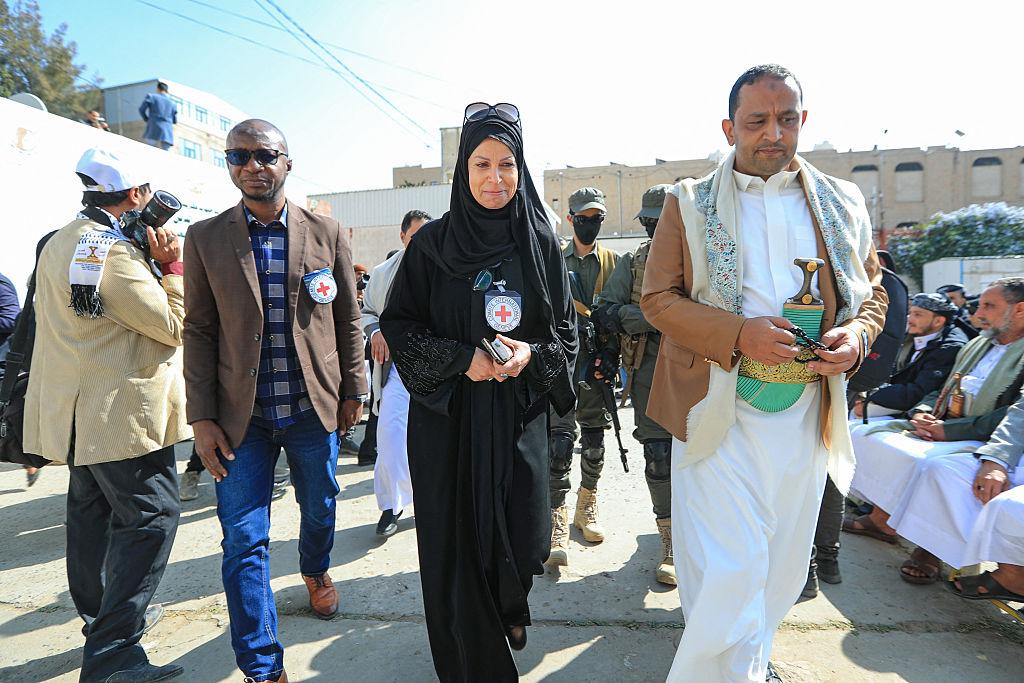
The Red Cross provides humanitarian assistance
The ICRC played a supporting role in the release, focusing on the safety, health and dignity of the individuals involved.
Before the operation, its delegates held private interviews with each detainee. Medical personnel checked their health conditions, while assistance was arranged for those requiring additional support.
The organisation also helped facilitate their return home, emphasising that people released after prolonged detention may face medical, practical and family-related difficulties when travelling back to their communities.
The ICRC clarified that its participation should not be interpreted as involvement in the political or military decisions behind the release. It did not select the detainees, negotiate the list or determine how many people would be freed.
Its role was humanitarian and based on the principle of neutrality. The organisation said it remained ready, at the request of the parties, to facilitate future releases, transfers and repatriations involving people detained in connection with the conflict.
The clarification is particularly important because the release took place outside the established framework for negotiated prisoner exchanges. The ICRC’s involvement in facilitating the safe return of detainees does not mean that the wider political disagreements between Yemen’s warring parties have been resolved.
A separate track from the negotiated prisoner exchange
The release also comes against the background of efforts to organise a much larger exchange between the Houthi authorities and Yemen’s internationally recognised government.
On 14 May 2026, the two sides reached an agreement in Amman, Jordan, to release more than 1,600 conflict-related detainees following 14 weeks of negotiations under United Nations auspices.
The agreement was described by the UN as an unprecedented step in the country’s ongoing conflict. Under the arrangement announced at the time, the Houthis were expected to release 580 detainees, including seven Saudi nationals and 20 Sudanese nationals, while the government side was to release approximately 1,100 Houthi-affiliated detainees.
The ICRC was involved in preparations for the broader operation as a neutral intermediary and co-chair of the supervisory mechanism established under the 2018 Stockholm Agreement.
However, the 15 November release was described by the ICRC as an initiative of the Houthi National Committee for Prisoners’ Affairs that did not fall under the Stockholm framework. The organisation did not identify it as the implementation of the wider Amman agreement.
The distinction separates two different approaches. The May arrangement was based on negotiations and reciprocal commitments between the parties, while the latest release was a unilateral decision by the authorities in Sanaa.
Yemen’s prisoner issue has remained one of the most sensitive humanitarian aspects of the conflict. Families on both sides have spent years seeking information about relatives, while disagreements over lists, identities and the conditions of release have repeatedly complicated negotiations.
An earlier release in October
Sunday’s operation followed another unilateral release in October, when Houthi authorities freed 159 conflict-related detainees in Sanaa.
The ICRC confirmed on 17 October that its delegates had conducted interviews with the detainees, assessed their health and provided assistance to facilitate their return home.
As with the November operation, the October release was initiated by the National Committee for Prisoners’ Affairs and did not fall under the Stockholm Agreement. The ICRC also said it had no role in determining the identities or number of people released.
The two operations demonstrate that unilateral releases have continued alongside efforts to organise a broader exchange. They have offered individual families the prospect of reunification, but have not removed the need for a comprehensive agreement covering people still held by the opposing sides.
For relatives who have spent years without knowing whether detained family members will return, even a limited release can carry considerable significance. However, the absence of a comprehensive public list makes it difficult to establish how the latest announcement affects the wider population of people still in detention.
Yemen’s wider conflict remains unresolved
The prisoner release comes amid a conflict that has devastated Yemen for more than a decade.
The war escalated in 2014 when Houthi forces seized Sanaa and expanded their control over large parts of northern Yemen, forcing the internationally recognised government from the capital. A Saudi-led military coalition intervened in 2015 in support of the government.
Although front-line fighting declined during periods of de-escalation, the conflict never reached a comprehensive political settlement. The country’s institutions remain divided, while competing authorities exercise control over different territories.
Recent renewed fighting has added further pressure to an already fragile situation. Military developments around southern Yemen and the strategic Bab al-Mandab area have raised concerns about a possible expansion of hostilities.
Against this background, the release of 600 detainees provides a limited humanitarian development at a time when broader political and security conditions remain uncertain.
There is no indication that the operation was linked to a new ceasefire agreement, and it should not be treated as evidence that the opposing parties have reached a wider understanding on the future of the conflict.
The immediate significance lies in the freedom of the individuals concerned and the possibility of renewed contact with their families, rather than any demonstrated change in the military balance.
Families welcome the prospect of reunification
For families affected by detention, the release represents an important moment after prolonged uncertainty.
People held during armed conflicts may spend months or years separated from their relatives, with families often facing difficulties obtaining reliable information about their whereabouts and health.
The ICRC’s involvement is intended to help ensure that releases take place safely and that detainees are treated with dignity. Private interviews and medical assessments can also help identify individuals requiring additional assistance before travelling home.
The organisation has repeatedly emphasised that detainees must be treated humanely and that their rights remain protected under international humanitarian law, regardless of which party holds them.
Nevertheless, the release of 600 people is only one part of a much larger unresolved issue. Thousands of families across Yemen continue to seek information about relatives whose whereabouts and conditions of detention remain uncertain.
The ICRC has reiterated its readiness to support future releases if the parties request its assistance. Whether that willingness can translate into a broader humanitarian agreement will depend on the decisions of the Yemeni government and the Houthi authorities.
A humanitarian step, not a political settlement
The November release demonstrates that limited humanitarian measures remain possible despite continuing military and political divisions in Yemen.
By freeing 600 detainees without waiting for a reciprocal exchange, the Houthi authorities have enabled a significant number of people to return home. The ICRC’s involvement has helped provide medical checks, private interviews and practical assistance, while preserving its neutral role.
However, the operation does not resolve the wider dispute over thousands of detainees or replace the need to implement negotiated agreements. The broader Amman framework offers a potential route towards a much larger exchange, but progress requires continued cooperation and commitments from both sides.
For now, Sunday’s release is a meaningful development for the individuals and families involved. Its longer-term importance will depend on whether it encourages further humanitarian measures or remains an isolated initiative amid the continuing conflict.